New 2027 F-150 Lineup
Ford Unveils Refreshed 2027 F-150 Featuring a New Base Engine and Carhartt Package
Anonymous
Key Points
1
Ford has eliminated the naturally aspirated V-6 from the F-150 lineup in addition to discontinuing the 2.7-liter EcoBoost; the new 3.0-liter EcoBoost is now the sole non-hybrid V-6 entry point.
2
The rest of the powertrain lineup retains its existing outputs: the 3.5-liter EcoBoost makes 400 horsepower and 500 pound-feet of torque, the PowerBoost hybrid makes 430 horsepower and 570 pound-feet, and the Raptor R’s supercharged 5.2-liter V-8 produces 720 horsepower and 640 pound-feet.
3
Ford’s chief F-150 program engineer, Kelly Kohlstrand, said the larger base engine “gives you a little bit of a better everyday driving experience,” despite producing the same peak power and torque as the engine it replaces.
4
The lower-priced Tremor reduces equipment in specific ways, including manual rather than dual-zone climate control, the removal of heated seats and adoption of a six-speaker instead of an eight-speaker audio system; Ford says these changes cut about $5,300 from the 2026 starting price, bringing the 2027 model to $62,400.
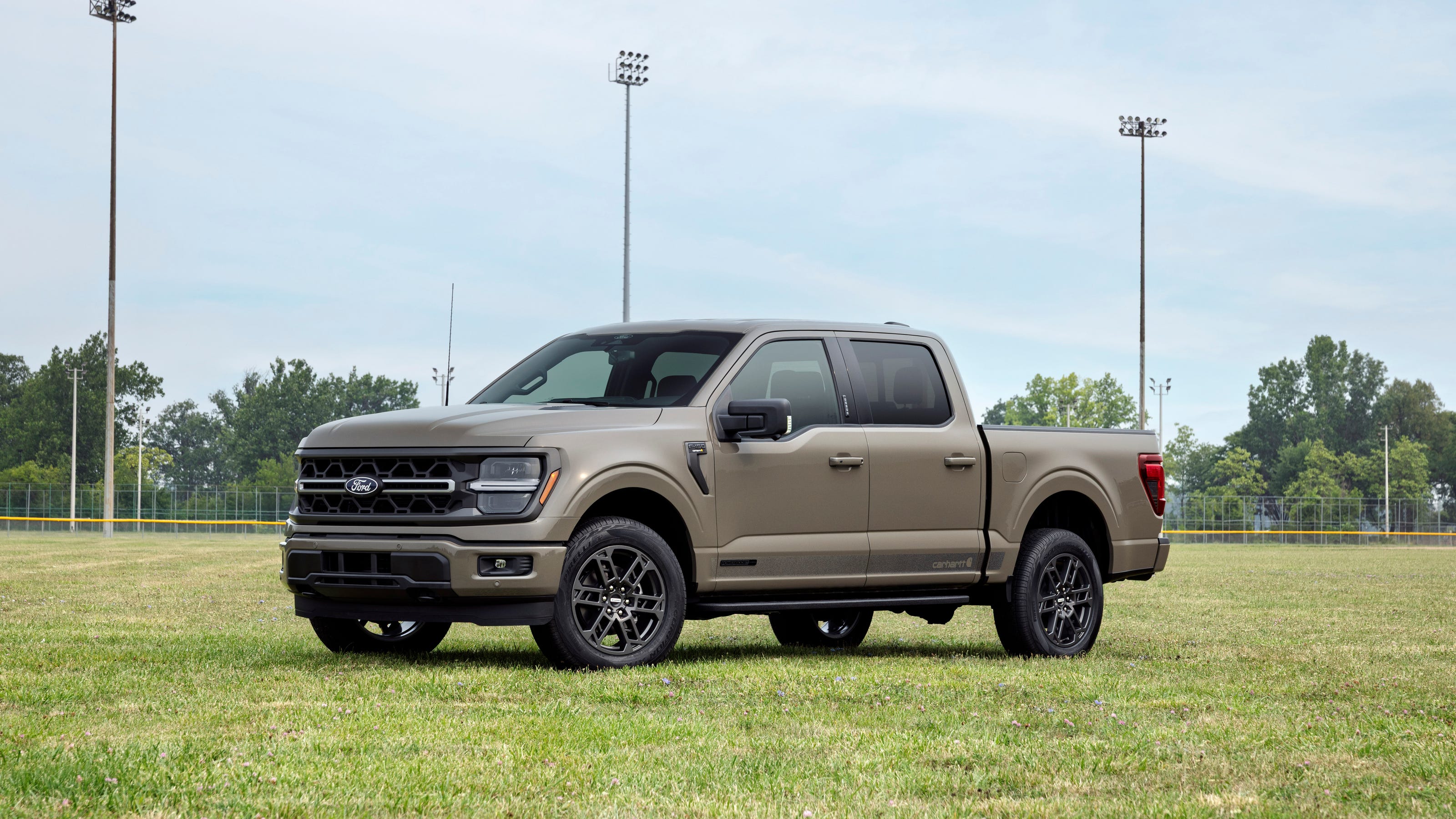
Ford's refreshed 2027 F-150 lineup replaces the 2.7-liter EcoBoost V-6 with a new 3.0-liter twin-turbo EcoBoost as its base engine, autoevolution. The larger engine maintains the same 325 horsepower and 400 pound-feet of torque but reaches peak torque at 2,250 rpm instead of 3,500 rpm, delivering quicker low-end response for everyday driving and towing. Ford is also expanding V-8 availability, making the 5.0-liter V-8 available on King Ranch and Platinum trims, while introducing a $4,195 Carhartt package for four-wheel-drive XLT SuperCrew models starting at $62,660.
Orders are open now, with the standard 2027 F-150 arriving later this year and the Carhartt edition expected in early 2027, auto123. Ford's chief F-150 program engineer, Kelly Kohlstrand, said the larger base engine "gives you a little bit of a better everyday driving experience" despite matching the outgoing engine's peak outputs.
New Base Engine Shifts F-150 Priorities
The 3.0-liter EcoBoost replaces Ford's naturally aspirated V-6 lineup entirely, bnd. Ford is simplifying its engine portfolio by discontinuing both the old naturally aspirated V-6 and the 2.7-liter EcoBoost. The new 3.0-liter delivers identical peak power—325 horsepower and 400 pound-feet of torque—but reaches that torque 1,250 rpm sooner, improving how the truck feels under load during daily driving and towing operations.
Other powertrains remain unchanged: the 3.5-liter EcoBoost produces 400 horsepower and 500 pound-feet, the PowerBoost hybrid generates 430 horsepower and 570 pound-feet, and the Raptor R's supercharged 5.2-liter V-8 makes 720 horsepower and 640 pound-feet. By focusing on torque delivery rather than raw power increases, Ford avoids expensive overhauls while improving real-world performance for truck buyers.
V-8 Returns to Premium Trims Nationwide
The 5.0-liter V-8 is now available on King Ranch and Platinum trim levels, autoevolution, expanding its presence beyond previous model years. This move preserves traditional gasoline V-8 options for buyers who value engine sound and character alongside performance. Ford's decision reflects confidence that premium truck buyers want conventional powertrains, not just turbocharged or hybrid alternatives.
The broader engine portfolio accommodates different buyer preferences across the lineup. Some customers prioritize efficiency and towing capacity through hybrid powertrains, while others seek the proven reliability and visceral appeal of a traditional V-8. By maintaining multiple options, Ford avoids forcing premium buyers into electrified drivetrains while the turbo four and V-6 options serve base and mid-range models.
Carhartt Package Blends Lifestyle and Affordability
Ford introduced a Carhartt Edition for four-wheel-drive XLT SuperCrew models priced at $62,660 before destination charges, freep. The $4,195 package adds Carhartt branding and logos to exterior and interior trim, workwear-inspired seats, logo-adorned floor mats, and a spray-in Carhartt bedliner. This partnership between two iconic Motor City brands creates a lifestyle-oriented offering for buyers seeking utilitarian style.
Meanwhile, lower-priced Tremor and Raptor equipment groups cut specific luxuries to reach lower starting prices, bnd. The 2027 Tremor reduces equipment including manual rather than dual-zone climate control, removal of heated seats, and a six-speaker instead of eight-speaker audio system. These changes cut roughly $5,300 from pricing, bringing the 2027 Tremor to $62,400. Ford thus addresses both premium lifestyle demand and affordability pressure within a single generation.
Modest Styling Updates and Hands-Free Towing
The 2027 F-150 receives revised grilles and wheel designs on several trims, maintaining the truck's recognizable profile while refreshing its appearance, auto123. These updates avoid a complete redesign, preserving parts compatibility and allowing buyers to focus on mechanical improvements and new features.
Ford is expanding BlueCruise with Towing capability at no extra cost, enabling hands-free driving while towing on equipped trucks, autoevolution. This semi-autonomous feature addresses a key pain point for truck owners who manage long towing distances, combining convenience with the practical upgrades—the 3.0-liter engine's torque improvements and V-8 options—that define the 2027 lineup.
Sentiment
Mostly PositiveNEGATIVENEUTRALPOSITIVE
Publishers
17
Articles
3
Reach
20
A
AnonymousAuthor


