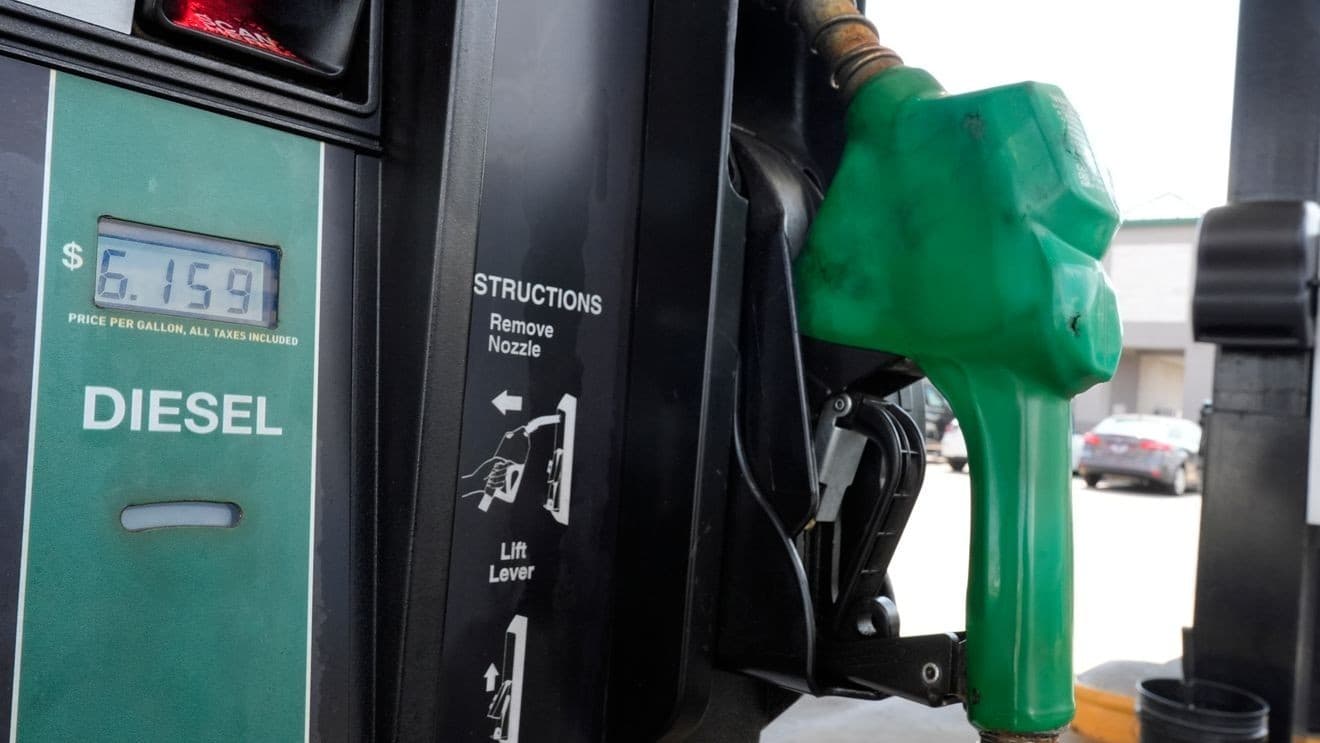
Record Fuel Prices
Diesel Prices Reach Record Highs Across Switzerland and Germany Amid Supply Disruptions
Anonymous
Key Points
1
The Touring Club Switzerland says diesel is especially sensitive to price shocks because it is used extensively in freight transport, construction, industry and heating, in addition to passenger vehicles. Demand can also increase when natural-gas prices rise and countries switch to diesel-like fuels for power generation.
2
Swiss pump prices are influenced not only by supply disruptions but also by Rotterdam fuel-market prices, the US dollar exchange rate and Rhine freight costs, according to the TCS and Swiss experts.
3
The Swiss price outlook remained difficult because Brent crude briefly exceeded $108 a barrel, its highest level since July, according to the Swiss report.
4
Switzerland’s record rail use in 2025 provides broader transport context as motorists face higher fuel costs: passengers travelled nearly 24 billion passenger-kilometres and made 675 million rail trips, both increases from 2024.
Diesel prices have hit record levels across Switzerland and Germany, driven by the Iran war, disrupted shipping through the Strait of Hormuz, and reduced Russian fuel exports. Swiss diesel now costs about CHF 2.41 per litre, surpassing its 2022 record, while German diesel reached €2.453 per litre, according to Touring Club Switzerland. Low Rhine water levels and a temporary refinery closure are compounding supply pressures, threatening to raise costs for freight, construction, and heating across Central Europe.
Why Diesel Prices Are Extra Vulnerable to Supply Shocks
Diesel is more sensitive to price spikes than petrol because it fuels freight trucks, construction equipment, industrial machinery, and heating systems, according to Touring Club Switzerland. When natural gas becomes expensive, countries also switch to diesel-like fuels for power generation, which increases demand further. A single disruption ripples across transportation, food supply, and manufacturing.
Multiple Factors Pushing Swiss Prices to Record Highs
Swiss diesel prices aren't determined by crude alone. Touring Club Switzerland and Swiss experts cite four drivers: Rotterdam fuel-market prices, the US dollar exchange rate, Rhine freight costs, and global supply. Brent crude briefly exceeded $108 per barrel this year—its highest level since July—adding further pressure. Meanwhile, low water levels on the Rhine make shipping fuel more expensive and slower.
Germany's Political Gridlock Over Price Relief
German Chancellor Friedrich Merz promised action against price gouging but has not yet announced any measures, according to reports on German fuel prices. The Social Democrats want a windfall tax on oil companies to curb excess profits. Merz opposes the tax, leaving Germany's governing parties deadlocked on a response even as diesel reached €2.453 per litre and petrol climbed to €2.314.
Switzerland's Rail System Offers Alternative as Pump Prices Soar
As motorists grapple with record fuel costs, Switzerland's rail network set new records in 2025. Passengers travelled nearly 24 billion passenger-kilometres and made 675 million rail trips, both increases from 2024, according to Swiss transport data. Expanded rail use provides some relief for commuters and freight operators seeking cheaper alternatives to diesel-powered transport.
Sentiment
Mostly NegativeNEGATIVENEUTRALPOSITIVE
Publishers
19
Articles
59
Reach
78
Topics
A
AnonymousAuthor