Global Fuel Price Surge
Middle East conflict drives global fuel price surge amid critical supply route disruptions.
Anonymous
Key Points
1
A merchant vessel was struck in the Strait of Hormuz on Sunday, killing one person and injuring three, according to Iranian authorities. Iran now requires vessels to obtain permission before crossing and is considering imposing service fees, adding further uncertainty to shipping through the waterway.
2
Saudi Arabia’s East-West pipeline can carry about seven million barrels of oil per day—roughly 4% of global supply—and was designed to bypass the Strait of Hormuz. Its closure could therefore significantly constrain alternative export routes if it persists.
3
AMP chief economist Shane Oliver warned that reserves cannot be drawn down indefinitely and estimated that oil might need to reach $150 a barrel to force enough demand destruction to offset the supply reduction. He said Australian petrol prices had already risen above A$2.10 a liter, with some Sydney stations charging A$2.15.
4
Market-based forecasts assign relatively low odds to a new crude-oil record in the near term: 3.4% by September 30 and 13.5% by December 31. The figures indicate that traders see prolonged geopolitical risk as supportive of prices but do not broadly expect an immediate record high.
5
Europe is entering winter with gas storage below 70% full, compared with 82% at the same point in 2025 and a five-year average above 80%. Kpler analyst Go Katayama warned that a colder winter could produce a global “fight for fuel” as European and Asian buyers compete for alternative LNG cargoes.
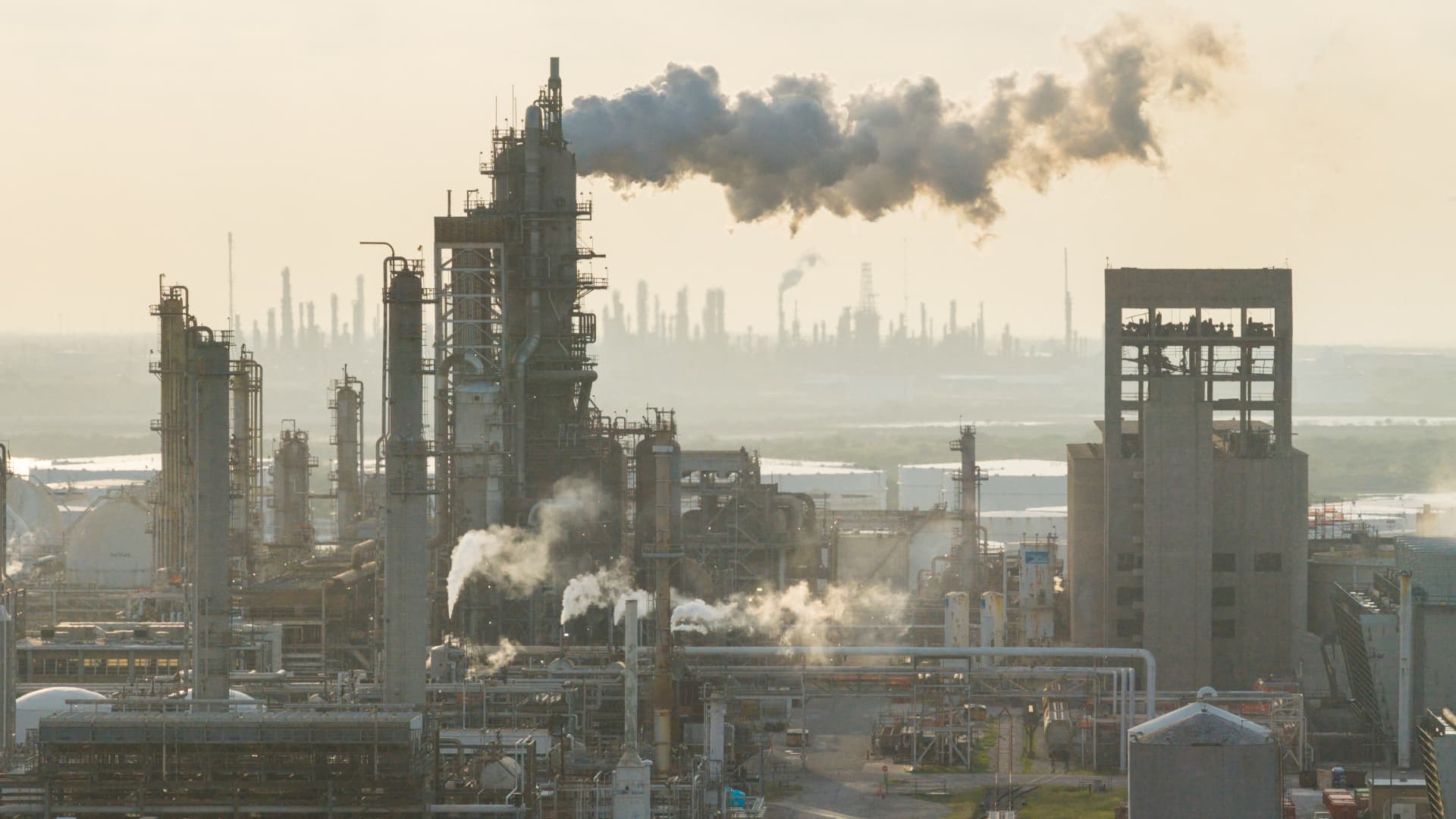
Middle East conflict has pushed global crude oil prices above $107 per barrel for Brent and $102 for West Texas Intermediate, as attacks on shipping and infrastructure disrupt energy supplies worldwide. Reuters reported that a merchant vessel was struck in the Strait of Hormuz on Sunday, killing one person and injuring three, while Reuters also documented that Saudi Arabia's critical East-West pipeline—which carries 7 million barrels daily and bypasses the Strait—has been shut down, threatening 4% of global oil supply.
The price surge is hitting consumers hard across multiple continents. U.S. diesel has exceeded $6 per gallon, Australian petrol has climbed above A$2.10 per liter, and Pakistan has raised fuel prices for a fourth consecutive day to Rs370.80 per liter for petrol and Rs398.04 for diesel. European natural gas prices have reached their highest levels since the 2022-2023 energy crisis, with storage below 70% capacity heading into winter.
Strait of Hormuz Becomes Flashpoint for Global Energy Crisis
Iran is tightening control over the Strait of Hormuz, the waterway through which roughly 20% of the world's oil flows. Reuters reported that Iranian authorities now require all vessels to obtain permission before crossing and are considering imposing service fees. Ship-tracking data shows transit has dropped sharply to just 7 vessels per day, compared with a baseline of 14 and with zero liquefied natural gas tankers passing through.
The closure of Saudi Arabia's East-West pipeline removes a critical alternative route. Designed to bypass the Strait entirely, the pipeline normally handles 7 million barrels per day. Kpler analyst Kpler Go Katayama warned that a colder winter could trigger a global
European Gas Storage Hits Dangerous Lows Before Winter
Europe's natural gas storage stands at less than 70% capacity—far behind the 82% level recorded at this point in 2025 and below the five-year average above 80%. MarketScreener reported that German wholesale prices posted their fastest rise in over three years in August, driven largely by Middle East conflict. The tightening supply coincides with competition between European and Asian buyers for limited liquefied natural gas cargoes heading into the cold season.
Kpler analyst Go Katayama warned that a colder winter could produce a global
Fuel Prices Soar Across Emerging Markets and Developed Economies
The price shock is spreading unevenly but severely. South Africa faces record petrol and diesel prices, while the Philippines is bracing for diesel to rise 2 to 2.50 pesos per liter and gasoline to jump 4.50 to 5 pesos next week. Australia's petrol has crossed A$2.10 per liter at most stations, with some Sydney locations charging A$2.15. AMP chief economist Shane Oliver said that Australian reserves cannot be drawn down indefinitely and estimated oil might need to reach $150 a barrel to force sufficient demand reduction to offset supply losses.
Pakistan has shifted to daily fuel price adjustments due to extreme international volatility. After cumulative increases of Rs59.50 for petrol and Rs68.53 for diesel, the nation now charges Rs370.80 per liter for petrol and Rs398.04 for diesel. U.S. diesel has exceeded $6 per gallon, threatening transportation costs and supply-chain logistics that ripple across consumer goods and food prices.
Financial Markets Expect High Prices But Not a Record Spike
Despite the crisis atmosphere, derivatives traders are cautious about record crude prices. Market-based forecasts assign only a 3.4% probability to crude hitting a new record by September 30 and just 13.5% by December 31, according to options pricing data. This suggests traders view sustained geopolitical risk as supporting elevated prices but do not broadly expect an immediate catastrophic spike that would shatter previous highs.
Independent refiners are benefiting from unusually wide crack spreads—the profit margin between crude and refined products—amid constrained refining capacity and tight inventories globally. Prolonged disruptions, however, could fuel inflation and weaken consumer demand if prices remain elevated long enough to damage economic growth.
Sentiment
Mostly NegativeNEGATIVENEUTRALPOSITIVE
Publishers
41
Articles
35
Reach
76
A
AnonymousAuthor


