NASA's New Space Telescope
NASA Advances $1.2B PRIMA Mission for Advanced Far-Infrared Space Observations
Anonymous
Key Points
1
PRIMA will use a 5.9-foot (1.8-metre) telescope for deep, sensitive far-infrared surveys.
2
Far-infrared observations can reveal processes whose radiation is obscured at other wavelengths, giving PRIMA access to phenomena that other facilities may not readily observe.
3
NASA’s Explorers Program, which PRIMA joins, has launched more than 100 missions since 1958.
4
NASA associate administrator Nicky Fox said PRIMA could help investigate how water came to be on Earth, alongside its broader studies of planet and cosmic evolution.
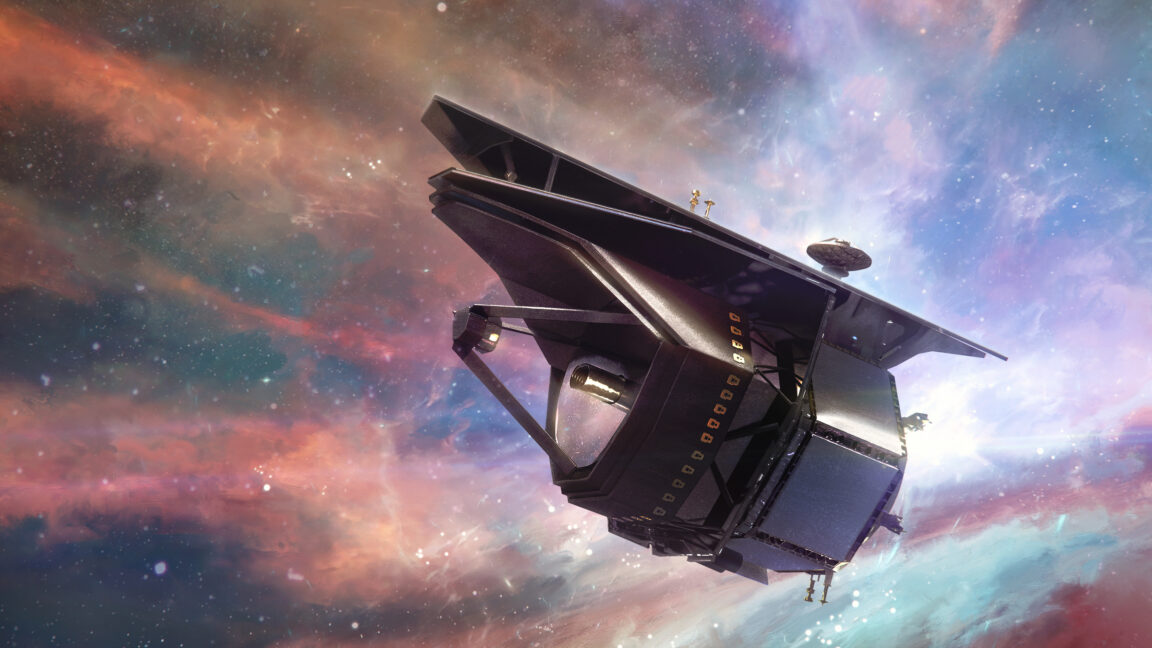
NASA has given the green light to PRIMA, a $1.2 billion far-infrared space telescope, moving it into the next design phase. Ars Technica reports the mission is the first in NASA's new Probe Explorers class and will launch around 2033. PRIMA will study how planets form, how galaxies evolve, and where heavy elements come from in the universe.
The 5.9-foot telescope fills a critical gap between powerful observatories like the James Webb Space Telescope and radio telescopes. NASA associate administrator Nicky Fox said PRIMA could help answer how water arrived on Earth while revealing cosmic secrets hidden from other space observatories.
PRIMA's Far-Infrared View of the Universe
Far-infrared light reveals processes completely hidden at other wavelengths. SpaceWatch Global explains that PRIMA will conduct deep, sensitive surveys of the cosmos by detecting infrared radiation that ordinary telescopes cannot see. This view lets scientists study dusty star-forming regions, black holes, and galaxies across billions of years of cosmic history.
A New Era of Affordable Space Missions
NASA's Explorers Program has launched more than 100 missions since 1958, making it one of the most prolific exploration initiatives. Ars Technica notes that PRIMA represents a new class within this program—one designed to balance ambition with cost efficiency. The $1.2 billion budget cap excludes launch costs, keeping PRIMA affordable compared to larger flagship missions.
What PRIMA Will Investigate in Space
PRIMA's science agenda is broad but focused. The telescope will examine dust and gas in planet-forming regions around young stars. It will track how galaxies and their central black holes grew over cosmic time. UMass Amherst astronomer Alexandra Pope leads the science team for this mission to unlock secrets about the universe's dusty past.
Path to Launch: Design Review and Beyond
PRIMA is now in Phase B, a critical stage for preliminary design and technology development. University of Toledo reports the mission must pass a rigorous review of its technical performance, program management, and costs before NASA approves full development. If successful, PRIMA will begin its initial five-year mission in 2033, potentially extending longer if systems perform well.
Sentiment
Mostly PositiveNEGATIVENEUTRALPOSITIVE
Publishers
18
Articles
8
Reach
26
A
AnonymousAuthor


