Treasury Bond Buyback
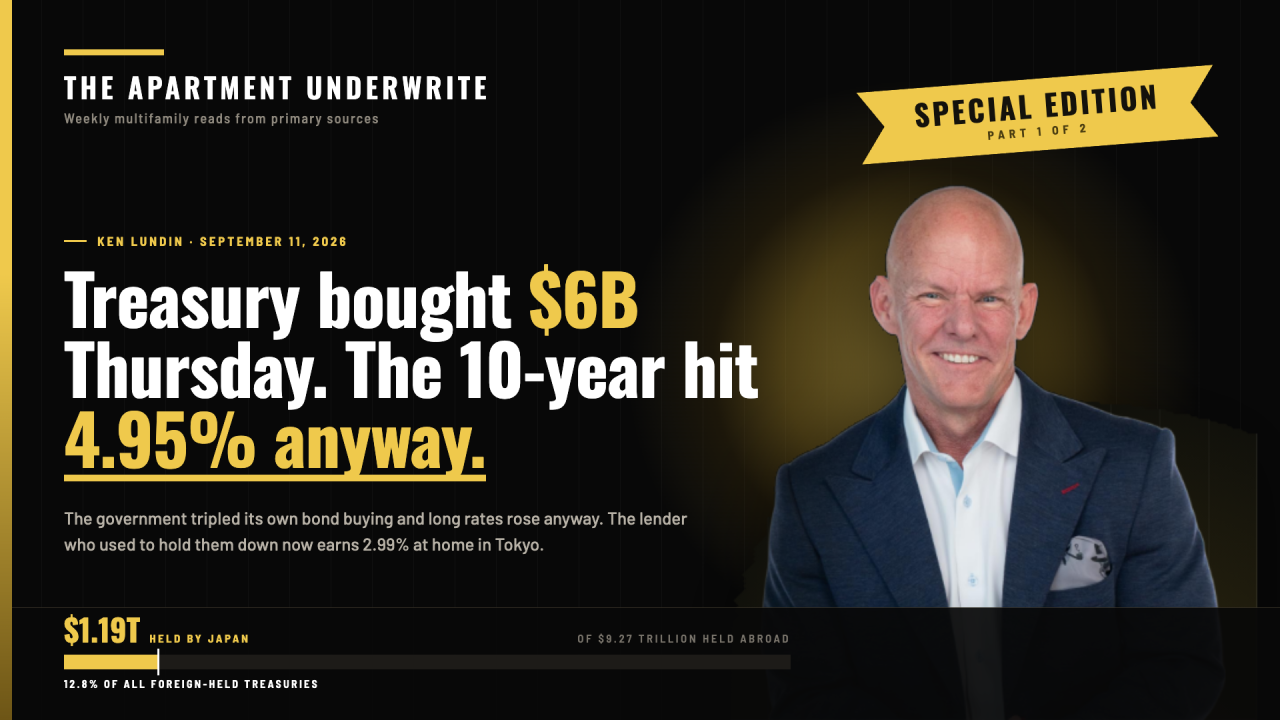
U.S. Treasury Buys $6 Billion in Bonds as 10-Year Yields Hit 24-Year High
Anonymous
Key Points
1
Investors tendered $46.4 billion in bonds, but Treasury accepted just $6 billion across two of the 41 eligible securities. It paid about $67 and $76 for each $100 of face value, meaning the debt retirement required roughly $4.47 billion in cash.
2
Treasury expanded its long-term buyback operations on August 19, raising their size from $2 billion to at least $4 billion per operation; the expanded program runs from September 9 to November 4.
3
A survey measure of prices paid by U.S. factories rose to 77.9, while oil was near $91 a barrel, adding to the inflation concerns cited in the coverage.
4
The Treasury planned to auction $119 billion in new notes and bonds the following week: $58 billion in three-year notes, $39 billion in 10-year notes and $22 billion in 30-year bonds.
The U.S. Treasury deployed its full $6 billion buyback allocation, purchasing older bonds maturing in 2041 and 2042 as the 10-year yield climbed to 5.342%—its highest level since 2002. KuCoin reported that investors tendered $46.4 billion in securities, but Treasury accepted only $6 billion, paying roughly $67 to $76 per $100 of face value. The selective buying reflects the Treasury's effort to boost liquidity in aging debt while navigating record-high borrowing costs.
The bond purchases come as inflation pressures persist. Yahoo Finance noted that a survey measure of prices paid by U.S. factories reached 77.9, with oil hovering near $91 a barrel. These headwinds complicate the Treasury's broader challenge: borrowing $119 billion in new debt next week while yields remain elevated and deficit concerns loom.
Expanded Buyback Program Shows Selectivity
In August, the Treasury doubled its bond buyback commitment, raising the limit from $2 billion to at least $4 billion per operation. KuCoin reported the expanded program runs through November 4. By using the full $6 billion in this round, the Treasury signaled commitment to stabilizing the secondary market for aging securities. However, the gap between $46.4 billion tendered and $6 billion accepted reveals strict pricing discipline—the department rejected offers deemed too expensive.
10-Year Yield Reaches Two-Decade Peak
The 10-year Treasury yield hit 5.342%, marking its highest point since April 2002. Yahoo Finance cited Federal Reserve rate increases—raising its benchmark from 3.75% to 4%—as part of the inflation-fighting effort. This two-decade high ripples across the economy, pushing up mortgage rates, auto loans, and broader portfolio valuations. The elevated yield reflects persistent concerns about deficits, inflation, and heavy government borrowing.
Market Reaction and Upcoming Debt Auctions
Some market participants view the Treasury buybacks as supportive of bond prices and risk assets. Yet analysts caution that restraint—selectively rejecting expensive bids—aligns with the program's liquidity goals rather than a broad price-support mechanism. The Treasury faces an immediate test: next week's $119 billion in new auctions, including $58 billion in three-year notes, $39 billion in 10-year notes, and $22 billion in 30-year bonds. Success depends on investor appetite despite elevated yields.
Sentiment
Mostly NegativeNEGATIVENEUTRALPOSITIVE
Publishers
16
Articles
29
Reach
45
A
AnonymousAuthor


