El Niño Food Strains
Developing Super El Niño Threatens Global Food Systems and Strains Farmers
Anonymous
Key Points
1
The 2015–16 strong El Niño was associated with catastrophic, record-rainfall flooding in South Carolina, offering a recent example of how the pattern can produce severe impacts far from the Pacific.
2
NOAA’s 2015–16 research response deployed a research ship, aircraft, weather balloons and unmanned aircraft; for the developing event, the agency plans to send only a handful of unmanned watercraft, while other projects may await a congressional budget expected as late as December.
3
The El Niño is developing alongside Middle East conflict-related disruptions to fertilizer supplies, higher energy costs and shipping-route problems—additional pressures farmers are facing even as agricultural systems have so far adapted.
4
New Mexico’s flooding followed a combination of late-season monsoon rain and rain from Tropical Storm Odalys and Hurricane Polo; some areas recorded 1 to 4 inches over two days, prompting a state of emergency.
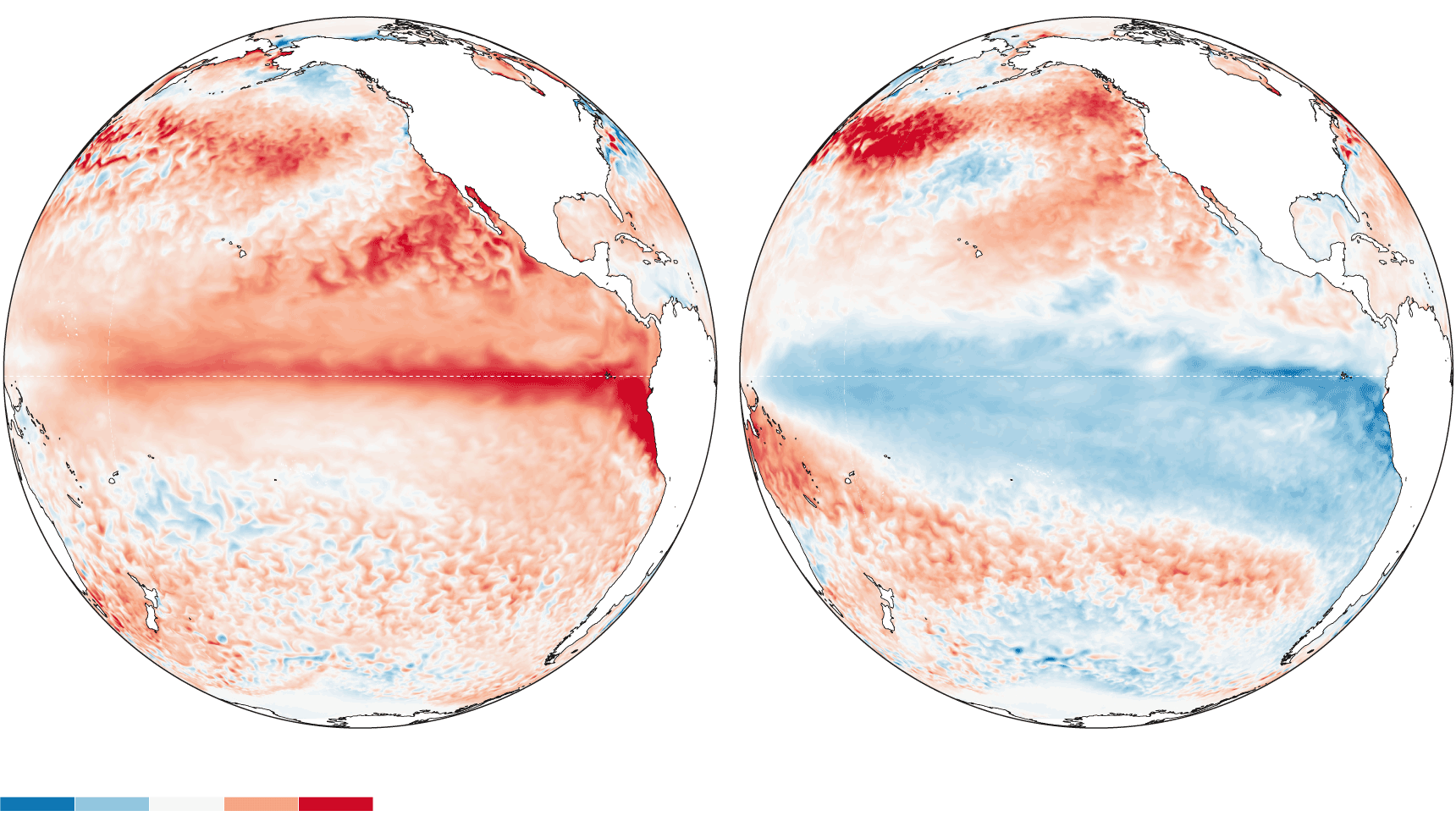
A potentially record-strength El Niño is developing in the Pacific, bringing warnings of severe weather shifts that could strain food systems worldwide. NOAA and climate forecasters say the pattern will likely bring floods, droughts, and crop stress to different regions, though impacts vary sharply by location.
Early snowfall has already hit Taos, New Mexico, while heavy rains from Tropical Storm Odalys and Hurricane Polo triggered flooding and evacuations across the state. Some areas received 1 to 4 inches of rain in just two days. The 2015–16 El Niño showed how powerful these events can be—it brought catastrophic flooding and record rainfall to South Carolina, causing significant damage far from the Pacific Ocean.
How El Niño Disrupts Weather Patterns Worldwide
El Niño shifts jet streams and rainfall patterns across the globe, but effects differ dramatically by region. University of Washington atmospheric scientists caution that strong El Niño years have not necessarily meant poor snowpack or water supplies in the Pacific Northwest—a key agricultural and water-supply region. Farmers and water managers must prepare for uncertainty.
The current event is developing alongside other pressures: fertilizer shortages tied to Middle East conflicts, higher energy costs, and shipping disruptions. These factors compound the challenge for farmers already adapting to shifting growing seasons and rainfall timing across major food-producing regions.
New Mexico's Flooding Shows El Niño's Immediate Impact
Recent storms in New Mexico delivered a preview of El Niño's power. Tropical Storm Odalys and Hurricane Polo combined with late-season monsoon rain to drench the state. Rainfall totals of 1 to 4 inches fell in just 48 hours, forcing evacuations and prompting a state of emergency declaration across multiple counties.
The flooding damaged homes, roads, and farmland. While early snow in higher elevations may seem beneficial for winter water supplies, the violent swings between extreme rain and drought are the real threat El Niño poses to agriculture and water management in the coming months.
NOAA's Research Response Falls Short of 2015 Effort
The 2015–16 El Niño sparked an intensive NOAA research campaign. Scientists deployed research ships, aircraft, weather balloons, and unmanned drones to study the event in real time. This data became crucial for understanding how El Niño spreads across the ocean and atmosphere.
This time, NOAA is planning only a handful of unmanned watercraft. Staffing losses and budget uncertainty—with Congress not expected to pass a final budget until December—have limited the agency's ability to mount a comparable effort. Researchers warn this gap means less direct data on a potentially record-strength event.
Food Systems Face a Critical Test Ahead
Global agriculture has shown resilience to recent supply shocks and cost spikes. But El Niño could test that resilience hard. Regions where growing seasons overlap with rainfall shifts—from Southeast Asia to Central America—face the highest risk of crop losses and food-price spikes.
The event offers scientists a rare chance to study El Niño's full impact on food security. However, without robust field research and real-time data collection, forecasters and farmers will have fewer tools to predict regional outcomes and adapt farming practices before harvest season arrives.
Sentiment
Mostly NegativeNEGATIVENEUTRALPOSITIVE
Publishers
25
Articles
63
Reach
88
A
AnonymousAuthor


