Historic Swiss Glacier Melt
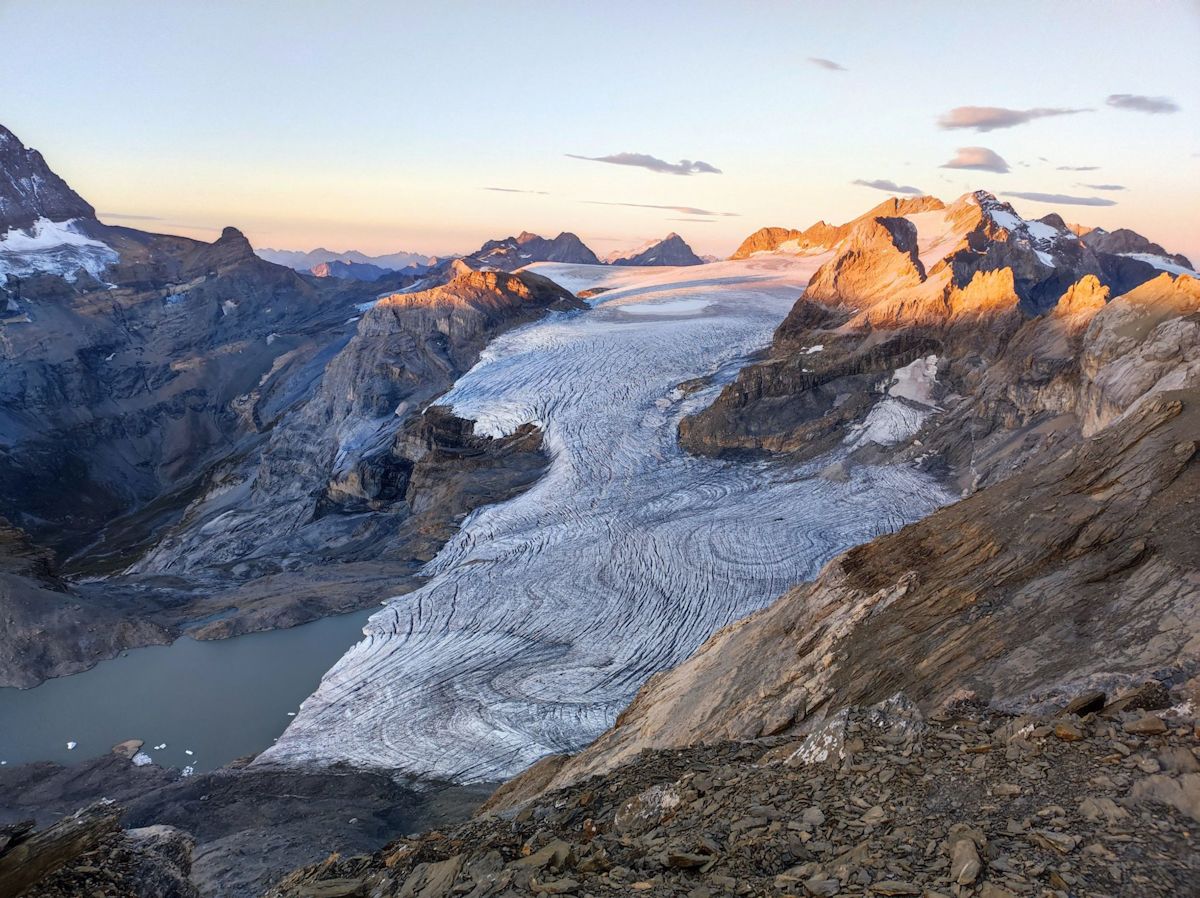
Swiss glaciers suffer massive ice loss following a low-snow winter and prolonged heat.
Anonymous
Key Points
1
During the May-to-September melt season, the freezing level rose above 4,000 metres on a record 76 days. By September, snow had disappeared even at 3,500 metres, leaving the ice exposed to further melting.
2
Swiss glaciers lost about 2,200 billion litres of water between July and September—more than four times the annual drinking-water use of all Swiss households.
3
The pace of loss has accelerated: Switzerland lost 27% of its glacier ice over the past decade, compared with 10% between 1990 and 2000.
4
The smaller glaciers Bella Tola in Valais and Griessfirn in Glarus were among those that disappeared completely and permanently.
5
Early heatwaves removed much of the glaciers’ remaining snow cover; exposed bare ice reflects less sunlight than fresh snow and therefore absorbs more of the Sun’s energy, accelerating melt.
Swiss glaciers lost 5.5% of their ice in 2026, marking the second-worst year on record, Phys.org reported. A brutal combination of low winter snow and extreme summer heat melted away roughly 2,200 billion liters of water between July and September alone—more than four times what all Swiss households drink in a year.
The melt rate over the past five years is now more than double any previously tracked five-year period, leaving glaciers with nearly 20% less ice than in 2021. Sinar Daily noted that scientists called 2026 a "devastating" year. Some smaller glaciers, including Bella Tola and Griessfirn, have vanished entirely and permanently.
Record Heat Exposed Bare Ice to the Sun
During the May-to-September melt season, the freezing level climbed above 4,000 metres on a record 76 days, Phys.org reported. Early heatwaves stripped away most of the glaciers' remaining snow cover. Bare ice reflects far less sunlight than fresh snow, so it absorbs more of the Sun's energy and melts faster.
By September, snow had disappeared even at 3,500 metres elevation. This exposed ice layer accelerated the summer melt dramatically. The combination of record heat and low snowfall created a perfect storm for glacier loss across the Swiss Alps.
Major Glaciers Hit Record Melt Levels
The Rhône, Aletsch, and Clariden glaciers all recorded their greatest annual melt in 2026, Yahoo reported. These three iconic Swiss glaciers have shrunk steadily for decades, but this year's ice loss was unmatched. The Aletsch, Switzerland's longest glacier, continues its rapid retreat.
Across the border in Italy, the Ciardoney glacier in Gran Paradiso National Park lost 2.2 million cubic metres of ice over just three years. Researchers warn it could vanish entirely by 2040 if current trends continue.
Five Years of Accelerating Loss Threatens Water and Power
Switzerland lost 27% of its glacier ice over the past decade—nearly triple the 10% lost between 1990 and 2000, Market Screener reported. This acceleration threatens critical water supplies, hydropower generation, and mountain stability. Some glaciers may disappear within decades.
Glaciers act as natural water reservoirs. The 2,200 billion liters lost in just three summer months highlights how quickly this frozen storage is vanishing. As glaciers shrink, regions downstream face reduced water flow during dry seasons and greater flood risk in spring.
Sentiment
Mostly NegativeNEGATIVENEUTRALPOSITIVE
Publishers
21
Articles
81
Reach
102
Topics
A
AnonymousAuthor


