Vanishing Tropical Ice
Papua's Last Tropical Glaciers Expected to Vanish Within Two Years
Anonymous
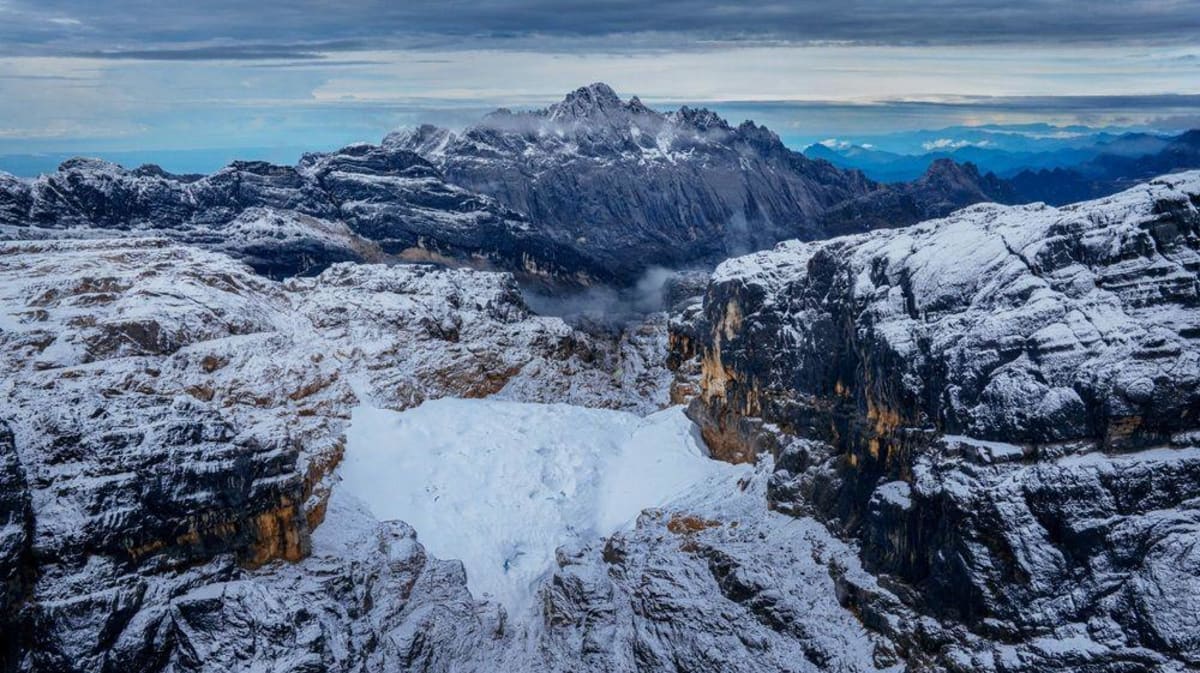
Papua’s remaining tropical glaciers around Puncak Jaya, also known as Carstensz Pyramid, may disappear within the next one to two years, leaving the last tropical ice between the Andes and the Himalayas. Ice cover across the Sudirman Range has dwindled from about 1,900 hectares in the 19th century to roughly 16 hectares today, with researchers documenting a 95% decline since the early 2000s. Scientists attribute the retreat chiefly to human-driven warming, which raises the freezing level and shifts precipitation from snow to rain; El Niño and local conditions can accelerate or affect the loss. The glaciers’ ice cores preserve records of past atmospheric conditions and the tropical Pacific climate, but researchers are racing to study them before the archive disappears. The mountain range also holds deep spiritual significance for Indigenous Papuan communities, so its loss threatens a culturally important landscape as well as a rare scientific and natural feature.
Key Points
1
Ice cores from Puncak Jaya can help researchers trace changes in the Western Pacific Warm Pool, the planet’s warmest ocean waters, as well as record atmospheric conditions.
2
The Moni people call the mountain Mbainggela and believe their ancestors watch over it; the Amungme call it Nemangkawi, meaning “White Arrow.”
3
Amungme activist Adolfina Kum said the mountain’s importance was comparable to Mecca for Muslims or the Vatican for Catholics, and warned that melting ice threatened traditions and cultural foundations.
4
Beyond warming and El Niño, cloud cover, snowfall and local topography also influence whether the remaining glaciers survive.
5
Czech glacier ecologist Marie Šabacká travelled to Puncak Jaya in March to study the ice, describing the loss as profoundly unfair.
Sentiment
Mostly NegativeNEGATIVENEUTRALPOSITIVE
Publishers
5
Articles
4
Reach
9
A
AnonymousAuthor


