Western Fishing Bans
Record Heat and Drought Across US West Force Unprecedented River Fishing Closures
Anonymous
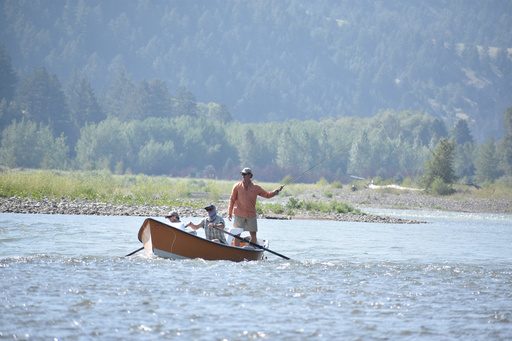
Fishing closures have become a summer routine across the U.S. West, as record heat pushes river temperatures to levels that can kill trout. Wildlife officials in Montana and Colorado have banned afternoon fishing across hundreds of miles of rivers, a response once considered a rare emergency AP. The trigger: an exceptionally dry winter, shrinking snowpacks, and relentless heat waves that are warming rivers faster than fish can survive.
Colorado has now restricted fishing on 19 separate rivers this summer — a scale state officials call unprecedented. Montana expanded its afternoon "hoot-owl" bans to cover 1,200 miles (1,931 km) of rivers. Yellowstone National Park has restricted fishing due to high temperatures in five of the past six years Stamford Advocate.
"Hoot-Owl" Bans Now Cover Thousands of Miles of Rivers
"Hoot-owl" restrictions ban all fishing from 2:00 PM to midnight each day. The name comes from the early-morning hours when hoot owls are active. The rules target the hottest part of the day, when fish are most at risk. On July 29, Montana Fish, Wildlife and Parks expanded these bans to 1,200 miles of rivers in a single move Seattle PI. The same day, Yellowstone National Park extended its restrictions to the entire park.
Colorado's bans went further. On July 16, Colorado Parks and Wildlife closed four major Western Slope rivers. By July 23, it added the Lake Fork of the Gunnison River, Tomichi Creek, and Cochetopa Creek. The South Platte River is now running at just 10 cubic feet per second — a 94% drop from its historical average of 170 cfs KHQ.
Trout Start Dying When Water Tops 70°F
Trout thrive in water between 50°F and 60°F (10°C to 16°C). Warm water holds less oxygen. When temperatures exceed 65°F (18°C), fish hooked by anglers struggle to recover even after being released. Once water hits 70°F to 71°F (21°C), many fish die even with careful handling Goshen News. Clear Creek near Golden, Colorado, hit 73°F (22.8°C) this summer, triggering immediate voluntary closures.
Matt Nicholl, assistant director of Colorado Parks and Wildlife's aquatic branch, put it plainly: "This combination of high temperatures and low precipitation means there is less habitat and lower oxygen levels than is ideal." Kirk Deeter of Trout Unlimited warned of a massive fish die-off on the Yampa River in Steamboat Springs: "That's a bad harbinger for the trout" Idaho Press.
Climate Change Is Shrinking the Window to Fish Safely
Experts say this is no longer a series of bad summers. It is the new normal. Dr. Li Li, an engineering professor at Penn State, said climate change "is changing the size and timing of the mountain snowpack, and that's contributing to river heat waves." When snow melts too early, rivers lose their natural supply of cold water by mid-summer WBAL.
Adam Strainer, head of Montana's fisheries division, said closures have become "very routine from late June through early September" over the past decade Stamford Advocate. Todd Tanner, a fly-fishing instructor in Bigfork, Montana, has watched the safe fishing window shrink for 30 years: "This wasn't something that we even thought about 25 years ago." Dan Gigone, who has owned Sweetwater Fly Shop in Livingston for 22 years, called this "the warmest stretch I remember."
Fly Fishing's Booming Economy Faces a Season Shrinking Fast
Fly fishing drives millions of dollars in tourism in Montana and Colorado each summer. But closures are forcing guides to launch boats at 5:00 AM and steer clients to cold tailwaters below dams just to stay in business. August, once peak season, is now what Gigone calls "a crapshoot" for whether fishing is even possible Dayton Daily News.
Veteran guides are shifting their calendars toward fall and winter trips. Some anglers are adapting too. Mike Wever, 62, a recreational fisher from California, stood in the Yellowstone River in shorts and backed the state restrictions: "It's great for us to have this resource. But we have to manage it" Rutland Herald.
Sentiment
NeutralNEGATIVENEUTRALPOSITIVE
Publishers
25
Articles
25
Reach
25
A
AnonymousAuthor


