AI Solves Math Problems
Meta announces its AI model helped mathematicians successfully solve six complex research problems.
Anonymous
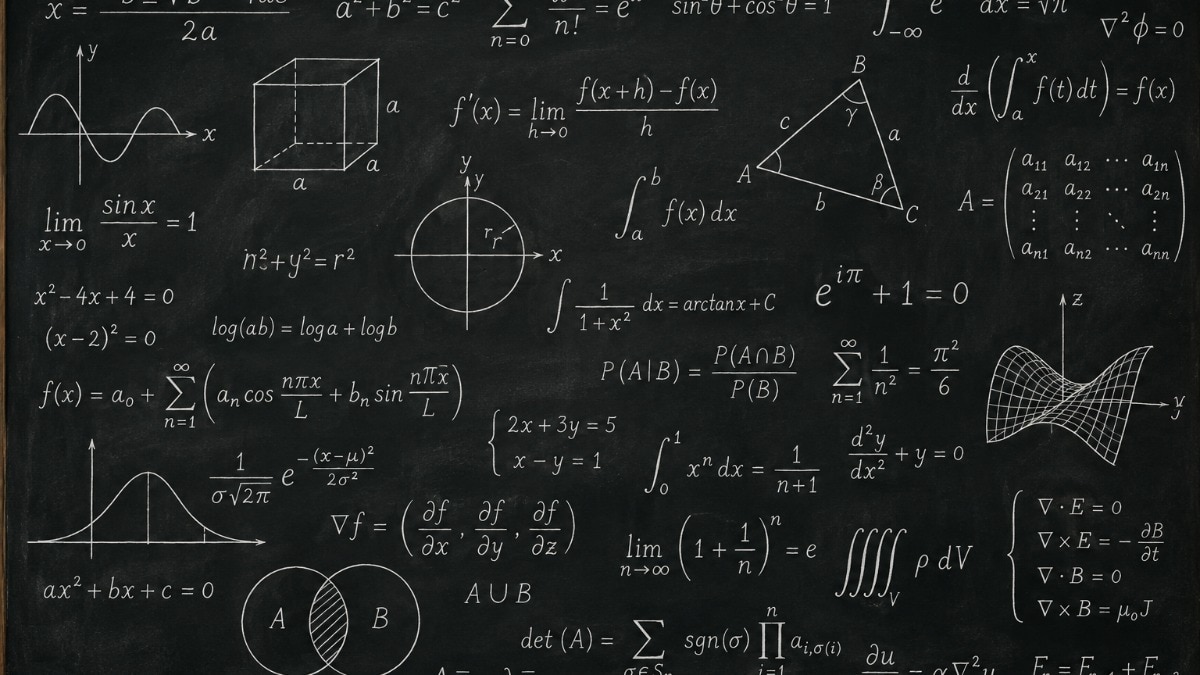
Meta says its Muse Spark AI model helped mathematicians solve six research problems, five of them open questions spanning probability, differential equations, group theory and optimization. Researchers used the model’s standard chat interface in Thinking Mode, without research-specific modifications, and described the work as a collaboration requiring human assessment and repeated testing rather than answers to problems with known solutions. Reported results include proving when high-dimensional Gaussian points can be fitted to an ellipsoid, establishing that certain waves must collapse in finite time, and finding a counterexample that disproved a conjecture in group theory. Meta is publishing the work in six papers as part of a broader effort in mathematical reasoning and formal proof; separately, it announced Muse Gadgets, an open-source project for building hardware compatible with Muse.
Key Points
1
In the group-theory result, the counterexample had order 384; Meta said Muse Spark generated the GAP search program that found it.
2
The wave-collapse result settles a question left open in 2015 and confirms a prediction made in 2002 from simulations.
3
Meta’s broader formalization effort includes AutoformBot, launched in May 2026, which converted 26 mathematics textbooks into Lean 4 and produced more than 45,000 declarations and hundreds of thousands of lines of code.
4
A September 23, 2026 Meta preprint, “Learning to Discover Interesting Mathematics,” examines training language models to generate theorems that are interesting as well as true.
Sentiment
Mostly PositiveNEGATIVENEUTRALPOSITIVE
Publishers
6
Articles
6
Reach
12
Topics
A
AnonymousAuthor


