Arctic Security Tensions
US Increases Arctic Surveillance as Chinese Research Vessels Navigate Near Alaska
Anonymous
Key Points
1
U.S. officials are concerned that Chinese research could identify seabed mineral resources in areas subject to U.S. sovereignty or jurisdiction, potentially adding an economic dimension to the security dispute.
2
Officials also view the vessels’ scientific data collection as potentially dual-use: the information gathered could provide China with a military advantage or pose a security threat to the United States.
3
China has described itself as a “near-Arctic state” and is promoting a “Polar Silk Road,” an effort linked to its broader Belt and Road strategy and its pursuit of Arctic trade routes and natural resources.
4
The Bering Strait is a particularly sensitive strategic chokepoint because it is the only maritime gateway between the Pacific and Arctic oceans; at its narrowest, it is about 82 kilometers wide between Alaska and Russia.
5
U.S. agencies are pursuing a whole-of-government approach to protect maritime access and domestic economic interests in Alaskan waters as expanded navigation seasons increase activity in the High North.
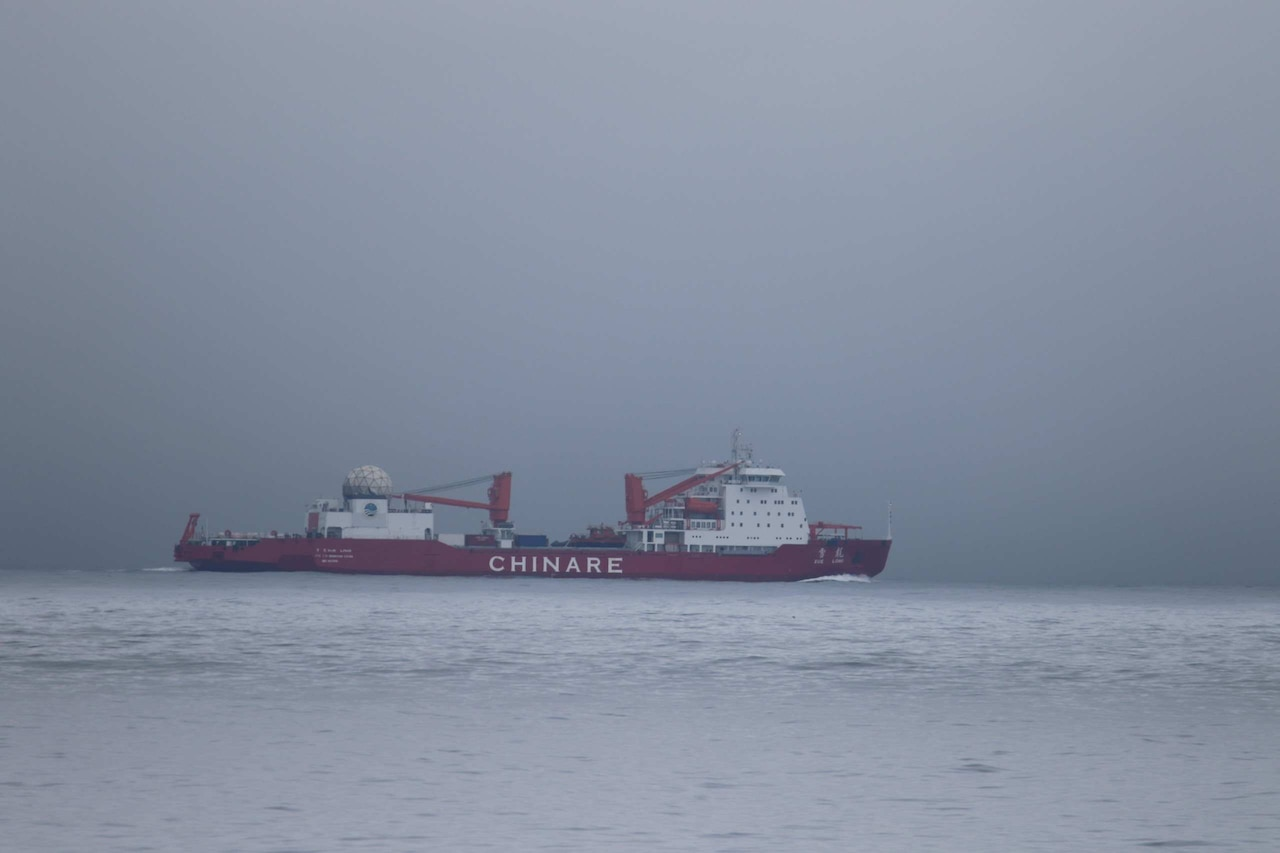
The United States is intensifying surveillance of Chinese research vessels operating in Arctic waters near Alaska, citing concerns about homeland security and maritime access. RCINET reported that four Chinese research ships worked off Alaska in 2026, down from five in 2025, traveling near the Aleutian Islands, through the Bering Strait, and as far north as the North Pole. Although the vessels stayed in international waters, U.S. officials say China did not provide customary advance diplomatic notification.
Officials worry the ships could map seabed resources in areas subject to U.S. sovereignty or jurisdiction, adding an economic dimension to security concerns. The Economic Times noted that U.S. military officials are monitoring the activity for potential implications to homeland security. The Bering Strait — the only maritime gateway between the Pacific and Arctic oceans — is particularly sensitive; at its narrowest point, it measures just 82 kilometers wide between Alaska and Russia.
China Eyes Arctic Resources and Trade Routes
China has positioned itself as a "near-Arctic state" and is promoting a "Polar Silk Road" linked to its Belt and Road strategy. This effort focuses on Arctic trade routes and natural resources. As sea ice retreats due to climate change, new shipping lanes are opening and intensifying competition among the United States, China, Russia, and other nations in the strategically important High North region.
Dual-Use Scientific Data Raises Military Concerns
U.S. officials assess whether the Chinese vessels' scientific missions could gather data with potential military applications. The Economic Times reported that officials view the data collection as potentially dual-use — information that could provide China with a military advantage or pose a security threat to the United States. The concern extends beyond simple research to strategic intelligence gathering in sensitive Arctic waters.
U.S. Mounts Whole-of-Government Arctic Defense
U.S. agencies are pursuing a coordinated whole-of-government approach to protect maritime access and domestic economic interests in Alaskan waters. US Coast Guard Surveillance Reports indicate expanded surveillance operations following Chinese activity in U.S. exclusive economic zones. The effort reflects growing concern that retreating ice and longer navigation seasons are increasing Arctic activity and creating new vulnerabilities that require sustained monitoring and coordinated response across federal agencies.
Sentiment
Mostly NegativeNEGATIVENEUTRALPOSITIVE
Publishers
15
Articles
67
Reach
82
A
AnonymousAuthor


