Everest Glacier Melt
Human Activity at Everest Base Camp Accelerates Khumbu Glacier Ice Melt
Anonymous
Trending on XSharp yen appreciation to 155 range on expectations of faster Bank of Japan rate hikes
Key Points
1
The study’s heat budget was calculated as 849,174 ± 179,774 megajoules for the 50-day spring 2023 season, translating to 2,492 ± 528 tonnes of ice and snow melt—figures reported with explicit uncertainty rather than only a single rounded estimate.
2
Researchers said their calculations potentially undercount the total warmth because they did not include other heat sources such as climbers’ body heat, helicopters used in operations, and yaks transporting items.
3
Beyond noting satellite-based faster warming, one report specifies how the warming rate was derived: using Landsat imagery from 1991 to 2023, temperatures at the base-camp area rose by an average of about 0.28°C per year—roughly twice the rate on the surrounding Khumbu Glacier.
4
The research team included senior Nepalese institutional involvement, naming Kim Lal Gautam as a senior surveyor at Nepal’s Department of Land (and describing the team as international).
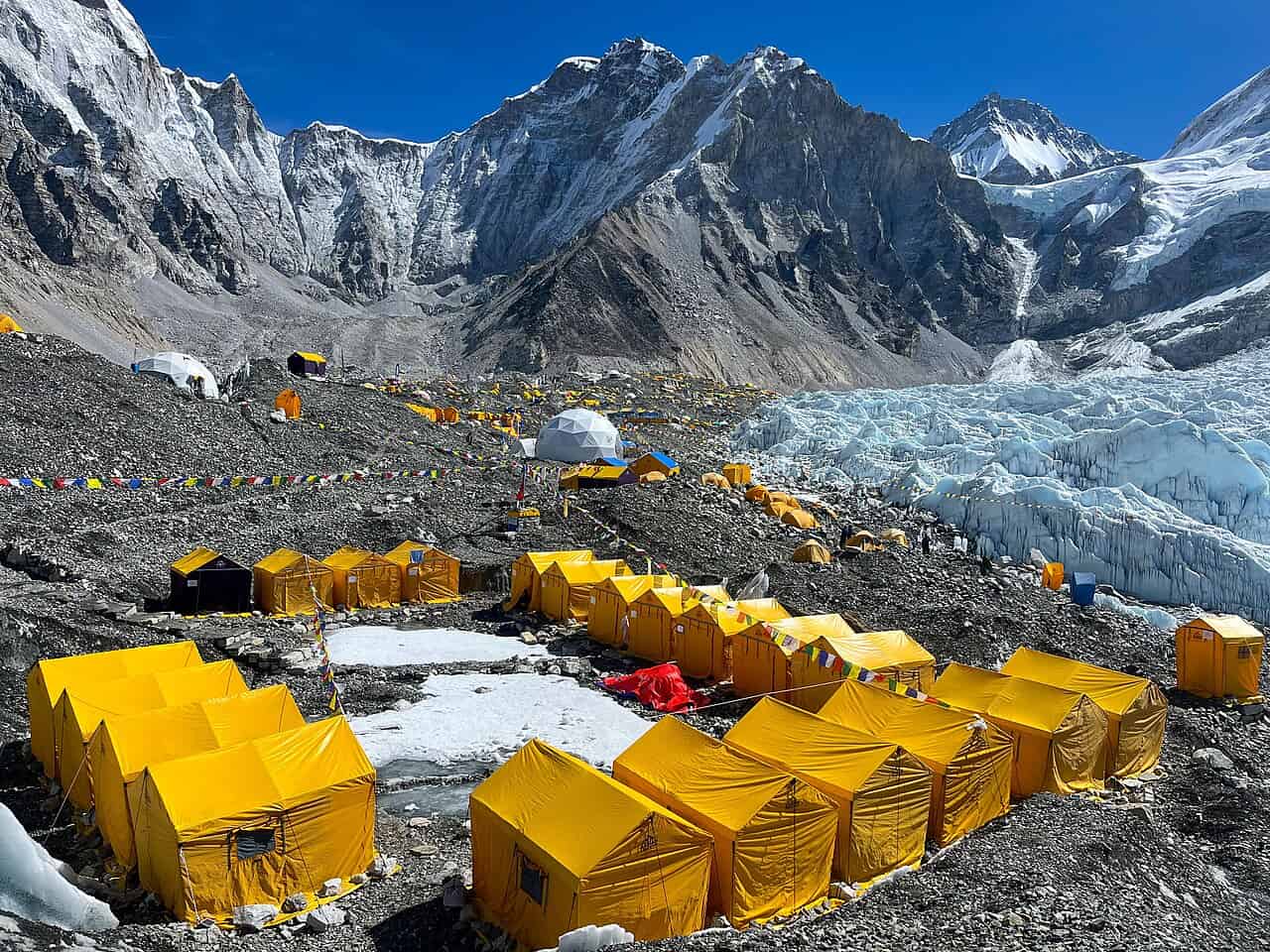
Human activity at Everest Base Camp is melting the Khumbu Glacier faster than climate change alone would predict, according to a new study published in Regional Environmental Change. Researchers found that fuel burned for cooking and heating, combined with roughly 6,000 liters of urine discharged daily onto the glacier, generated enough heat during spring 2023 to melt approximately 2,500 tonnes of ice and snow. The study highlights a preventable environmental toll that compounds the already severe damage from global warming.
The base camp area is warming about twice as fast as the surrounding glacier. ZME Science reports that urine alone could account for roughly 154 tonnes of seasonal melting, while researchers acknowledge their calculations likely undercount total heat because they excluded body warmth, helicopters, and yaks used in operations.
How Scientists Measured the Heat Damage
The research team tracked about 1,600 tents over a 50-day spring season in 2023, measuring fuel consumption and calculating total heat output. BD24Live reports that the team used liquefied petroleum gas, kerosene, and petrol consumption data to build their heat budget. The final calculation: 849,174 megajoules of energy, equivalent to melting 2,492 tonnes of ice—with a margin of error of ±528 tonnes.
Scientists used satellite imagery from 1991 to 2023 to measure temperature changes at the base camp. The data shows warming of roughly 0.28°C per year in the camp area—double the rate on the surrounding glacier. This faster warming suggests human operations create a localized heat island effect on top of global climate trends.
Urine Discharge Is a Major Culprit
At high altitude, climbers and guides generate about 6,000 liters of urine per day, which gets discharged directly onto the snow and ice. Daily Mail warns that this human waste contributes significantly to glacier melt. The study calculates that urine alone is responsible for roughly 154 tonnes of ice loss per season—a substantial portion of the total 2,500-tonne figure.
Researchers stress that their estimates are conservative. InShorts notes that the team did not include other heat sources like climbers' body heat, helicopter operations, or the warmth from yak transport. These omissions mean the true environmental impact at base camp is likely even larger than reported.
Climate Change Remains the Bigger Picture
The researchers emphasize that climate change is still the primary driver of long-term glacier loss across the Himalayas. Dexerto reports that the study identifies base camp operations as an additional, preventable pressure on an already fragile environment. By controlling fuel use and managing human waste, mountaineers could reduce their contribution to melt without affecting climbing operations significantly.
The research team included senior scientists from Nepal's Department of Land, demonstrating international collaboration on a local environmental crisis. The findings suggest that Everest Base Camp operators could implement waste management systems and fuel-efficiency measures to lower their impact on the Khumbu Glacier while broader climate action continues.
Sentiment
Mostly NegativeNEGATIVENEUTRALPOSITIVE
Publishers
14
Articles
10
Reach
24
Topics
A
AnonymousAuthor


