Gas Prices Surging
U.S. Gasoline Prices Surge Past $4.44 Amid Global Oil Pressures and Rising Demand
Anonymous
Key Points
1
Prices varied widely by station in Eugene: the cheapest reported price was $4.79 per gallon and the most expensive was $5.49, a 70-cent spread. Across Oregon, the gap was even larger, at $1.62 per gallon between the lowest and highest prices.
2
AAA said the national gasoline average was nearing this year’s high of $4.56 per gallon, while the all-time national record remains $5.01, set in June 2022. The Energy Information Administration also reported that gasoline demand, domestic supplies and production were all increasing.
3
The Great Lakes region experienced especially sharp increases: Michigan, Indiana, Illinois, Ohio and Wisconsin each rose by more than 30 cents per gallon in the latest week, according to GasBuddy analyst Patrick De Haan.
4
Baltimore’s average price was $4.17 per gallon, but local station prices ranged from $3.79 to $4.59. Nearby averages included $4.20 in Maryland, $4.38 in Washington, D.C., and $4.53 in York, Pennsylvania.
5
Rhode Island’s average regular gasoline price rose three cents to $4.40 per gallon, which AAA Northeast said was seven cents below the national average but $1.28 higher than a year earlier.
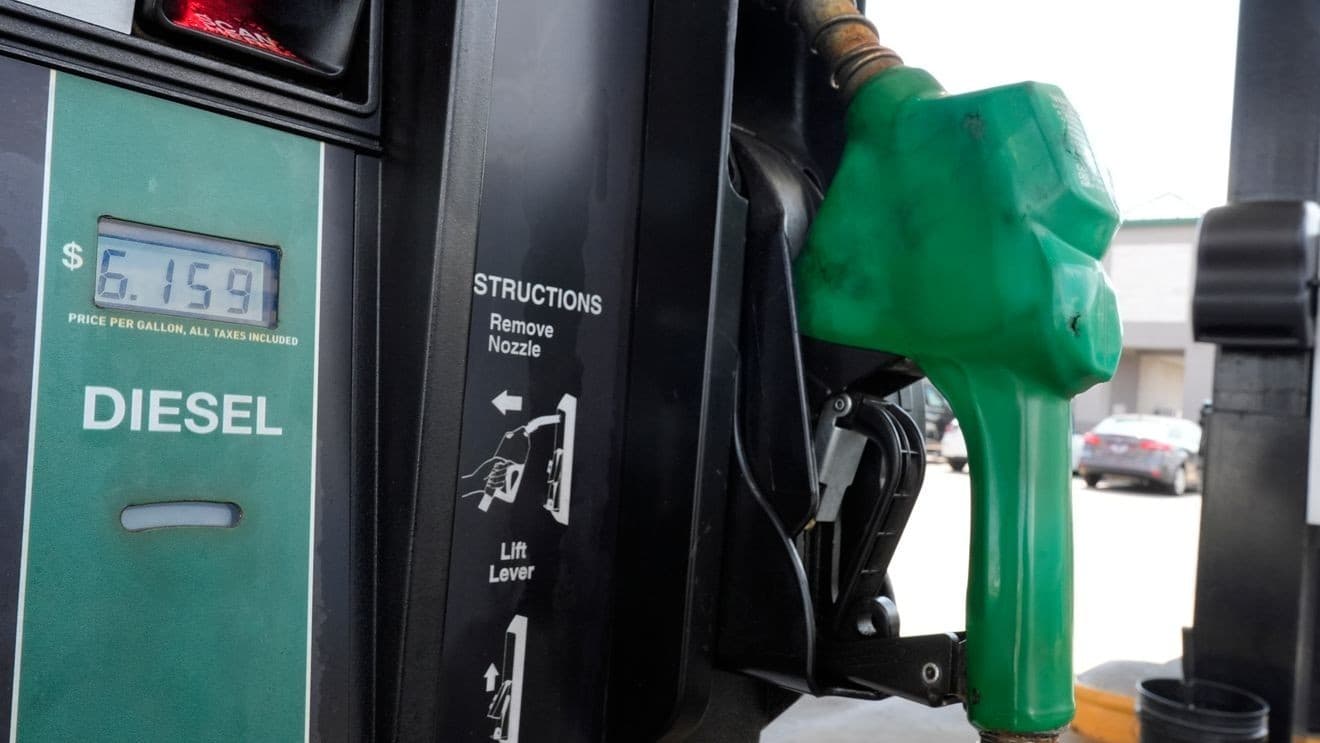
Gasoline prices climbed to $4.44 to $4.47 per gallon nationally, more than $1 above last year's level, as military strikes on Russian refineries and Middle East tensions squeezed global fuel supplies GasBuddy. Diesel prices surged even higher, hitting $6.49 to $6.50 per gallon—a 76% spike upday—driving up shipping costs for food and goods across America.
The national average sits just below this year's high of $4.56 per gallon, though it remains well under the all-time record of $5.01 set in June 2022. The Great Lakes region experienced the sharpest spikes, with Michigan, Indiana, Illinois, Ohio and Wisconsin each jumping over 30 cents in a single week GasBuddy.
Russian Strikes and Refinery Outages Drive Diesel Shortage
Ongoing military strikes targeting Russian oil refineries have crippled global diesel production. GasBuddy analyst Patrick De Haan noted that strikes tighten diesel supply worldwide, while regional refinery disruptions—especially ExxonMobil's Joliet plant shutdown—have amplified pressure on the Great Lakes. Sam Ori, an energy analyst at the University of Chicago, said the U.S. refining system operates with "so little margin for error" that single outages cause massive regional price spikes whig.
Diesel demand remains strong as supply tightens. The Energy Information Administration reported that gasoline demand, domestic supplies and production are all increasing, yet wholesale prices have not fallen. Experts warn that tight fuel inventories heading into autumn mean sudden supply shocks instantly feed through to pump prices.
Middle East Tensions Push Crude Oil Prices Higher
Geopolitical turmoil involving Iran, Israel and the United States has rattled crude markets. Houthi maritime attacks in the Strait of Hormuz and military conflict triggered on February 28, 2026 have created uncertainty about Middle East oil flows. These tensions combine with Russian refinery strikes to amplify crude prices globally wbur, pushing pump prices even higher.
President Trump criticized the impact on U.S. energy markets, writing on Truth Social: "Russia has unfortunately lost control of its Diesel Oil Industry due to its War with Ukraine... This ridiculous and never-ending War with Ukraine must be ended." The crude market's volatility now reflects both Middle Eastern risks and Eastern European supply disruptions.
Regional Price Spikes Reach $5.09 in Eugene
Price volatility varies sharply by location. Eugene, Oregon averaged $5.09 per gallon, up 4 cents in one week whig, while station prices there ranged from $4.79 to $5.49—a 70-cent spread. Across Oregon, the gap widened to $1.62 between lowest and highest prices. Illinois surged 41 cents to $4.88 whig, while Massachusetts hit $4.41, a 7-cent jump since Monday wbur.
The Northeast and Mid-Atlantic also felt pressure. Rhode Island rose 3 cents to $4.40 per gallon butlerradio, while Baltimore held steady at $4.17 but with station prices ranging $3.79 to $4.59. Pennsylvania's Butler area jumped 20 cents to $4.79 butlerradio. Arkansas rose 14.3 cents to $4.07 per gallon ktlo. Overall, GasBuddy reported 45 states saw weekly increases exceeding 3 cents per gallon.
High Fuel Costs Add $114 Billion to American Budgets
Soaring diesel and gasoline prices are draining consumer wallets. Since March 1, U.S. drivers have spent $70 billion more on gasoline and $44 billion more on diesel compared to the prior year—totaling $114 billion extra. Diesel spikes hit shipping and trucking hardest, driving up food and freight costs nationwide. Industries dependent on fuel-heavy logistics face mounting pressure as prices remain elevated.
Short-term relief may arrive if Great Lakes refineries restart, but the broader outlook hinges on Middle Eastern and Eastern European developments. Analysts caution that while panic over complete shortages is unwarranted—the U.S. holds over 4 billion gallons of distillate inventory—current price spikes reflect genuine refining logistics constraints and global crude risk premiums that will persist as long as geopolitical tensions remain high.
Sentiment
Mostly PositiveNEGATIVENEUTRALPOSITIVE
Publishers
30
Articles
8
Reach
38
A
AnonymousAuthor