Exoplanet Radio Signal Detected
Astronomers Detect First Unambiguous Radio Emissions From a Distant Exoplanet
Anonymous
Key Points
1
Beta Pictoris b orbits a young star about 1.75 times the Sun’s mass; the system has three planets, according to CNN.
2
Beta Pictoris b is less than 23 million years old and has been directly imaged with the Gemini Planet Imager since 2013, allowing astronomers to track its motion.
3
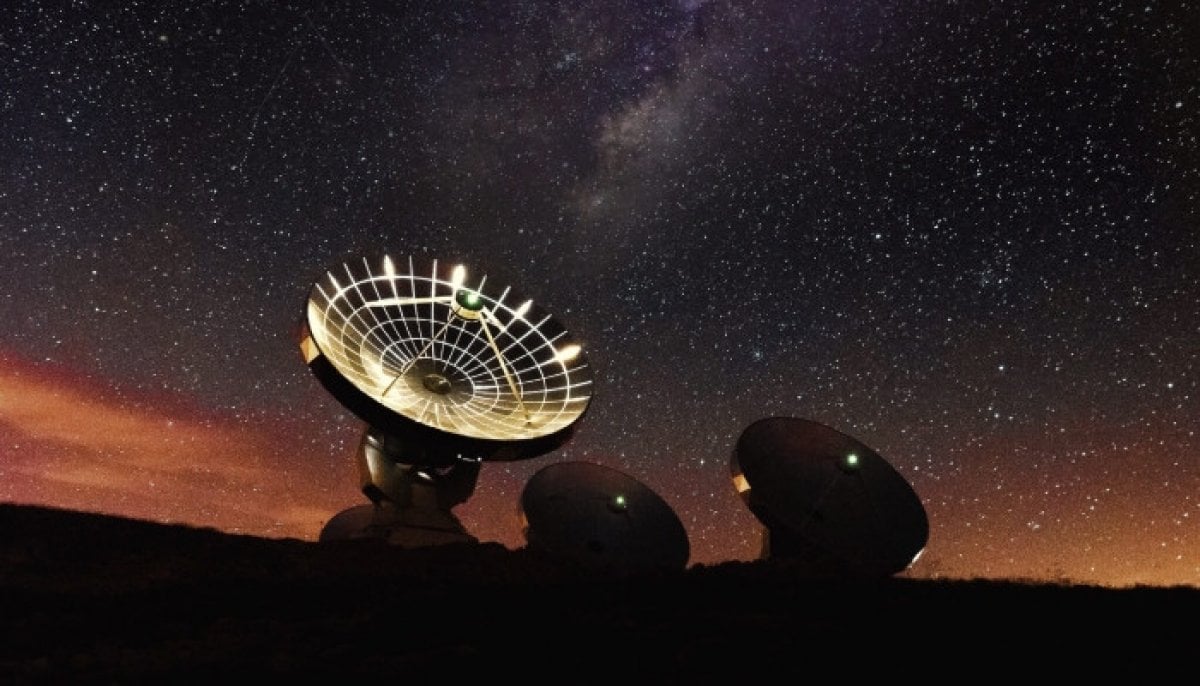
MeerKAT’s 64 antennas are located in South Africa’s Karoo Desert, in the Northern Cape’s Meerkat National Park.
4
The research team reported detecting the emissions on multiple occasions and at multiple frequencies, with Harvard astronomer Edo Berger saying, “It’s there every single time.”
Astronomers have detected radio waves directly from an exoplanet for the first time. Using South Africa's MeerKAT telescope, researchers picked up repeating auroral emissions from Beta Pictoris b, a gas giant 63 light-years away and 12 times Jupiter's mass, according to Times of India. The finding marks a major milestone in studying planets beyond our solar system.
The radio signal suggests Beta Pictoris b has a magnetic field at least 200 times stronger than Jupiter's. WAFF reports the emissions were detected on multiple occasions at multiple frequencies. Harvard astronomer Edo Berger confirmed: "It's there every single time." The research is awaiting peer review but could revolutionize how scientists study distant planets' atmospheres and interiors.
A Young Planet Producing Giant Magnetic Storms
Beta Pictoris b orbits a star just 1.75 times the Sun's mass in a system containing three planets, KPLC reports. The exoplanet itself is younger than 23 million years old. Since 2013, astronomers have directly imaged it using the Gemini Planet Imager, allowing them to track its motion across space. This young age may explain why its magnetic field is so exceptionally strong — younger planets retain more heat and generate more powerful magnetic activity.
MeerKAT's Powerful Antenna Array Detects the Signal
The breakthrough came from South Africa's MeerKAT radio telescope, which has 64 antennas spread across the Karoo Desert in the Northern Cape's Meerkat National Park. This configuration gives MeerKAT exceptional sensitivity to faint radio signals from space. The team detected Beta Pictoris b's emissions repeatedly, ruling out chance detections or interference from nearby stars.
Opening a New Window Into Distant Worlds
Until now, astronomers could only detect radio emissions from the stars that planets orbit, not from the planets themselves. SSBCrack notes this exoplanet detection is a first-ever achievement. Radio signals reveal information about magnetic fields, which shape a planet's atmosphere and protect it from stellar radiation. Future observations of Beta Pictoris b's unusually strong magnetic field could unlock secrets about how giant planets form and evolve.
Not a Sign of Alien Life
The radio emissions come from natural auroral activity — similar to Earth's northern lights — not from any technological source. Researchers emphasized the signal contains no evidence of extraterrestrial intelligence. The discovery highlights how advances in radio astronomy let us study planets light-years away in entirely new ways, adding powerful tools to the search for habitable worlds and understanding planetary evolution.
Sentiment
Mostly PositiveNEGATIVENEUTRALPOSITIVE
Publishers
30
Articles
39
Reach
69
Topics
A
AnonymousAuthor


