First Reborn Planet Discovered
Astronomers discover first possible reborn planet orbiting a white dwarf star.
Anonymous
Key Points
1
Lead researcher Jamie Williams defined second-generation planets as “worlds that form out of the material a star casts off as it dies,” and said finding one around a white dwarf was “completely unexpected.”
2
The authors note that possible reborn planets had previously been identified around pulsars, but not around white dwarfs; white dwarfs are more common than pulsars, making the new candidate especially significant.
3
The article says niobium produced as a star dies had not previously been found in a white dwarf, underscoring how unusual HS 0209+0832’s chemical signature is.
4
The TESS signal repeats every 4.4 days; the researchers say this timing could be explained by a Jupiter-sized planet.
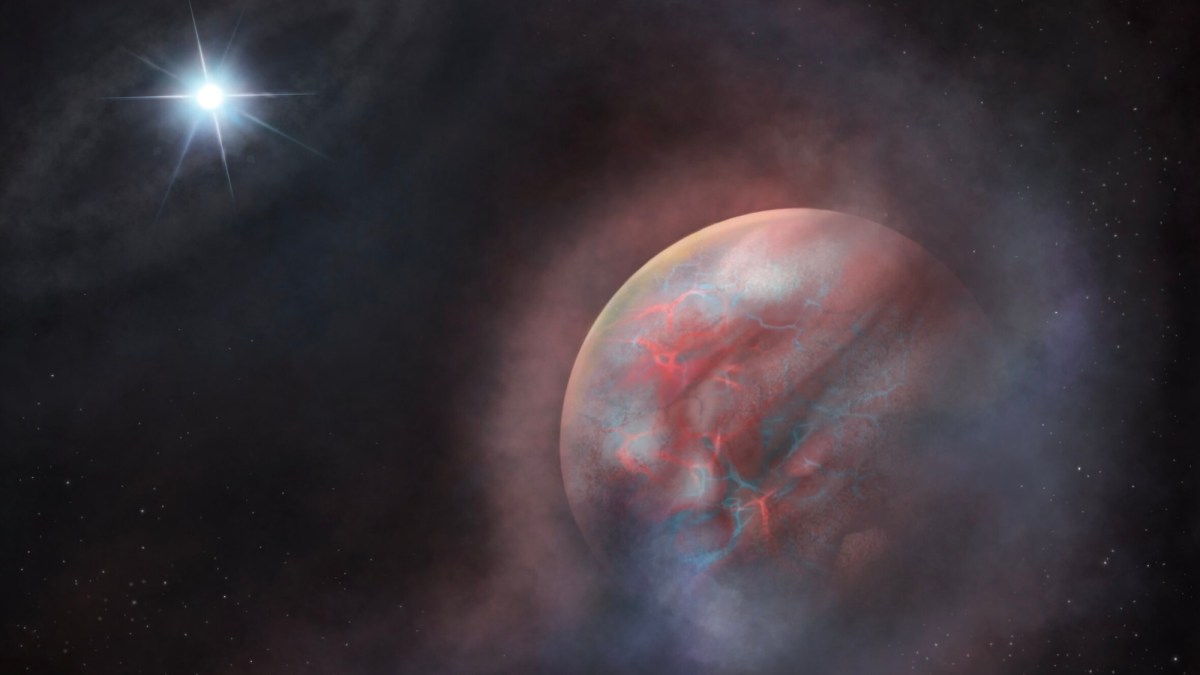
Astronomers have detected the first evidence of a planet born from a dead star's remains. Located 270 light-years away, the white dwarf HS 0209+0832 appears to host a giant planet formed from stellar debris — a discovery that upends what scientists thought possible Pop Science. Researcher Jamie Williams called it "completely unexpected," adding that these "second-generation" worlds form "out of the material a star casts off as it dies" Pop Science.
The find is extraordinary because white dwarfs are far more common than pulsars, where similar planets had been spotted before WKTV. If confirmed, this planet could be the first of many hidden in stellar graveyards across the galaxy Yahoo Tech.
An Impossible Chemical Signature in a White Dwarf
The dead star's chemical makeup revealed the smoking gun. HS 0209+0832 contains abundant niobium — an element forged only when a star dies WKTV. Scientists had never detected niobium in a white dwarf before, making this signature completely unique Pop Science. The presence of this rare material suggests the star recently pulled it from a nearby object Head Topics.
A Repeating Signal Points to a Giant World
NASA's TESS telescope detected a recurring signal from the white dwarf every 4.4 days WKTV. Researchers say this timing matches what a Jupiter-sized planet would produce as it orbits the dead star Pop Science. The consistency of the signal strengthens the case that a real object — not random noise — is circling HS 0209+0832 Yahoo Tech.
What This Discovery Means for Dead Stars Everywhere
Until now, only a handful of planets had been found around pulsars — a rarer type of stellar remnant WKTV. White dwarfs outnumber pulsars by far, so if planets around them prove common, astronomers may have been missing an entire population Pop Science. This discovery suggests that planetary rebirth may be the rule, not the exception, in the universe's vast graveyards of dead stars.
Sentiment
Mostly NegativeNEGATIVENEUTRALPOSITIVE
Publishers
14
Articles
26
Reach
40
A
AnonymousAuthor


