Fashion Meets Ocean Conservation
Stella McCartney Uses Paris Fashion Week to Spotlight Ocean Threats and Sustainable Materials
Anonymous
Key Points
1
McCartney said there was no wool in the Spring/Summer 2027 collection and highlighted Brewed Protein, a fermented material developed with Japanese biotech company Spiber as an alternative to wool and cashmere. She said her view on wool is nuanced, but that sourcing must be traceable and responsible.
2
The show’s staging included an opening voiceover from David Attenborough warning that “we have drained the life from our ocean”; a separate video invitation came from oceanographer Sylvia Earle.
3
Specific materials in the collection included recycled cotton denim and organic cotton, as well as a black pigment grown from algae rather than refined from oil.
4
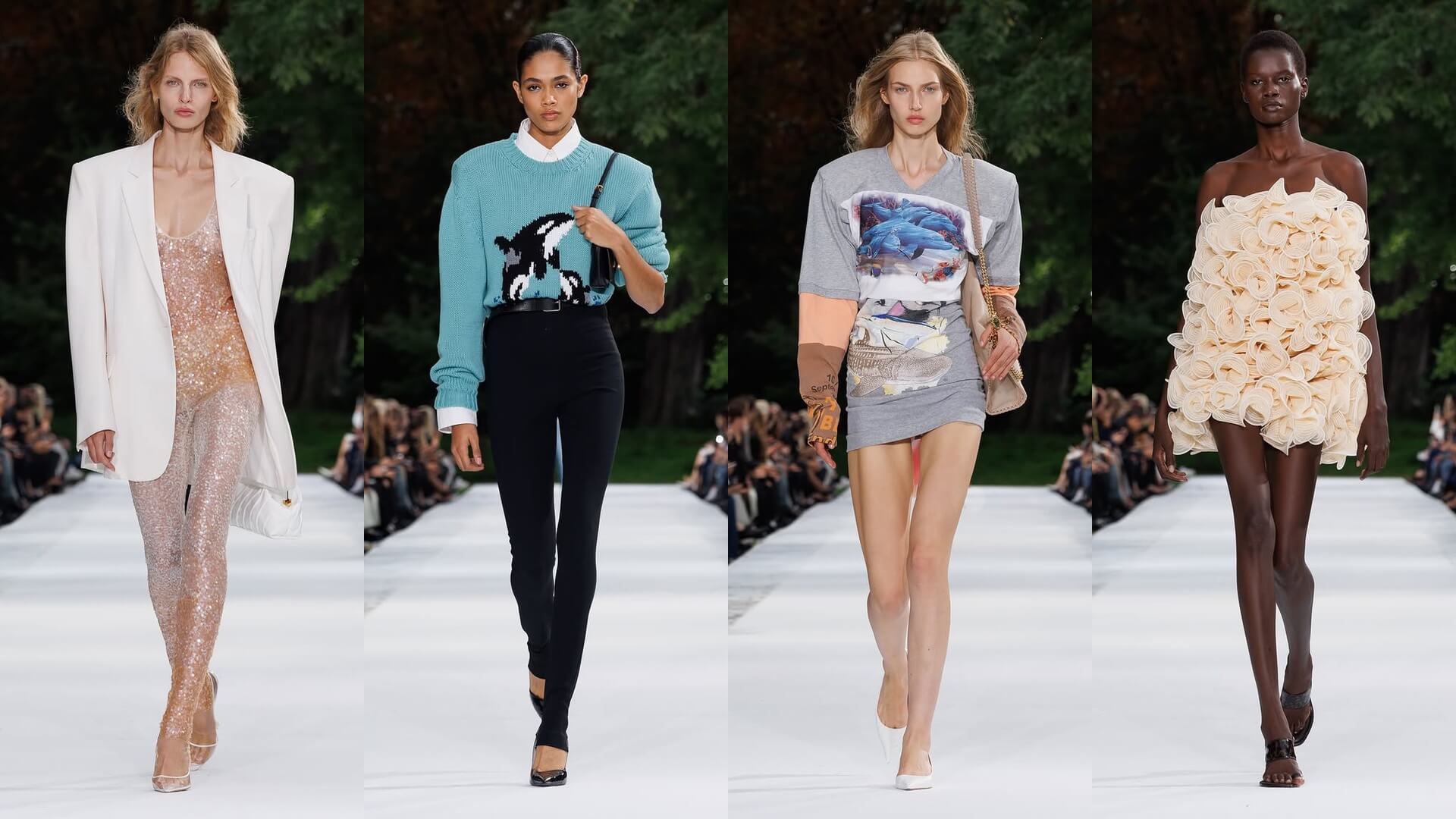
Several looks featured killer whales and sharks as well as dolphins, and models carried transparent handbags displaying sea creatures such as starfish.
Stella McCartney used her Paris Fashion Week runway to sound an alarm about ocean threats. Her Spring/Summer 2027 collection featured dolphins, sharks, and killer whales — not as decoration, but as a call to action. McCartney's message was blunt: "sea life, not seafood." Fashion Network reported that the show spotlighted overfishing and climate change as twin dangers to marine ecosystems.
The collection contained zero animal products — no wool, leather, fur, or feathers. Instead, McCartney showcased cutting-edge alternatives like Brewed Protein, a fermented material made with Japanese biotech company Spiber. Recycled cotton, organic cotton, and even algae-based black pigment replaced conventional sources. The designer called on major luxury brands to help scale these sustainable options across the industry, according to PETA UK.
Opening Act: A Warning From Attenborough
The show opened with a voiceover from David Attenborough. His words cut through the glitz of fashion week: "We have drained the life from our ocean." The staging reinforced the environmental theme throughout. Oceanographer Sylvia Earle appeared in a separate video invitation, lending scientific weight to McCartney's message about what fishing practices do to marine life beyond the intended catch.
Ocean-Inspired Design Meets Innovation
Wave motifs and bubble hems dominated the collection. Colors mimicked the ocean — teals, blues, and grays. But the designs went deeper. Models carried transparent handbags that displayed sea creatures like starfish inside. Killer whales and sharks appeared on fabrics alongside dolphins. Bilyonaryo noted the collection featured floaty fabrics that suggested movement and water. Every visual choice reinforced one idea: the ocean is alive and worth protecting.
Animal-Free Materials as the Real Innovation
McCartney's animal-free stance is not new — she has rejected conventional animal materials for years. What's different now is the technology backing it up. Brewed Protein represents a leap forward. The fermented material replicates wool and cashmere without sheep or goats. McCartney acknowledged her views on wool are nuanced but insisted sourcing must be traceable and responsible. Algae-based pigments replaced oil-derived black dyes, cutting ties to fossil fuels.
These innovations matter because luxury fashion still dominates global material use. When a designer of McCartney's scale adopts alternatives, she creates demand. She also creates proof that premium quality does not require animal suffering or environmental destruction. Her call for other luxury brands to follow sends a message: scaling sustainable options is possible — and necessary.
Sentiment
Mostly NegativeNEGATIVENEUTRALPOSITIVE
Publishers
12
Articles
162
Reach
174
A
AnonymousAuthor