Ceuta Migrant Camp Cleared
Spanish police clear Ceuta's largest migrant camp citing safety and rising tensions.
Anonymous
Key Points
1
The operation involved riot police brought in from Seville, Granada, Malaga and other parts of Spain, alongside local and outside prevention, reaction and intelligence units.
2
Police sealed the camp’s access points to prevent clashes and people fleeing into the hills; a drone monitored the operation, and two BMR armoured vehicles and a Vamtac S3 off-road vehicle were deployed.
3
Officers went tent to tent to tell people to leave, with an interpreter explaining the relocation in Arabic. Women and children were included in the first phase, although most people affected were men.
4
The deployment began shortly before 8 a.m.; local police had announced road closures between Benítez and Benzú from around 7:30 a.m., and the first bus to the Tarajal reception centre left shortly before 9 a.m.
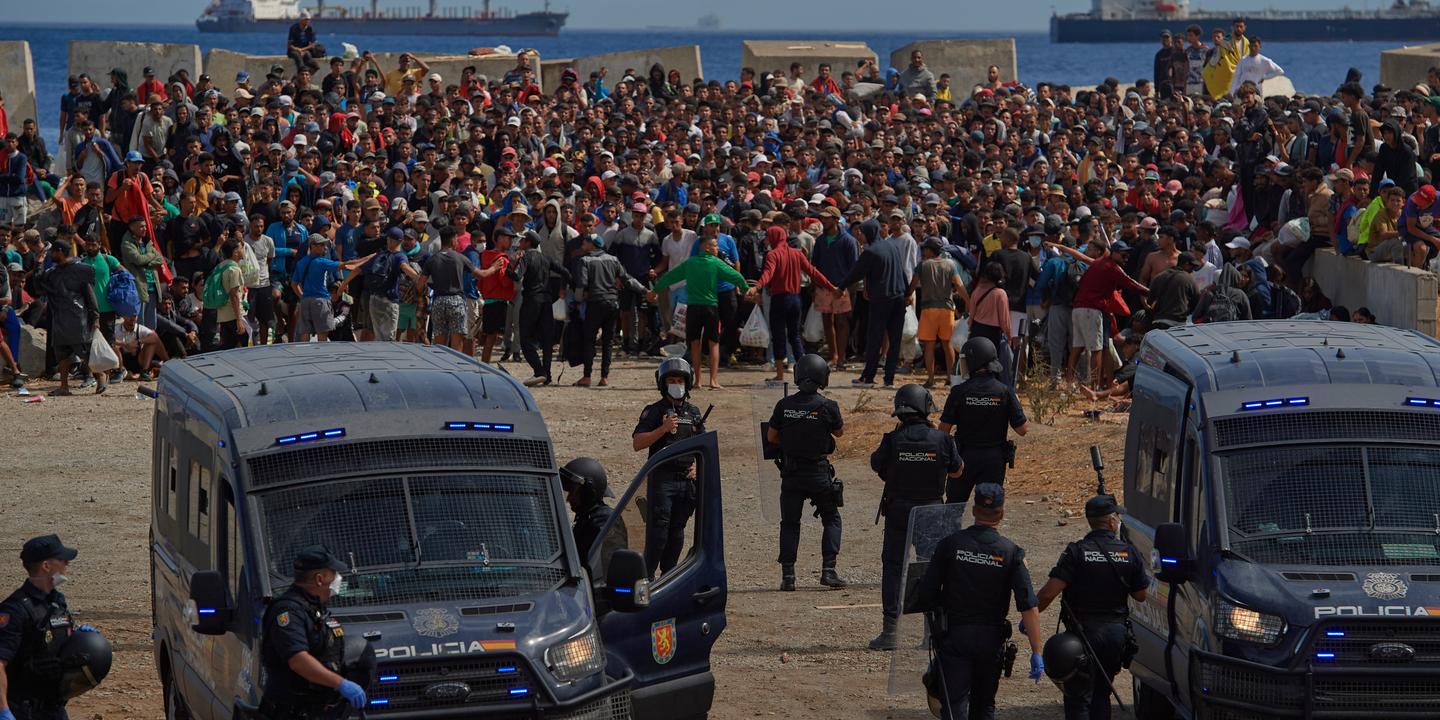
Spanish police dismantled Ceuta's largest migrant camp on Trampolín beach on October 10, moving about 3,000 residents by bus to a reception center. Albeu reported the operation targeted unsafe conditions, contaminated coastal waters, and rising violence after the migrants had lived in the makeshift camp for nearly two months.
The clearance comes as King Felipe VI and Queen Letizia prepare to visit the Spanish enclave on October 13–14. Le Monde noted the timing reflects longstanding tensions in Ceuta, where at least 10,000 migrants remain among a local population of about 80,000 after more than 72,000 crossed from Morocco in late July.
Riot Police Deploy Heavy Equipment to Clear Beach
Spanish authorities mobilized riot police from Seville, Granada, Malaga and other regions alongside local units. The Olive Press reported that officers sealed camp access points, deployed two BMR armored vehicles and a Vamtac S3 off-road vehicle, and used a drone to monitor the operation to prevent clashes and escapes into nearby hills.
The operation began shortly before 8 a.m. Local police announced road closures between Benítez and Benzú around 7:30 a.m., and the first bus departed for the Tarajal reception center before 9 a.m., according to Albeu.
Officers Move Residents Tent to Tent With Arabic Translators
Police went from tent to tent telling people to leave, with interpreters explaining the relocation in Arabic. IJR reported that women and children were prioritized in the first phase, though most affected residents were men. Officers then transported people to the Tarajal reception center for identification and processing.
Massive Influx Strains Ceuta's Resources and Residents
More than 72,000 migrants crossed from Morocco into Ceuta in late July, though most later departed. Albeu reported that at least 10,000 remain in the enclave, straining local services and housing in a city of about 80,000 people. Residents held demonstrations against the migrants' presence shortly before the clearance operation began.
After processing, relocated migrants may move to temporary accommodation or return to Morocco. The operation addresses long-standing disputes between Spain and Morocco over the enclave's status and migration pressures, with the royal visit adding urgency to clearing visible camps from public spaces.
Sentiment
Mostly NegativeNEGATIVENEUTRALPOSITIVE
Publishers
24
Articles
73
Reach
97
A
AnonymousAuthor


