Starlight Capture Milestone
NASA's Roman Space Telescope Successfully Captures Its First Starlight in Orbit
Anonymous
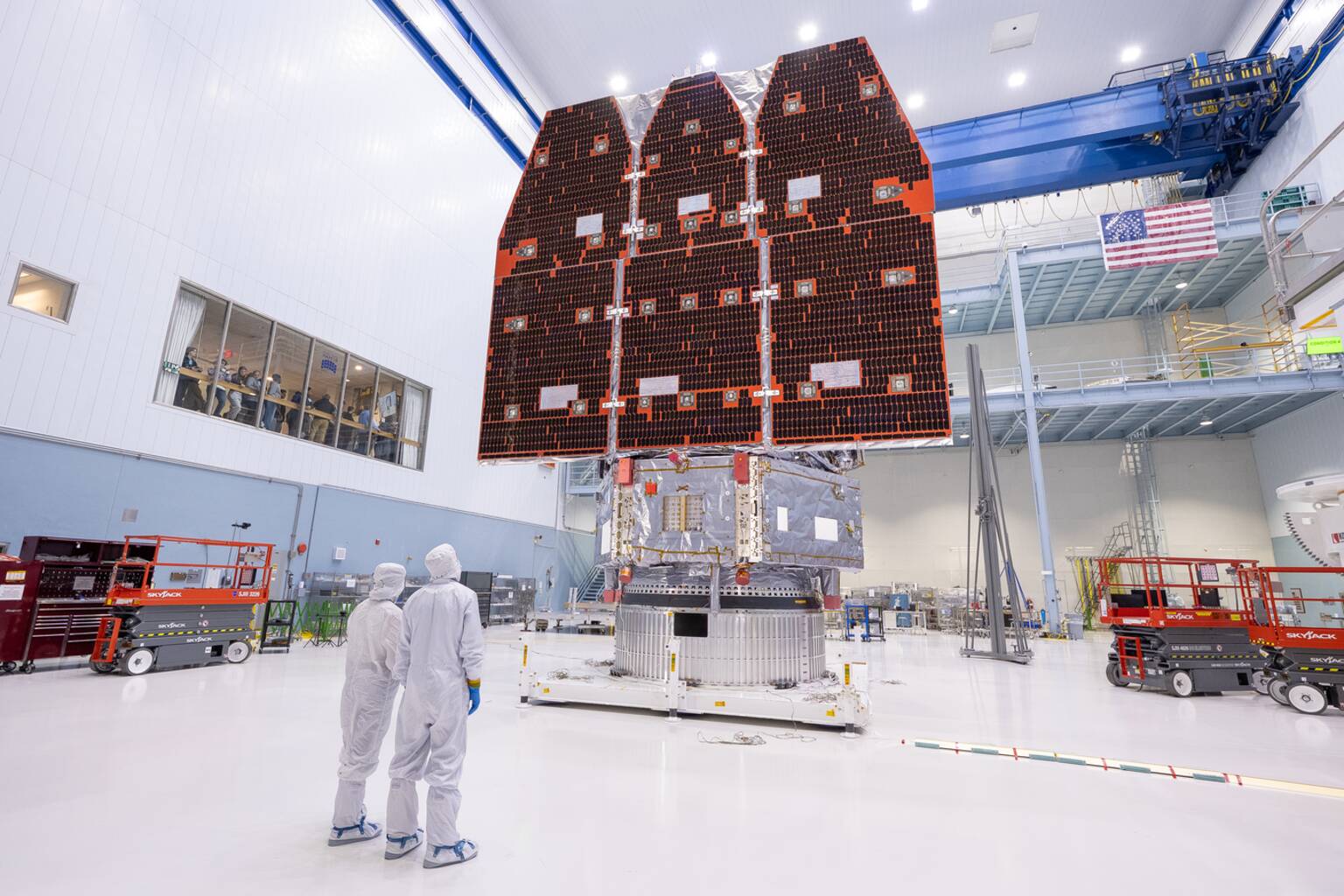
NASA’s Nancy Grace Roman Space Telescope’s Coronagraph Instrument captured its first focused images of starlight on September 22 and 27, a milestone in testing technology designed to block a star’s glare so nearby, faint planets and disks can be observed. The first image showed a star in the Large Magellanic Cloud; the follow-up was sharper after the detectors were cooled. These were commissioning tests of the instrument and its optical systems, not detections of exoplanets. Before the observations, Roman’s fine-guidance system demonstrated that it could keep the telescope remarkably steady during long runs, an essential requirement for suppressing starlight. The coronagraph and the telescope’s Wide Field Instrument will undergo further calibration and increasingly complex tests as NASA prepares the observatory for future science observations.
Key Points
1
Roman’s first in-space coronagraph images also tested deformable-mirror wavefront technology, which is central to future efforts to directly image exoplanets; the article notes that NASA’s planned Habitable Worlds Observatory is expected to build on what Roman’s coronagraph demonstrates.
2
NASA’s next named guidance milestone is validation of spectral guiding, which the report said was expected within weeks.
3
The September 22 image had noise because the detectors were kept warmer than their eventual operating temperature to prevent contamination; for the September 27 observation, the team cooled them to improve sensitivity.
4
NASA anticipates releasing Roman’s first images by early 2027, according to Caltech’s account of the commissioning plan.
Sentiment
Mostly PositiveNEGATIVENEUTRALPOSITIVE
Publishers
8
Articles
1
Reach
9
A
AnonymousAuthor


