AI for Audio Wearables
Qualcomm Unveils New Platform to Bring On-Device AI Functions to Audio Wearables
Anonymous
Key Points
1
The platform includes Qualcomm’s dedicated ultra-low-power eNPU, which can provide up to 128 GOPS of additional AI processing when handling a task.
2
Its XPAN connectivity combines Bluetooth with micro-power Wi-Fi to extend connections beyond a host device; it prioritizes Bluetooth during calls and voice-assistant use to help avoid delays.
3
Qualcomm’s Snapdragon Sound Apps C Agents are intended to connect wearables with AI assistants, online services and content, with cloud updates potentially adding capabilities after devices are sold.
4
The Elite Gen 2 succeeds the Snapdragon S7 Gen 1, which launched in standard and Pro tiers nearly three years earlier and focused more on connectivity and low audio latency than AI interactions.
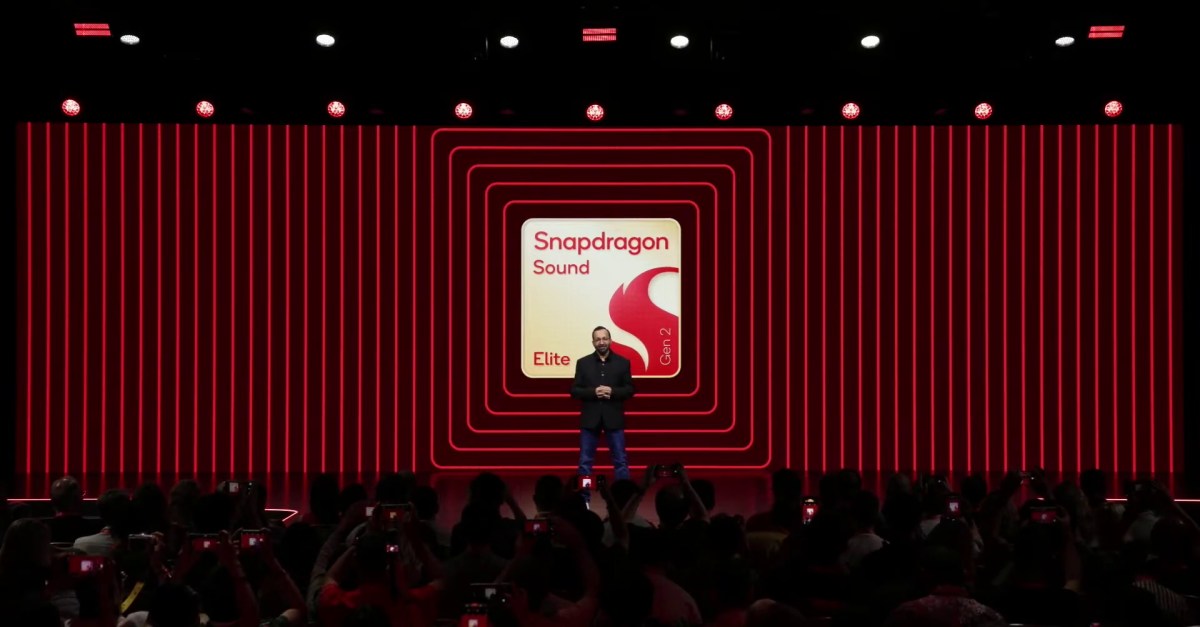
Qualcomm unveiled Snapdragon Sound Elite Gen 2, a new AI platform for earbuds, headphones, and audio glasses that brings artificial intelligence directly to wearables Channel News. The chip doubles AI processing power to 128 GOPS, cuts power use by 40%, and shrinks down 30% compared to its predecessor. It adds Wi-Fi 6E connectivity so earbuds can access cloud services and AI assistants without needing a nearby smartphone.
The platform enables features like real-time translation, active noise cancellation, and adaptive listening through on-device AI agents The Verge. Qualcomm research shows 70% of users want advanced AI in wearables. The company is providing reference designs to manufacturers, though camera-equipped earbuds remain early concepts rather than confirmed products.
Inside the Elite Gen 2's AI Engine
The platform packs an ultra-low-power eNPU—a dedicated chip for AI tasks—that delivers up to 128 GOPS of processing GSM Arena. That's double the power of the older Snapdragon S7 Gen 1. Two Arm Cortex-M55 cores and three audio digital signal processors handle everything from noise cancellation to voice clarity. The smaller footprint shrinks from 44.2 square millimeters to 31.2, fitting more power into tinier earbuds.
Power efficiency jumped 40% versus the previous generation Gizmo China. The chip prioritizes Bluetooth during calls and voice commands to avoid delays, while using micro-power Wi-Fi 6E for cloud access and music streaming. This hybrid approach lets earbuds handle heavy AI work without draining batteries.
Breaking Free From Your Smartphone
The Elite Gen 2's integrated Wi-Fi 6E means earbuds can connect directly to home networks and cloud services. Users no longer need a smartphone nearby to access AI assistants or stream lossless audio at 192kHz The Verge. The platform includes Snapdragon Sound Apps & Agents that connect wearables with AI services and online content, with cloud updates potentially adding new features after purchase.
This shift unlocks new possibilities: real-time translation, contextual assistance based on what you're hearing, and smarter voice capture. Ziad Asghar, Qualcomm's senior vice president, said users increasingly expect to interact with AI through conversation rather than screens. Natural, hands-free interaction through earbuds could become the primary way people engage with artificial intelligence.
Camera Earbuds and Early Skepticism
Qualcomm is targeting camera-equipped earbuds that could use visual context in AI responses GSM Arena. Imagine AI that sees what you're looking at and answers questions in real time. However, these remain early concepts—the company has not announced specific products yet. Manufacturers will use Qualcomm's reference designs and developer tools to bring their own devices to market.
Privacy concerns loom over always-on wearable cameras. Tech outlets raised questions about whether consumers actually want AI-heavy earbuds and whether continuous visual monitoring in earwear will face social pushback. Real-world battery life and actual performance will depend entirely on how manufacturers design finished products, not just chip capabilities.
Sentiment
Mostly PositiveNEGATIVENEUTRALPOSITIVE
Publishers
42
Articles
38
Reach
80
A
AnonymousAuthor