Nighttime Light Linked to Heart Changes in Study
Nighttime Light Linked to Heart Changes in Study
Anonymous
Key Points
1
The study population had a mean age of 61.1 years, and 56.6% of participants were women. Researchers defined each person’s nighttime as their least-active five-hour period and classified exposure to light above 3 lux as none, low, intermediate or high.
2
The cardiac changes were measured a median of 3.1 years after the seven-day light-monitoring period, while cardiovascular outcomes were assessed in a larger group of more than 70,000 participants over approximately 7.9 to 9.5 years.
3
The study found that high nighttime-light exposure was associated with 2.7% lower global circumferential strain, 2.9% lower radial strain and 2.8% lower longitudinal strain in the left ventricle, as well as 0.9% to 2.3% larger right-ventricular and left-atrial volumes and a 1.1% lower left-atrial ejection fraction.
4
Lead author Lu Qi described the findings as cardiac “remodeling,” saying it is the body’s adaptation to chronic stress or injury but that it “ultimately weakens the heart and can lead to heart failure.” The measured changes were small and did not constitute diagnosable heart disease.
5
Qi estimated that shorter sleep associated with nighttime-light exposure could explain 24% to 49% of the observed effect, with the remaining association potentially involving disrupted stress hormones and other biological processes.
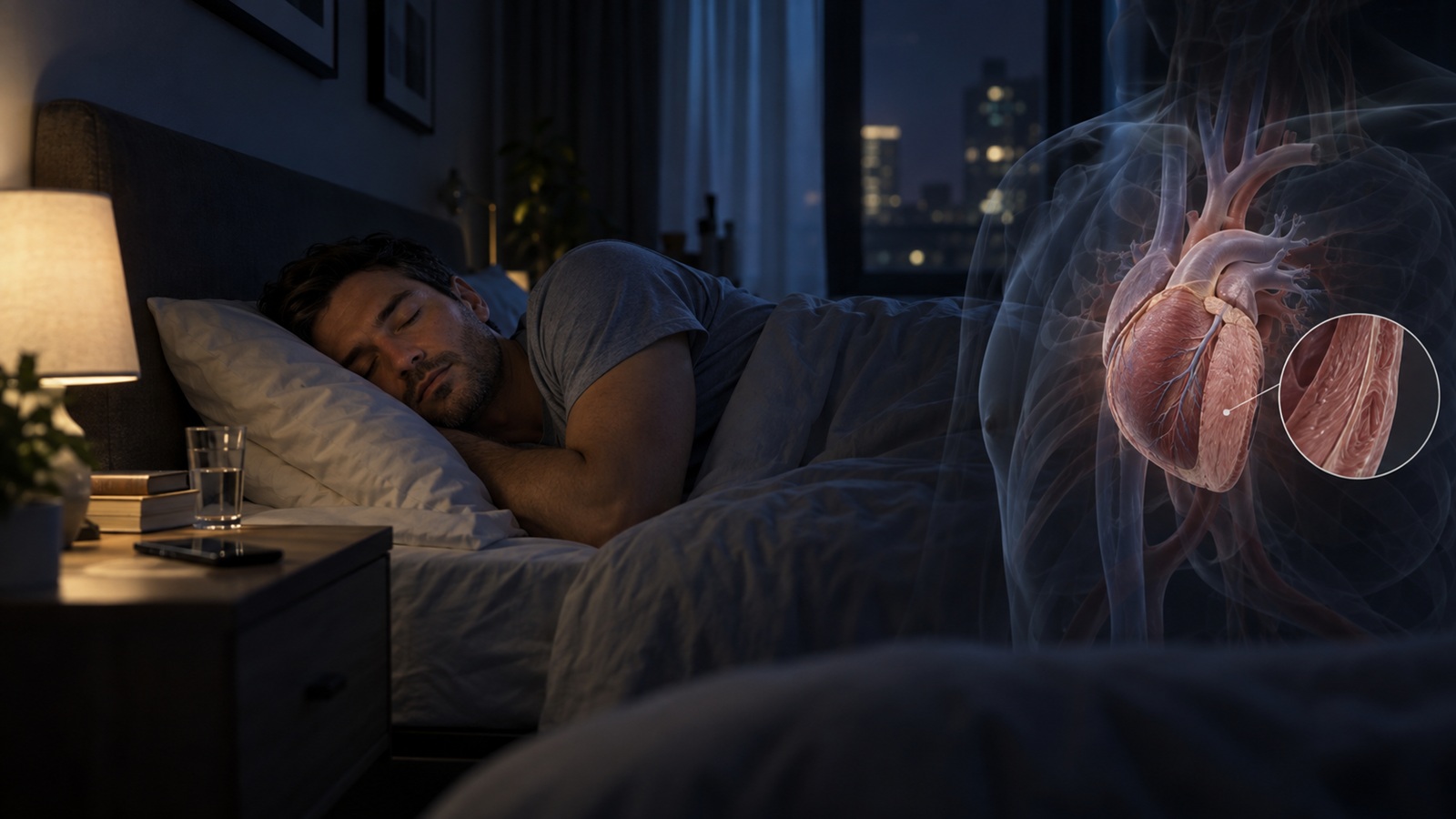
Sleeping in bright light may harm your heart, according to a major new study from Tulane University. Researchers analyzed 11,071 adults who wore wrist sensors tracking light exposure at night. Those exposed to the most light developed thicker heart walls, weaker heart contractions, and a 2.4% increase in left-ventricular mass compared to those in darkness.
The cardiac changes appeared within 3.1 years, and over longer follow-up periods (7.9 to 9.5 years), high nighttime-light exposure was linked to increased risks of heart failure, atrial fibrillation, stroke, and heart attack. Lead researcher Lu Qi described these changes as cardiac "remodeling"—the heart's adaptation to stress that ultimately weakens it. The findings don't prove light causes heart damage, but suggest disrupted sleep and stress hormones may play a role.
How Light Damages Heart Structure
The study used cardiac MRI scans to measure physical changes in participants' hearts. Those with the highest nighttime-light exposure showed thicker heart walls and reduced contraction efficiency. The left ventricle—the heart's main pumping chamber—showed 2.7% lower circumferential strain and 2.9% lower radial strain, meaning it squeezed less effectively.
The right ventricle and left atrium also enlarged by 0.9% to 2.3%, and the left atrium's ejection fraction dropped 1.1%. Qi explained these are signs of cardiac remodeling—the heart adapting to chronic injury. Though the changes were small and didn't constitute diagnosable disease, they signal potential future problems.
Sleep Loss May Explain Half the Risk
Researchers identified sleep disruption as a major culprit. Qi estimated that shorter sleep linked to nighttime light could explain 24% to 49% of the harmful cardiac effects. When light enters your eyes during sleep, your brain stays alert and prevents deep rest.
The remaining association likely involves stress hormones and other biological processes disrupted by nighttime light. The study participants had a mean age of 61.1 years, with 56.6% women. Researchers defined each person's nighttime as their least-active five-hour period and tracked light above 3 lux (a measure of brightness).
Simple Changes to Protect Your Heart at Night
Experts recommend blackout curtains as the most effective defense against nighttime light. Dimmer, warmer bedroom lighting also helps signal your body it's time to sleep. Cover or turn off electronics—phone screens, alarm clocks, and TV lights—that emit light during sleep hours.
Even weak light exposure increases cardiovascular risk according to Tulane researchers. The study observed over 70,000 participants tracking cardiovascular outcomes like heart attacks and stroke. While the findings are observational and don't prove causation, the link between darkness and heart health is strong enough to warrant bedroom changes.
Sentiment
Mostly NegativeNEGATIVENEUTRALPOSITIVE
Publishers
13
Articles
4
Reach
17
Topics
A
AnonymousAuthor


