KOSPI Semiconductor Rally
South Korea KOSPI Reclaims 7,000 Milestone Led by Semiconductor and Nuclear Stocks
Anonymous
Key Points
1
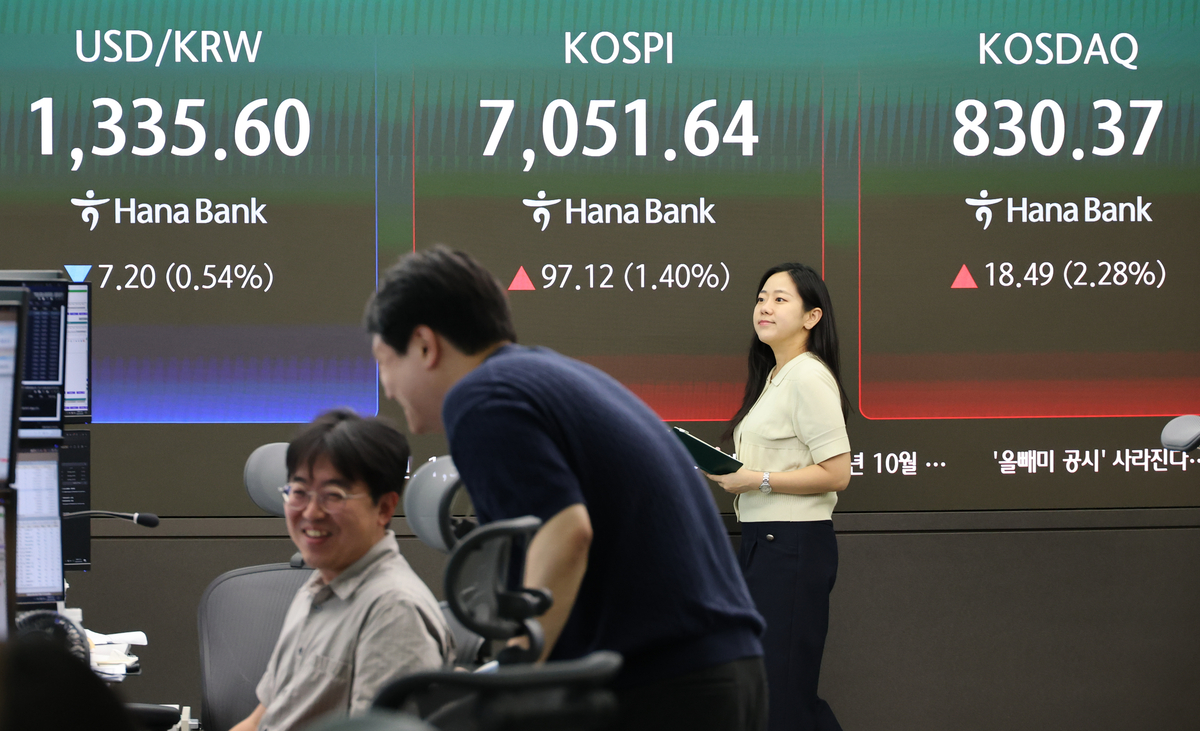
The KOSPI’s rebound was accompanied by a stronger South Korean won, which moved further into the 1,340-per-dollar range, while the KOSDAQ opened 0.35% higher at 825.03.
2
The September 7 rally was unusually broad across market participants but sharply divided by investor type: foreign investors bought about 2.96 trillion won and institutions about 3.42 trillion won, while retail investors sold roughly 7.96 trillion won.
3
Despite the KOSPI trading above 7,100 during the session, declining shares outnumbered advancing shares, with 503 stocks down and 360 up, suggesting the advance remained concentrated rather than a broad-based market rally.
4
The nuclear-investment discussions reportedly involve allocating $120 billion from a planned $200 billion U.S. investment package toward eight reactors, excluding a separate $150 billion commitment for shipbuilding.
5
Goldman Sachs Asia-Pacific equity strategist Timothy Moe said investors are underestimating the duration of the current earnings cycle and maintained a KOSPI target of 12,000 points.
South Korea's KOSPI index reclaimed the 7,000 level on September 8 for the first time in 15 trading sessions, driven by a sharp rally in semiconductor stocks and renewed optimism around artificial-intelligence memory demand Securities Daily. Samsung Electronics and SK hynix led the surge, buoyed by reports of severe supply tightness as memory inventories dropped below 10 days in Q3 2026. Foreign and institutional investors provided strong buying support, purchasing roughly 2.96 trillion won and 3.42 trillion won respectively, even as retail investors dumped nearly 7.96 trillion won of stock.
The index peaked above 7,170 intraday before retreating, raising questions about whether the gains can hold beyond the major chipmakers BloomingBit. A separate surge in nuclear-related shares gained momentum after reports emerged that South Korea and the United States are discussing construction of as many as eight large-scale U.S. nuclear plants, with $120 billion earmarked from a planned $200 billion U.S. investment package. The rapid rebound has also encouraged leveraged retail bets, exposing individual investors to margin calls if semiconductor stocks reverse.
Chip Demand Lifts Index But Rally Stays Narrow
The KOSPI opened up 0.72% at 7,045.79 on September 8, crossing the 7,000 threshold for the first time since late July Securities Daily. SK Hynix and Samsung Electronics led the advance on optimism that global artificial-intelligence buildout will drive sustained demand for High Bandwidth Memory chips. However, the rally showed its limits: declining shares outnumbered advancing ones 503 to 360, suggesting gains remained concentrated in a handful of stocks rather than reflecting broad market strength.
The KOSDAQ composite index opened 0.35% higher at 825.03, and the Korean won strengthened into the 1,336–1,340 per dollar range BloomingBit. Goldman Sachs Asia-Pacific strategist Timothy Moe maintained a KOSPI target of 12,000 points, arguing that markets are underestimating how long the current artificial-intelligence earnings cycle will last. He predicted U.S. tech capital expenditure will hit $1.2 trillion next year.
Foreign Buyers Push While Retail Investors Flee
A stark divide emerged between investor types during the September 7 rally. Foreign investors purchased approximately 2.96 trillion won of stock, while institutional players bought roughly 3.42 trillion won Securities Daily. Retail investors, by contrast, sold nearly 7.96 trillion won. Meritz Securities researcher Hwang Soo-wook warned that individual retail investors were using the rapid rebound as an exit window to cut losses rather than as a long-term entry point.
The heavy retail selling combined with low market breadth suggests vulnerability if semiconductor enthusiasm fades. Leveraged retail bets have multiplied as the index surged, creating exposure to margin calls if memory stocks pull back sharply. The concentration in just two major companies—Samsung Electronics and SK Hynix—means any negative reversal could trigger rapid unwinding.
$120 Billion U.S. Nuclear Deal Sparks Secondary Rally
South Korea and the United States are discussing a major nuclear infrastructure project that could boost Korean engineering firms. According to Trading Key, the deal allocates $120 billion from a planned $200 billion U.S. investment package toward eight large-scale nuclear reactors in the United States. Six reactors will use Westinghouse's AP1000 design, while two will deploy South Korea's homegrown APR1400 model.
The arrangement sidesteps U.S. protectionism and allows Korean construction and power-equipment companies such as Doosan Enerbility and KEPCO E&C to capture lucrative engineering and procurement contracts. A formal memorandum of understanding between the two countries is expected around September 18, 2026 BigGo Finance. The nuclear sector's outperformance signals investor enthusiasm for this long-term, capital-intensive industrial opportunity beyond the semiconductor rebound.
Sentiment
Mostly NegativeNEGATIVENEUTRALPOSITIVE
Publishers
49
Articles
12
Reach
61
A
AnonymousAuthor


