Historic West Coast Nests Saved
Biologists Relocate First Documented West Coast Sea Turtle Nests Threatened by Hurricane
Anonymous
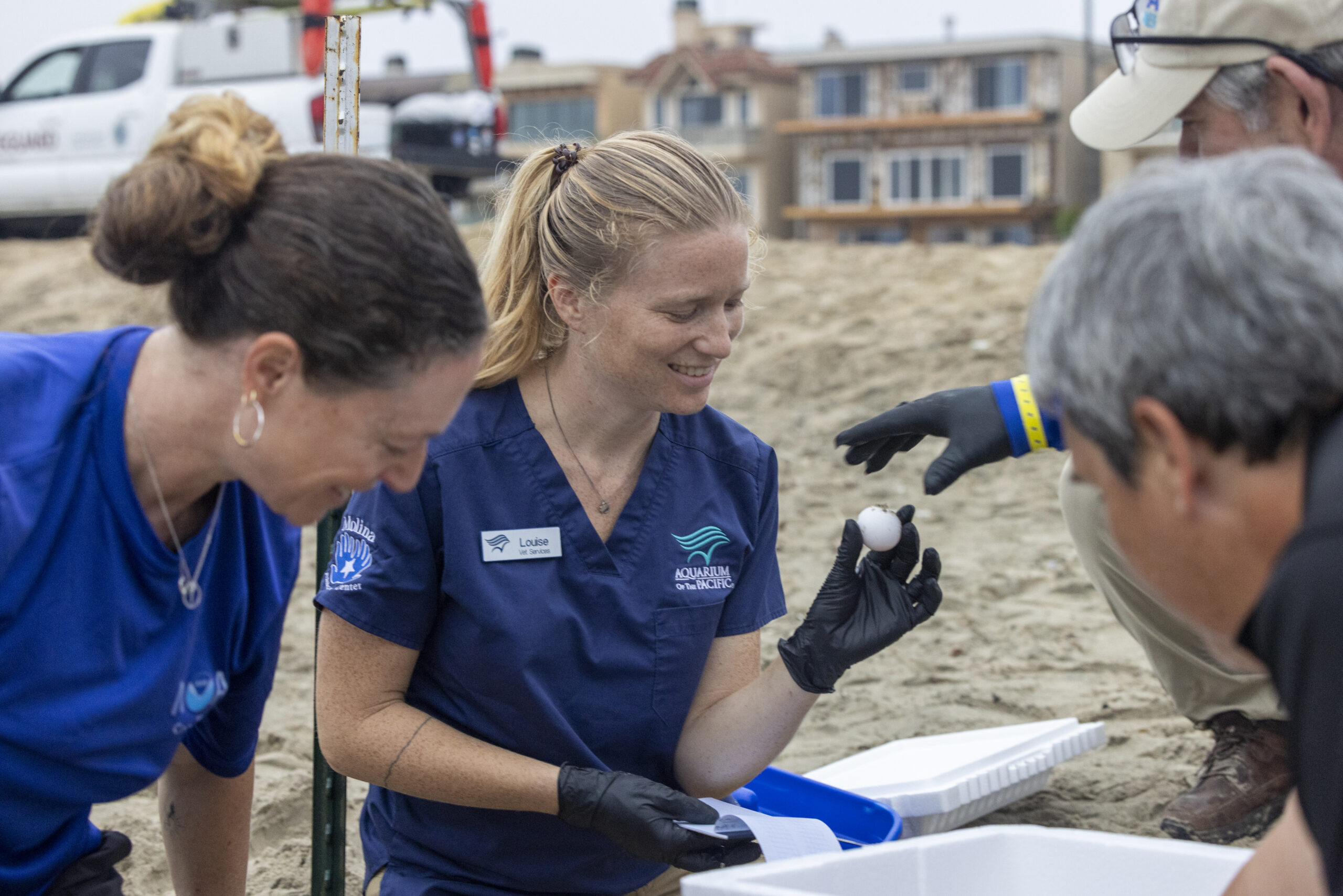
Two olive ridley sea turtles laid eggs at Seal Beach and Huntington Beach, marking the first documented natural sea turtle nesting on the U.S. West Coast. Because high surf and tides associated with Hurricane Polo threatened the nests, biologists relocated more than 200 eggs to the Aquarium of the Pacific in Long Beach for incubation and monitoring in controlled conditions. Viable eggs could hatch in 45 to 60 days, and hatchlings are expected to be released near the beaches where they were found. Researchers say unusually warm ocean conditions may have brought the turtles north, and further nesting is possible because the species can nest multiple times in a season.
Key Points
1
Officials recovered 104 eggs from the Seal Beach nest and 100 from the Huntington Beach nest.
2
The Seal Beach turtle was first seen nesting on September 16; a turtle was spotted nesting in Huntington Beach three days later, about eight miles south. Officials said it was not immediately clear whether the sightings involved the same turtle or two different turtles.
3
Acting Fish and Wildlife Service field supervisor Jonathan Snyder said officials generally favor the least intrusive recovery approach, but concluded the nests were likely to be destroyed and had to make a quick decision to relocate them.
4
The nests were fenced off and marked with interpretive signage, and officials urged beachgoers to keep their distance and avoid disturbing the fencing or signs.
Sentiment
Mostly NegativeNEGATIVENEUTRALPOSITIVE
Publishers
18
Articles
9
Reach
27
Topics
A
AnonymousAuthor


