Egypt Unearths Rare Tombs, Roman Camp Remains
Egypt Unearths Rare Tombs, Roman Camp Remains
Anonymous
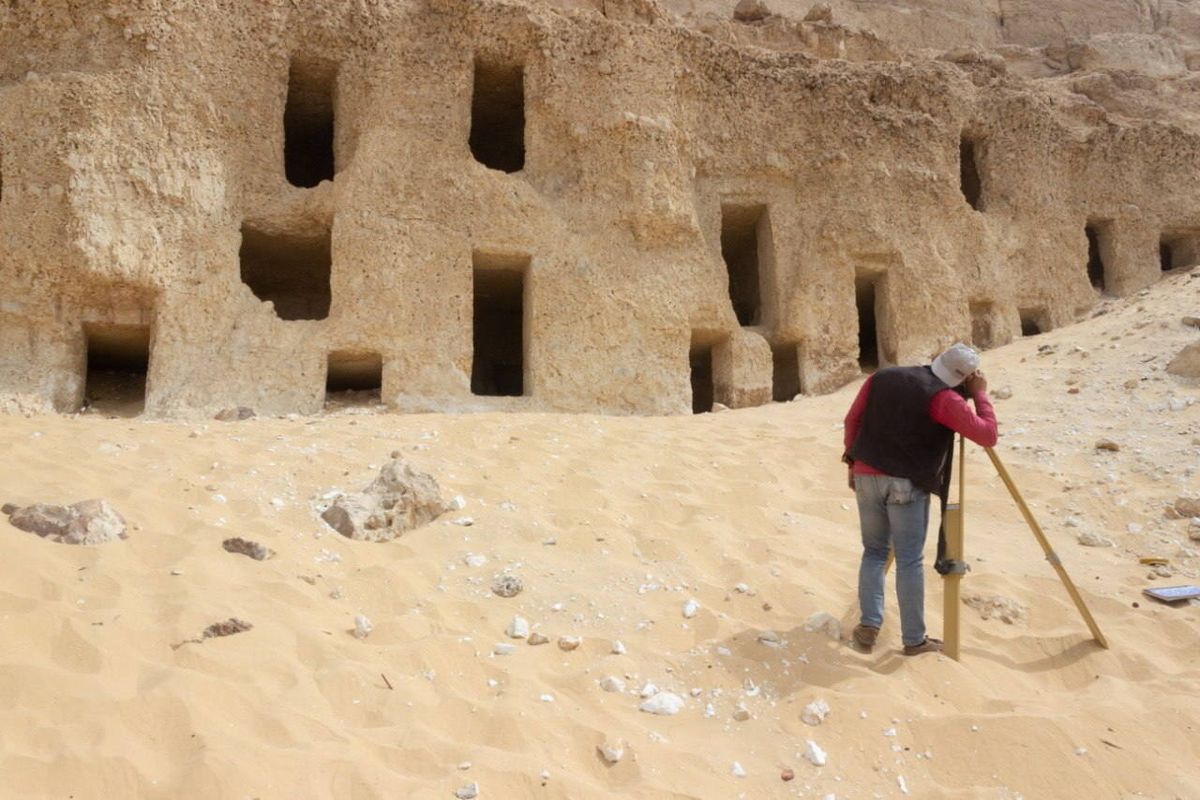
An Egyptian archaeological mission has uncovered rare rock-cut tombs at Tell el-Yahudiya in Qalyubia, north of Cairo, dating from the late New Kingdom and continuing in use through the Late Period. The tombs feature two designs: staircases leading to halls with burial niches, and rectangular shafts leading to two burial chambers. Officials said the discovery offers new evidence about the evolution of burial practices in the eastern Nile Delta, where clay-rich soil makes rock-cut tombs uncommon. Excavations also revealed remains of a Roman camp above the tombs, indicating that the strategically important site was used across successive historical periods.
Key Points
1
The late New Kingdom dating is placed approximately between 1550 and 1069 BC, providing a more precise chronological framework for the tombs.
2
The site is especially associated with the Hyksos period, when it contained a large camp, and evidence indicates that Tell el-Yahudiya was later used during the Greek and Roman eras.
3
Officials said comparable rock-cut tombs are known only at a limited number of Delta and coastal locations, including Kom El-Shoqafa in Alexandria and archaeological sites along Egypt’s North Coast.
4
Ayman Ashmawy, an adviser to the secretary-general of Egypt’s Supreme Council of Antiquities, identified the two tomb designs, while Anwar Abdel Samad, director general of the Qalyubeya Archaeological Area and mission head, reported that excavations also recovered artefacts associated with the tombs.
Sentiment
Mostly PositiveNEGATIVENEUTRALPOSITIVE
Publishers
5
Articles
6
Reach
11
Topics
A
AnonymousAuthor