Egypt Excavation Reveals Life Inside New Kingdom Fort
Egypt Excavation Reveals Life Inside New Kingdom Fort
Anonymous
Key Points
1
The fortress covers approximately 9 feddans, while the surrounding mound extends across about 35 feddans. Archaeologists have been excavating the site since 2015 and have now established the dimensions of both areas.
2
The Ramesses II stela depicts a bound Libyan prisoner from the Meshwesh tribe, directly linking the monument to the frontier conflicts the fortress was intended to guard against.
3
The site’s earlier excavation seasons had already produced a ceremonial cow burial and a bronze sword engraved with Ramesses II’s cartouche, adding to evidence of the fortress’s military and ritual functions.
4
Three stone wells in the southeastern area bear inscriptions identifying the titles of Ramesses II, providing an additional connection between the fortress’s water infrastructure and the king’s reign.
5
Researchers describe the buried horse as a medium-sized, agile breed, and its carefully aligned skeleton and intentional burial orientation suggest that it was interred ceremonially or respectfully rather than abandoned as a battlefield casualty.
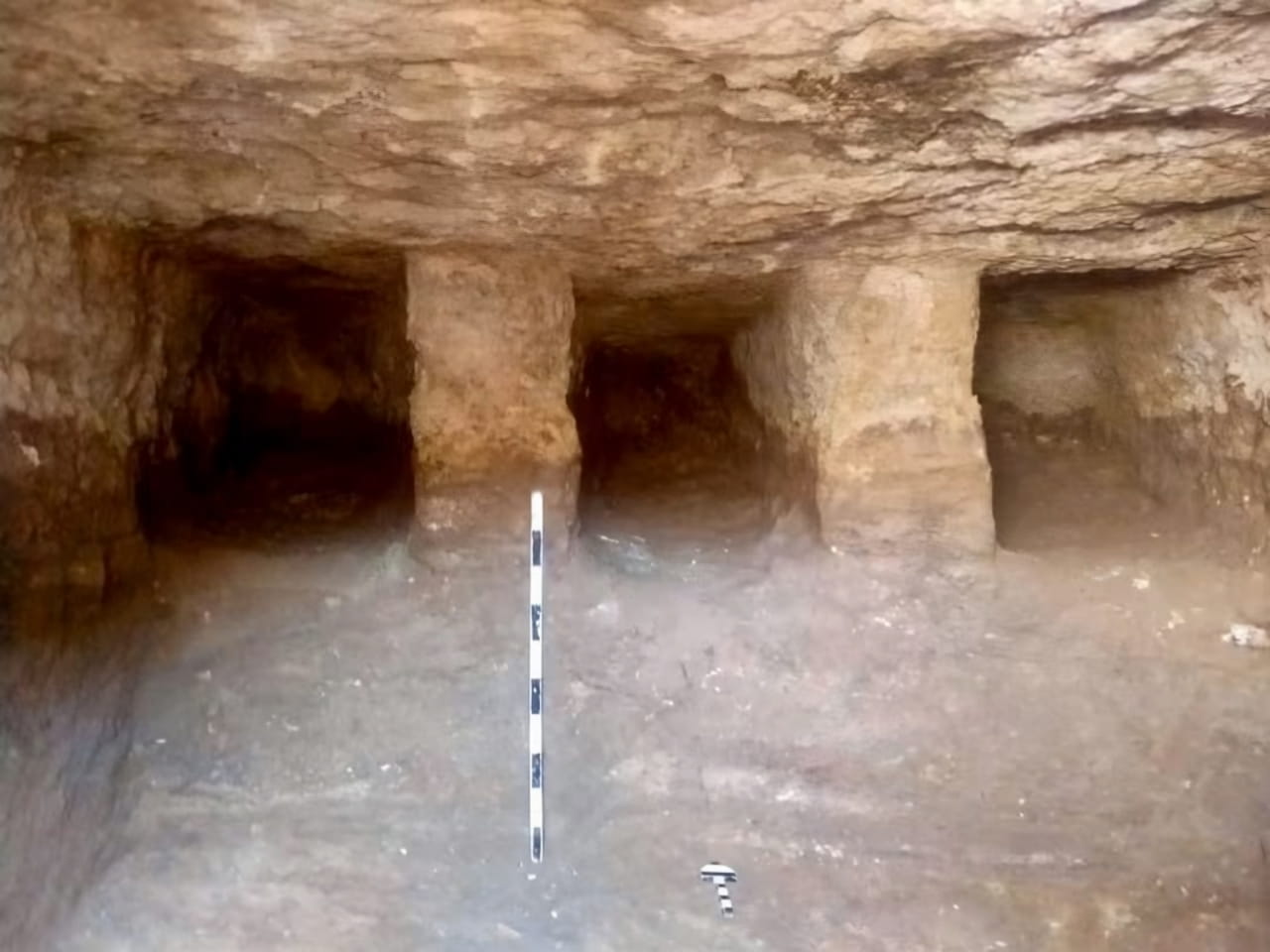
Archaeologists excavating Tell el-Abqain in Egypt's Beheira Governorate have uncovered a planned residential district inside a New Kingdom fortress that protected the western Nile Delta from Libyan raids. The mud-brick settlement features intersecting streets, homes, storage rooms, grain silos, ovens and wells—revealing how soldiers lived and ate at this frontier outpost. New discoveries including a stela naming Ramesses II and a ceremonially buried horse add to evidence of the fortress's military and religious significance.
A Fortress City Built for Defense and Daily Life
The fortress covers about 9 feddans, while the surrounding settlement extends across roughly 35 feddans total. Heritage Daily reports that archaeologists have been digging at Tell el-Abqain since 2015, and now understand both areas' full dimensions. The site shows careful urban planning: streets connected residential quarters directly to the limestone gate, creating an organized garrison town rather than scattered outposts.
Researchers found three stone wells in the southeastern area bearing inscriptions of Ramesses II's titles, linking the fortress's water systems to the king's reign. Large jars filled with charred wheat reveal how soldiers stored grain for survival during sieges. The combination of infrastructure—wells, ovens, storage rooms—shows this was a self-sufficient military settlement designed for long-term occupation.
Artifacts Link the Fort to Ramesses II and Libyan Conflict
A stela depicting a bound Libyan prisoner from the Meshwesh tribe directly connects the fortress to the frontier wars it was built to stop. The discovery of a bronze sword engraved with Ramesses II's cartouche in earlier seasons, along with a ceremonial cow burial, shows the site served both military and religious functions under the king's rule.
The Ramesses II stela and a fragment of a hieratic limestone stela tied to his successor Merneptah suggest the fortress remained important across generations. These monuments may expand understanding of how ancient Egypt managed its western borders and how royal authority was displayed at remote military posts.
A Horse Buried With Military Ceremony
Workers uncovered a complete young male horse buried near possible chariot-harness fittings, suggesting a link to military training or warfare. Researchers describe it as a medium-sized, agile breed—the type used for chariots and cavalry. The skeleton's careful alignment and deliberate burial orientation indicate the horse was interred respectfully, not abandoned as a battle casualty.
The horse burial joins scarabs, amulets, pottery, tools and jewelry found across the site, painting a picture of daily life at this frontier garrison. Together, these objects show how soldiers, their animals and their supplies were organized to defend Egypt's western edge against Libyan invasion.
Sentiment
Mostly PositiveNEGATIVENEUTRALPOSITIVE
Publishers
16
Articles
2
Reach
18
Topics
A
AnonymousAuthor