Spring Full Moon Viewing Guide
South Africa's Spring Full Moon Reaches Peak Brilliance Alongside Saturn This Saturday
Anonymous
Key Points
1
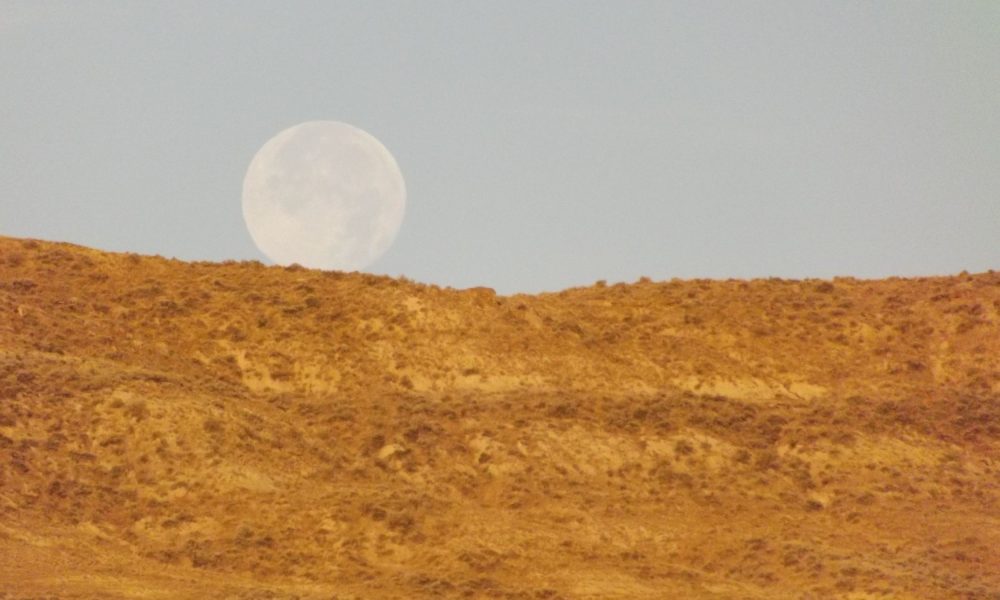
In Cape Town, Johannesburg and Durban, moonrise is expected at about 18:44, 18:01 and 17:50 respectively on September 26. Cape Town’s moonrise is close to sunset, offering a brief opportunity to photograph the Moon low near the horizon.
2
Harvest-related names differ among Indigenous traditions: examples include the Corn Moon, the Corn Maker Moon (Western Abenaki) and the Corn Harvest Moon (Dakota). Other names reflect seasonal changes, such as the Ojibwe’s Falling Leaves Moon and the Lakota’s Moon of Brown Leaves.
3
The Harvest Moon’s name is also tied to its practical use: its bright evening light traditionally helped Northern Hemisphere farmers gather the last summer crops, with the harvest season also marking preparations for colder months and community celebrations.
South Africa's Spring full moon reaches peak brightness on Saturday, September 26, 2026, at 18:48 South African Standard Time. The moon will appear fully illuminated through the evening and sit near Saturn, which is visible to the naked eye without binoculars. Sheridan Media reports the event marks the first full moon of the fall season in the Northern Hemisphere, while KSL notes Saturn will appear golden and close to the moon between Friday and Monday.
In Cape Town, the moon rises at 18:44 SAST—just two minutes before sunset at 18:46 SAST—creating a rare opportunity to photograph it low on the eastern horizon. Johannesburg will see moonrise at 18:01 SAST, while Durban's moonrise occurs at 17:50 SAST. For the clearest view, find an unobstructed eastern horizon and minimize exposure to artificial light.
Spring Moon vs. Harvest Moon Across Cultures
The same full moon carries different names depending on geography and tradition. In South Africa, it's called the Spring Moon to mark the arrival of spring in the Southern Hemisphere. Russ Pain explains that in 2026, the Harvest Moon will rise closest to the autumn equinox, giving Northern Hemisphere farmers crucial hours of evening light to harvest crops before cold weather arrives. Indigenous North American traditions use names like the Corn Moon, Corn Maker Moon (Western Abenaki), and Corn Harvest Moon (Dakota).
Other Indigenous names reflect seasonal changes: the Ojibwe call it the Falling Leaves Moon, while the Lakota name it the Moon of Brown Leaves. These names tied the lunar cycle to practical survival—historically, the bright evening light of the full moon helped farmers gather the last summer crops and prepare for colder months ahead.
Saturn Joins the Celestial Display
Saturn reaches opposition on October 4, 2026, making September's weeks an ideal viewing window. Southern Minnesota reports that Saturn glides eastward through dim fall constellations, appearing as a beacon in the east to southeast at nightfall. The planet will shine golden near the full moon, creating what KSL calls a "2-for-1 celestial display" between Friday and Monday.
Fainter Neptune also hangs in the evening sky nearby but requires binoculars or a telescope to spot. Observers have a 24-hour window before and after peak illumination—18:48 SAST—when the moon appears fully illuminated, so precise timing isn't necessary for a good view.
Astrological Beliefs About the Aries Full Moon
Spiritual practitioners frame the full moon as a time of heightened emotion and bold self-expression. Forever Conscious and other astrological outlets describe the Aries full moon as an energetic peak for independence and urge for change. Astrologers note that full moons represent tension between opposing zodiac signs—in this case, balancing Libra's diplomacy against Aries's directness.
Spiritual communities recommend rituals focused on releasing outdated habits, evaluating emotional truths, and boundary setting during this lunation. However, these are spiritual beliefs and interpretations. The astronomical community emphasizes that the full moon is simply a predictable orbital alignment of Earth, Sun, and Moon—it has no documented physical or psychological effects on humans.
Sentiment
Mostly NegativeNEGATIVENEUTRALPOSITIVE
Publishers
29
Articles
44
Reach
73
A
AnonymousAuthor


