iPhone 18 Pro Teardown
iFixit Teardown Reveals New Mechanical Camera System Inside iPhone 18 Pro
Anonymous
Key Points
1
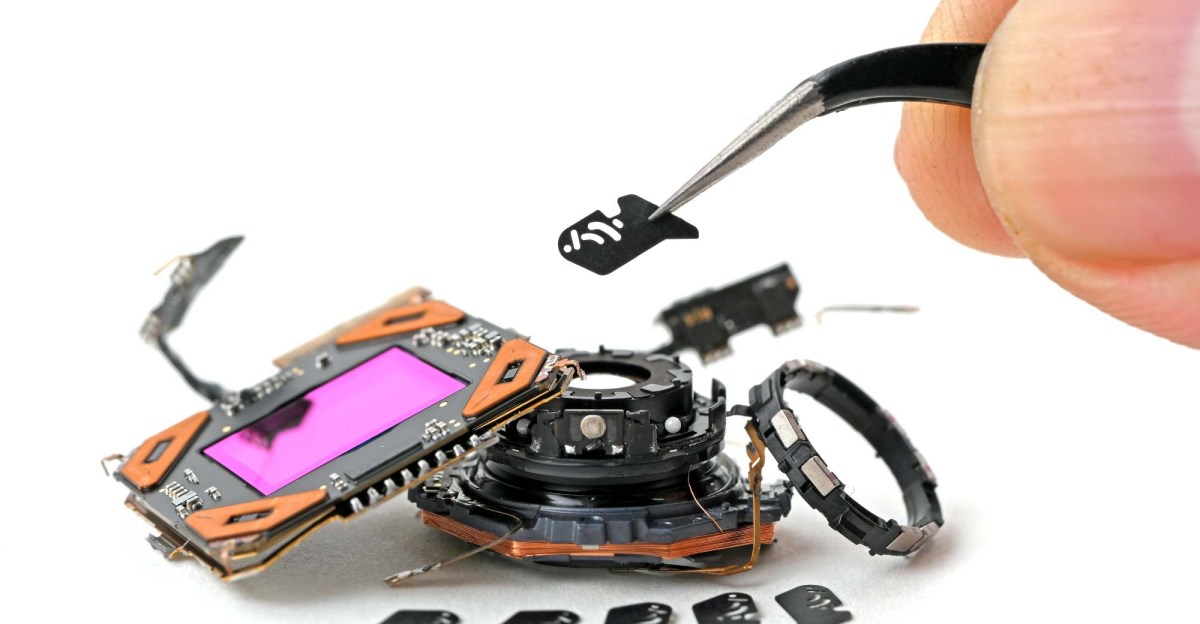
iFixit found the six aperture blades are approximately as thin as a human hair; during the teardown, one blade flew out while the lens stack was being dismantled, highlighting how impractical component-level repairs would be.
2
The variable-aperture mechanism operates independently of the optical image-stabilization system, even though both systems use electromagnetically controlled components.
3
The under-display Face ID infrared camera is concealed by removing every other row of OLED pixels above the sensor and using an infrared-pass filter beneath the display; iFixit observed an “eclipse effect” because the filter does not reach the edge of the opening.
4
The iPhone Duo’s camera system is a “Dual Fusion” setup built around a 48MP main camera that produces 24MP images by default and 12MP 2x images, while supporting sensor-shift stabilization but not spatial photos or the second-generation stabilization found on Pro models.
Apple's iPhone 18 Pro cameras feature the company's first mechanical variable-aperture system, using six electromagnetically driven blades thinner than a human hair to switch between four settings from f/1.48 to f/4.0. iFixit discovered the delicate mechanism offers 50% more light capture in low-light conditions, but the entire camera assembly must be replaced if the aperture fails — component-level repairs are impossible.
The phones earned a 7/10 repairability score despite new manual controls including adjustable aperture, shutter speed, and white balance. iFixit also found an under-display infrared Face ID camera, larger vapor chambers, and fragile display frames that could crack during repair attempts.
Six Hair-Thin Blades Control Light and Focus
The iPhone 18 Pro's 48MP Fusion camera uses six laser-cut polymer composite blades to create variable aperture. According to Apple's VP of iPhone Product Marketing Kaiann Drance, each blade is thinner than a human hair. During iFixit's teardown, one blade flew out while dismantling the lens stack, proving how impractical individual blade repairs would be.
The aperture system works independently from optical image stabilization, even though both use electromagnetically controlled parts. Switching from f/1.48 to f/4.0 lets photographers capture wider angles in darkness and narrower settings for sharper group shots. However, Fstoppers analysts note that stopping down on tiny mobile sensors risks diffraction blur, limiting real-world benefits for casual users.
Unrepairable Camera Means Full Assembly Replacement
If the aperture mechanism fails, Apple users must replace the entire camera assembly — no partial fixes allowed. iFixit tested four units and found that the plastic backing frame cracked on three phones during display disassembly. Because Apple doesn't sell the frame separately, minor screen repair mistakes force customers to buy the complete display assembly.
The 7/10 repairability score reflects these challenges. Zach Nelson from JerryRigEverything praised the interior layout and display access in his durability tests, but iFixit emphasized that fragile components create significant risk for third-party repairs. Most internal fixes require removing glued parts and specialized tools.
Under-Display Face ID Camera Creates New Design Challenge
Apple hid the infrared Face ID camera beneath the OLED display by removing every other row of pixels above the sensor and adding an infrared-pass filter underneath. iFixit observed an "eclipse effect" under magnification because the filter doesn't reach the opening's edges. This creates a technical and repair puzzle for future service technicians.
The design decision keeps the selfie camera in the Dynamic Island while moving biometric hardware out of sight. iFixit and 9to5Mac noted this represents Apple's push toward borderless displays, though it complicates disassembly and raises costs for display repairs that damage the underlying infrared layer.
iPhone Duo Offers Simpler Dual-Display Camera Setup
Apple's foldable iPhone Duo uses a "Dual Fusion" camera system built around a 48MP main sensor that produces 24MP default images and 12MP 2x crops. It supports sensor-shift stabilization but lacks spatial photos and the second-generation stabilization found on Pro models. The Duo's cameras include AI-assisted group shots, child-focused framing prompts, and dual-display FaceTime.
The Duo's simpler mechanical design avoids the repair headaches of the variable-aperture Pro cameras. While it lacks manual control features like adjustable aperture and white balance, the foldable device prioritizes reliability over professional-grade photography tools.
Sentiment
Mostly NegativeNEGATIVENEUTRALPOSITIVE
Publishers
26
Articles
14
Reach
40
Topics
A
AnonymousAuthor


