Japan US Xi Summit
Japan and US Discuss China and Defense Ahead of Xi Summit
Anonymous
Key Points
1
China’s global trade surplus is projected to exceed $1 trillion for a second consecutive year, reaching a record $1.2 trillion in 2025 even as Chinese exports to the United States declined.
2
Analysts say U.S. tensions with traditional allies could weaken Washington’s leverage over China. Ryan Hass of the Brookings Institution said, “America retains unmatched power on the world stage, but leverage requires a united front and there are a shrinking number of countries willing to follow America’s lead right now.”
3
The decision to hold the Trump-Xi meeting at the White House rather than in New York during the U.N. General Assembly was described by analyst Richard Gowan as potentially sending an “unsettling message” that could undermine the central role of the United Nations.
4
Japan’s Takaichi told Trump that Japan has been the largest investor in the United States for seven consecutive years, while both leaders pledged to strengthen bilateral economic ties.
5
The Japan-U.S. summit lasted more than 30 minutes, and Trump praised Takaichi as “a great prime minister,” saying Japan was doing “very well” and that he considered her a friend.
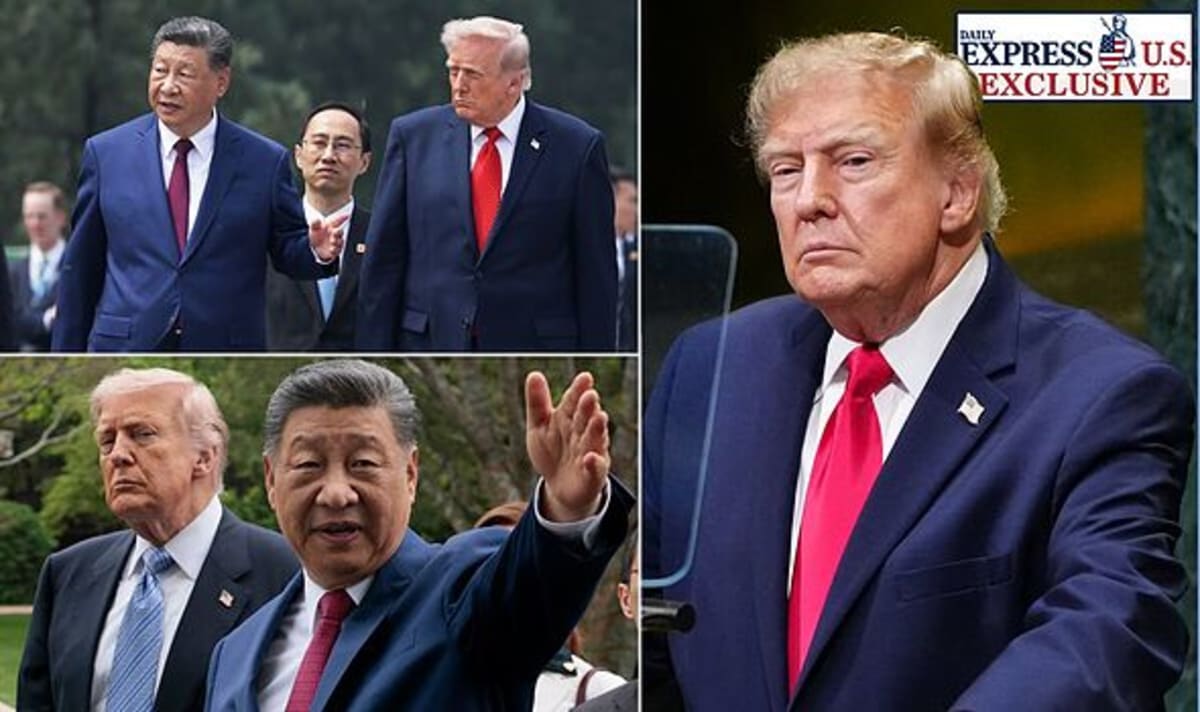
Japanese Prime Minister Sanae Takaichi met with President Trump for 35 minutes on September 22 ahead of his White House summit with Chinese President Xi Jinping. The talks focused on protecting Japan's security interests, particularly regarding Taiwan, as Tokyo worries Trump might trade defense guarantees for economic concessions with China The Japan Times.
Trump praised Takaichi as "a great prime minister" and "a friend of mine — tough and smart." Both leaders pledged to strengthen ties on defense, AI, semiconductors, and critical minerals while Japan highlighted its role as the largest foreign investor in the U.S. for seven consecutive years South China Morning Post, The Japan Times.
Tokyo Moves Fast to Shape Trump's China Strategy
Takaichi rearranged her UN schedule to meet Trump before his planned summit with Xi. She told reporters the talks were "timely" as Tokyo works to protect allied interests The Japan Times. Takaichi emphasized: "With the security environment becoming increasingly severe, including in Asia, the fact that Donald and I are holding talks here demonstrates the strength of the Japan-U.S. alliance to the world" The Japan Times.
Japan's move reflects deep anxiety about U.S.-China bilateral negotiations. Tokyo fears Trump might make concessions on Taiwan or East Asian defense in exchange for trade deals South China Morning Post. The summit came after Takaichi sparked Beijing's anger last November by suggesting Japan could intervene militarily if China attacked Taiwan The Japan Times.
China's Trade Surplus Grows Even as U.S. Tensions Rise
China's global trade surplus is projected to reach $1.2 trillion in 2025 — a second consecutive year exceeding $1 trillion, despite Chinese exports to the United States declining. The economic imbalance underscores the stakes in Trump's upcoming talks with Xi Reuters.
Beijing retaliated against Japan's Taiwan remarks by restricting rare-earth exports and imposing targeted controls on dual-use goods to Japanese firms The Japan Times. Experts warn that fractured alliances weaken U.S. leverage. Ryan Hass of the Brookings Institution said: "America retains unmatched power on the world stage, but leverage requires a united front and there are a shrinking number of countries willing to follow America's lead right now" Reuters.
White House Summit Location Signals Shift in U.S. Priorities
Trump is hosting Xi at the White House instead of meeting during the UN General Assembly in New York. Analyst Richard Gowan warned this sends an "unsettling message" that risks undermining the United Nations' central global role BBC.
The choice reflects Trump's focus on bilateral deal-making over multilateral frameworks. Allies worry this approach could marginalize traditional security agreements in Asia BBC. Takaichi said Japan "believes it is important for U.S.-China relations to contribute to the stability of the international community" — a diplomatic way of urging restraint The Japan Times.
AI and Semiconductors at Center of Trump-Xi Negotiations
The Trump-Xi summit is expected to focus on artificial intelligence, technology exports, rare-earth supplies, and semiconductor controls Roll Call. Senate Democrats are pressing Republicans for votes on export control legislation restricting Beijing's access to advanced AI chips Roll Call.
Trump and Takaichi pledged deeper cooperation on AI and semiconductor supply chains as a counterweight to Chinese dominance The Japan Times. Both the U.S. and China view AI as critical to future global power. The rivalry is reshaping geopolitics as both nations race to lead the technology BBC.
Sentiment
Mostly NegativeNEGATIVENEUTRALPOSITIVE
Publishers
51
Articles
115
Reach
166
A
AnonymousAuthor


