Immigration Lawsuits Filed
States and advocacy groups file lawsuits challenging Trump administration immigration policies and ICE arrests.
Anonymous
Key Points
1
The public-charge policy revives the Trump administration’s 2019 rule, which was later abandoned under President Biden; the Biden-era standard excluded noncash benefits such as food stamps and Medicaid from consideration.
2
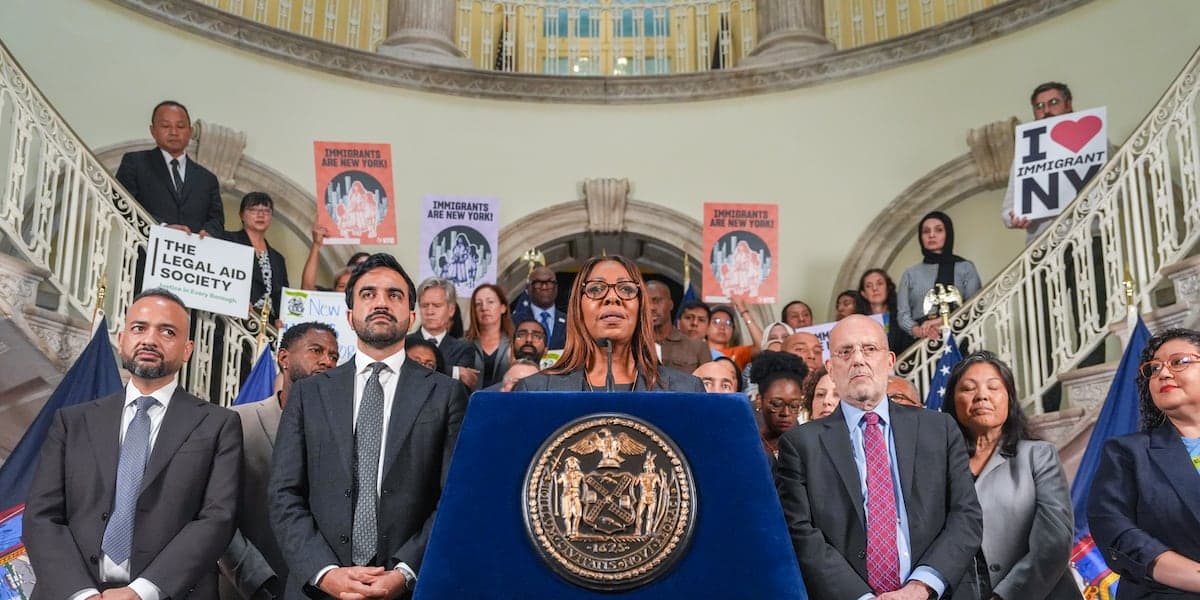
The states and local governments argue that the rule could strain hospital emergency rooms and reduce enrollment in food-stamp programs, potentially depriving local businesses of revenue tied to federal benefits. New York Attorney General Letitia James said families should not have to choose between needed assistance and the risk of future immigration consequences.
3
New York Mayor Zohran Mamdani said the rule would not apply to U.S. citizens or people seeking humanitarian relief such as asylum, while calling its language intentionally vague and designed to create uncertainty among immigrant New Yorkers.
4
The Maryland lawsuit alleges that 80% of people arrested by ICE in the state since 2025 had no criminal convictions; during the two-week Operation Safe Community surge in Maryland and Virginia, fewer than one-third of roughly 1,300 arrests involved people with criminal convictions.
5
The Maryland plaintiffs include three men and one woman, with three of the plaintiffs identified only by their initials. The groups bringing the case include We Are CASA, the Amica Center for Immigrant Rights, the ACLU of Maryland and the National Immigration Project.
A wave of federal lawsuits is challenging Trump administration immigration policies on two fronts. Twenty-two states, DC, New York City and other local governments sued to block a public-charge rule taking effect September 18 that would make it harder for immigrants to get green cards or visas if they use food stamps, Medicaid or housing help. Meanwhile, immigrant-rights groups sued over ICE arrests they say were warrantless, racially targeted and aggressive—with most detainees having no criminal convictions.
The legal battles pit states and civil-rights organizations against the Trump administration over how broadly immigration officials can deny benefits. The stakes are huge: DHS estimates the public-charge rule could cut $5.07 billion in annual federal aid to states for food stamps and Medicaid. Immigrant advocates call recent ICE sweeps 'arrest-first, ask-questions-later' operations that violate the Fourth Amendment and rely on ethnic profiling.
Public-Charge Rule Denies Visas to Benefit Users
The Trump administration revived a 2019 rule that lets immigration officials deny green cards and visas to applicants deemed likely to use non-cash benefits. New York AG Letitia James said the rule forces families to choose between needed help and immigration consequences. The rule applies to food stamps, Medicaid, housing assistance and other programs. President Biden had narrowed the rule to cover only cash assistance and long-term care.
NYC Mayor Zohran Mamdani called the rule's language 'intentionally vague' and designed to scare immigrant New Yorkers. States argue it will clog hospital emergency rooms and cut food-stamp enrollment, hurting local businesses that depend on federal benefit spending. DHS estimates the rule will reduce Medicaid payments to states by $4.05 billion annually and SNAP payments by $1.02 billion.
Maryland Lawsuit Alleges Racially Targeted Arrest Sweeps
Immigrant-rights groups We Are CASA and the ACLU sued in Maryland claiming ICE arrested people without warrants and based on race or ethnicity. Eighty percent of people arrested by ICE in Maryland since 2025 had no criminal convictions. During Operation Safe Community in Maryland and Virginia, fewer than one-third of roughly 1,300 arrests involved people with criminal records. The lawsuit names four plaintiffs, including U.S. citizen Samuel Guzman, who was detained by masked ICE agents at a 7-Eleven.
Guzman said agents shoved him against his car and handcuffed him despite his citizenship. They asked why he didn't 'speak better English' if American. Shana Khader, legal director of We Are CASA, called the arrests 'racial profiling' targeting Brown and Black neighborhoods. The groups contend ICE violated the Fourth Amendment by detaining people without individualized suspicion.
Factory Raid Detains Over 100 Workers Without Probable Cause
On September 4, roughly 60 armed federal agents raided the Nutrition Bar Confectioners plant in Cato, New York. They detained over 100 workers—mostly Latino—including U.S. citizens and permanent residents. Agents arrested 57 people. More than 20 workers were separated from their children, and several were deported. The NYCLU and Worker Justice Center sued, alleging agents detained and questioned workers without individualized suspicion.
The groups claim the warrant authorized a facility search only, not mass detention. Federal officials say agents had a valid criminal search warrant and deny the operation was unlawful. Pedro Rojas, a U.S. citizen born in Puerto Rico, was among those detained based solely on his ethnicity. The lawsuit is pending, and claims have not been proven in court.
Federal Government Denies Profiling, Defends Enforcement Powers
DHS rejects allegations that ICE officers profile immigrants based on race or ethnicity. The agency says officers use 'reasonable suspicion' to investigate immigration status and 'probable cause' to make arrests in line with the Fourth Amendment. Maryland Attorney General Anthony Brown filed a brief supporting stricter limits, stating Congress set specific legal requirements for warrantless arrests that are 'not optional.' Federal law allows ICE to arrest without a warrant only if agents have probable cause someone is unlawfully present and likely to escape.
Since January 2025, ICE has executed over 5,000 arrests in Maryland. Ninety-two percent of those targeted came from Latin American or Caribbean nations. The federal government maintains its enforcement targets people unlawfully in the country, not based on ethnicity. The lawsuits will test whether courts agree with states and civil-rights groups that recent operations violated constitutional protections.
Sentiment
Mostly NegativeNEGATIVENEUTRALPOSITIVE
Publishers
98
Articles
379
Reach
477
A
AnonymousAuthor