Post-Quantum Security Solution
FRC and QIZ Security Advance Post-Quantum Solution to U.S. Navy Hopper
Anonymous
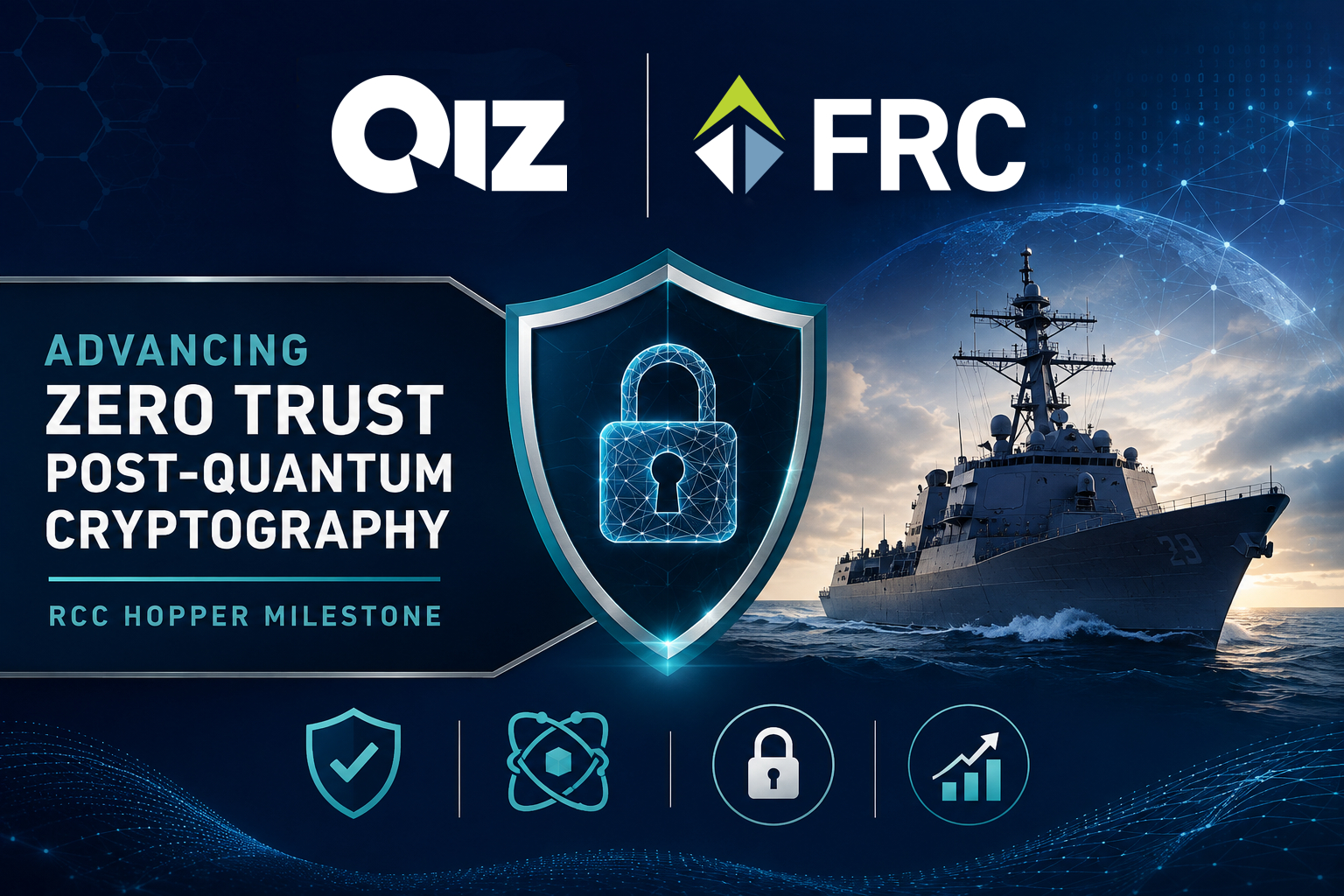
FRC and QIZ Security have achieved a major milestone in developing next-generation encryption for the U.S. Navy. Their Phase II proposal for a Zero Trust Post-Quantum Cryptography Solution has been selected for the RCC Hopper, according to National Post. The Hopper is a digital repository where Navy officials can find and fund new defense technologies.
The selection opens the door for prototype funding up to 24 months, Montreal Gazette reported. This advancement allows FRC and QIZ Security to build on their earlier work and help the Navy protect critical systems from future cyber threats — especially those posed by quantum computers, which could break current encryption methods.
What Zero Trust and Quantum Security Mean
Zero Trust security treats every network user and device as a potential threat until proven safe. Seaforth Huron Expositor explained that combined with post-quantum cryptography — codes designed to resist quantum computer attacks — this creates stronger protection for military systems. Traditional encryption could be cracked once quantum computers become powerful enough.
Post-quantum encryption uses math problems that even quantum computers cannot solve quickly. This matters now because adversaries may already be collecting encrypted military data to decrypt later when quantum computers arrive, making current defenses obsolete.
How FRC and QIZ Security Won Selection
The two companies submitted a proposal against the Navy's Zero Trust Post-Quantum Cryptography Roadmap under Area of Interest #26-A006, according to Calgary Sun. After competitive evaluation, their pitch demonstrated technical merit and qualified for advancement. Hanna Herald confirmed the selection followed a rigorous assessment process.
Being placed in the RCC Hopper means Navy resource managers can now discover and potentially fund their solution directly. Cochrane Times Post noted this gives the companies a real opportunity to turn their research into deployed systems protecting mission-critical Navy networks.
What's Next for Prototype Development
Selection to the Hopper does not guarantee a contract. Instead, it positions FRC and QIZ Security for Other Transaction (OT) awards — a flexible Navy funding mechanism designed to move prototypes from concept to reality faster than traditional contracts. The Whig reported these awards can run up to 24 months.
The companies can now leverage their Phase III research to build working prototypes. Owen Sound Sun Times highlighted how this milestone supports the Navy's broader push to modernize defenses against emerging quantum threats — a critical priority as hostile nations race to develop quantum capabilities.
Why This Matters for U.S. Military Networks
The U.S. military relies on encrypted communications to protect operational plans, weapons systems, and intelligence. Edmonton Sun noted that quantum computers could theoretically break today's encryption in minutes. Post-quantum solutions are no longer theoretical — they are urgent defensive priorities.
By moving FRC and QIZ Security's solution to the RCC Hopper, the Navy signals confidence in the approach and accelerates its path to real-world deployment. Shoreline Beacon emphasized this is part of a government-wide shift toward quantum-resistant encryption as the cybersecurity threat landscape evolves.
Sentiment
NeutralNEGATIVENEUTRALPOSITIVE
Publishers
10
Articles
10
Reach
10
A
AnonymousAuthor


