Largest New Lunar Crater
NASA Discovers Largest New Solar-System Crater Formed on the Moon
Anonymous
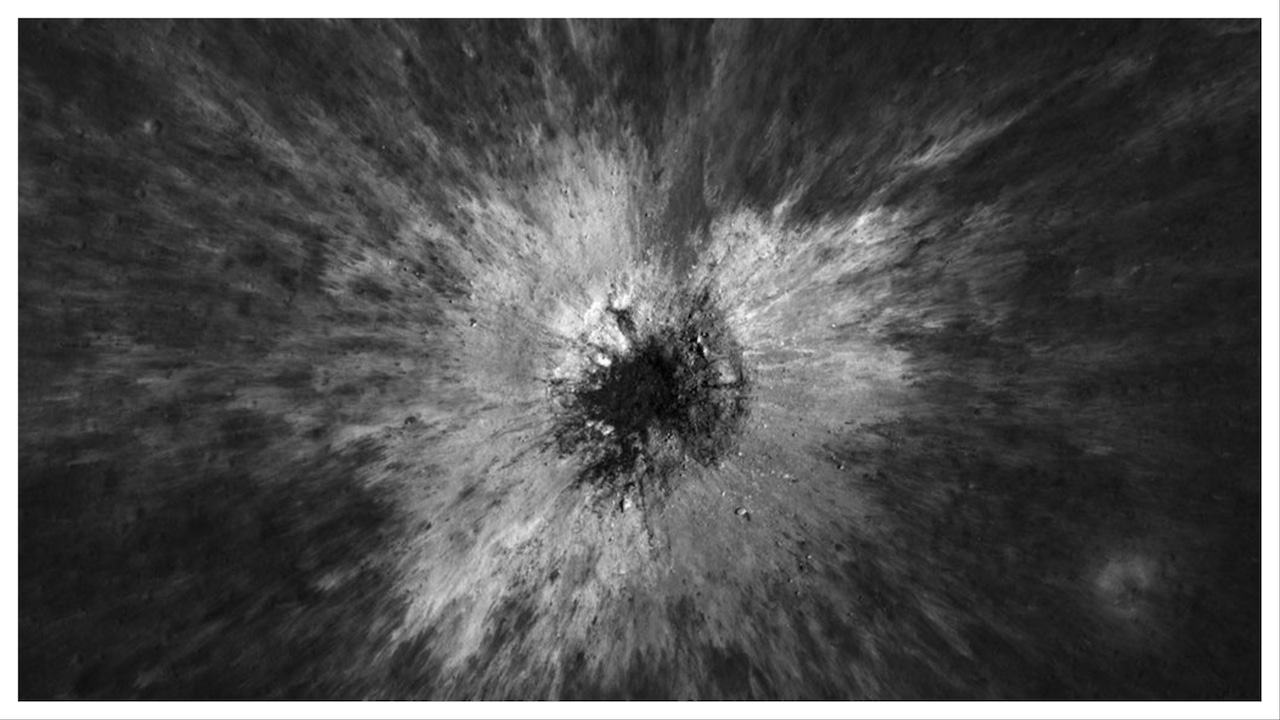
Scientists have identified McGetchin crater, a roughly 728-foot-wide and 141-foot-deep impact crater on the Moon that is the largest known crater formed in the solar system in recent times. It was created between April 11 and May 22, 2024, when a fragment of an asteroid or comet—estimated to be the size of a three- to six-story building—struck the lunar surface. The impact was missed in real time but was later detected by comparing NASA’s Lunar Reconnaissance Orbiter images, with the change identified during a data review in 2025 and confirmed through higher-resolution observations. The collision scattered dust and rock across more than 62 miles and produced a roughly four-mile-wide region with unusual nighttime cooling, offering scientists rare insight into lunar impacts and potential hazards for future missions and bases. Researchers estimate an event of this scale occurs only about once every 132 years and are considering robotic exploration of the site.
Key Points
1
The crater was named for Thomas McGetchin, a lunar scientist and former director of Houston’s Lunar and Planetary Institute. It lies on the Moon’s eastern near side, just inside the outer ring of the Crisium basin, about 330 kilometers from the edge of Mare Crisium.
2
Robert Wagner discovered the crater during a routine quality-control check that digitally compared hundreds of Lunar Reconnaissance Orbiter wide-angle images, with unchanged terrain greyed out and new features highlighted. He described the debris pattern as “by far the most obvious impact debris pattern I’ve ever seen in one of these images.”
3
The crater is about three times wider than the previous record-holder identified by the Lunar Reconnaissance Orbiter roughly a decade earlier. Its rim is also slightly asymmetric: researchers link that shape to a boundary between darker mare basalt and lighter highland material at the impact site.
4
The impact’s altered terrain could complicate lunar rover operations. NASA researchers said changes in the density and physical properties of the disturbed soil may affect rover mobility across the debris field, adding a practical concern for future missions beyond the crater’s scientific value.
5
The discovery was documented in two studies published in Science Advances, and the researchers characterized it as a “statistically rare, effectively once-in-a-lifetime observation.” The event also revealed that lunar material was thrown outward at a higher angle than impact models had expected, according to LRO camera chief scientist Mark Robinson.
Sentiment
Mostly NegativeNEGATIVENEUTRALPOSITIVE
Publishers
15
Articles
14
Reach
29
A
AnonymousAuthor


