Ancient Lunar Magnetism Discovered
Researchers Find Evidence That the Moon Generated Its Own Ancient Magnetic Field
Anonymous
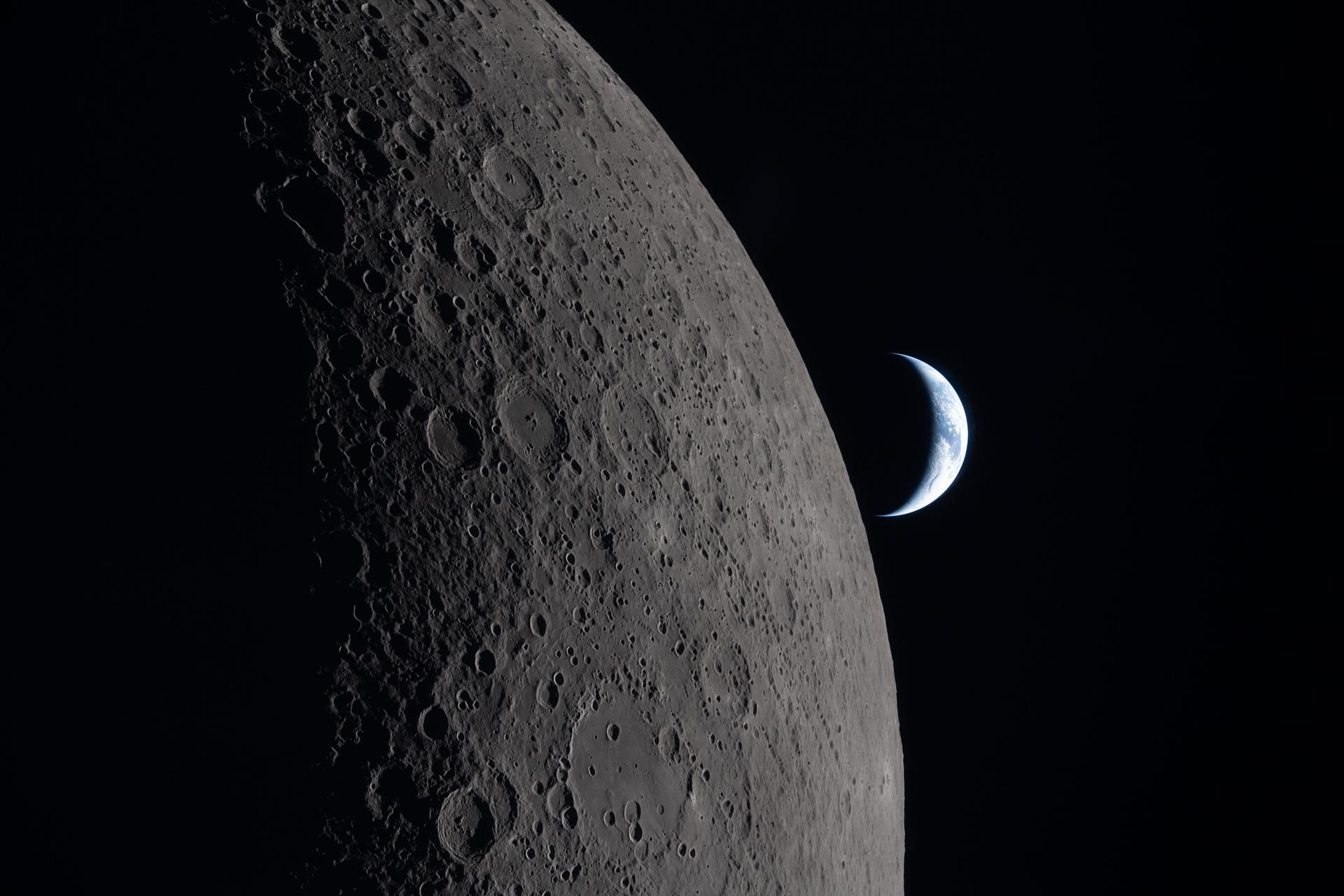
A study published in Science Advances finds evidence that the Moon generated its own magnetic field about 4.2 billion years ago, adding new evidence to a long-running debate fueled by conflicting analyses of Apollo rock samples. Rather than relying on samples, researchers combined orbital gravity and magnetic measurements to identify a dense, strongly magnetized feature in the Dewar region on the Moon’s far side. The feature, roughly 60 kilometers wide and up to 9 kilometers deep, is thought to be solidified magma from an underground volcanic complex. The team estimates the ancient field was at least 10 microteslas; the findings support an internally generated lunar dynamo, though they do not resolve how long it operated or precisely how it worked.
Key Points
1
Magnetized lunar rocks do not necessarily prove an internally generated dynamo: large impacts could also have produced magnetic signatures in the Moon’s crust, offering one possible explanation for some of the conflicting sample evidence.
2
Dewar is unusual because a magnetic anomaly, a gravity anomaly and bright, winding surface patterns known as lunar swirls coincide there, according to the researchers.
3
The estimated ancient field of at least 10 microteslas was around one-fifth to one-third the strength of Earth’s present magnetic field, which is about 50 microteslas.
4
Lunar magnetic anomalies can deflect solar-wind ions and alter the local space-weather environment and surface weathering; the research therefore also has potential implications for the safety of future robotic and human lunar exploration.
Sentiment
Mostly NegativeNEGATIVENEUTRALPOSITIVE
Publishers
15
Articles
3
Reach
18
Topics
A
AnonymousAuthor


