Workers Rescued After Floods
Nepal Rescuers Pull Two Hydropower Workers Alive From Flooded Tunnel After Nine Days
Anonymous
Key Points
1
Sanjaya Sah’s wife, Laxmi Kumari Sah, told IANS she was “very happy” about his rescue and said the past 10 days were “very painful” for their family; she added she was heading to Kathmandu to meet him after the rescue.
2
Nepal’s Minister for Energy, Water Resources and Irrigation secretariat specified that Maharjan was a supervisor for the Hydropower Automation Project of Upper Trishuli 3A (from Kathmandu) and that Sah was a foreman from Saptari—adding bureaucratic confirmation of both the men’s roles and locations.
3
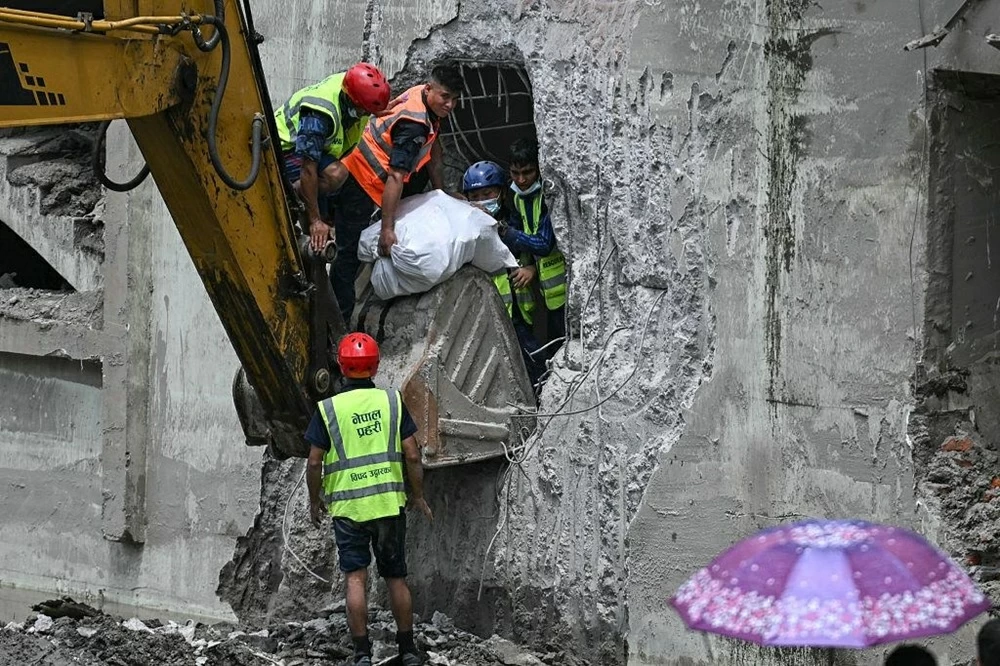
Rescue teams used extensive machinery and techniques beyond clearing obstructions—reports said the operation involved five excavators plus compressors and breakers, along with intensified tunnel drilling and “holing” work to gain access.
4
A joint Nepal Army–Armed Police Force effort reportedly included Chinese experts at the site, and local reporting said responders repeatedly called into the tunnel telling trapped workers not to panic, while also using controlled blasts (including one at about 2 a.m. Monday) as part of the access attempt.
5
The operation also involved site-specific life-support measures: at least one report said crews were pumping air into the tunnel and draining water, while rescue workers focused on air pockets as a reason trapped workers might survive.
Nepal's rescue teams pulled two hydropower workers alive from a flooded tunnel on Friday, nine days after an August 26 flash flood devastated the Trishuli River corridor. NBC Washington reported that Sanjaya Sah, 30, a foreman, and Kabir Maharjan, 45, a mechanical supervisor, were extracted from the Trishuli 3A Hydropower Project tunnel after rescuers heard voices and established communication. Both men were airlifted to Kathmandu hospital, raising hopes that other workers trapped in similar tunnels across the region may also survive.
The rescue comes as Nepal grapples with catastrophic flooding that has killed over 1,250 people and left thousands missing. The Independent reported that a global WhatsApp group of 500 experts guided rescue teams through the operation, which involved five excavators, compressors, breakers, and controlled blasts to clear massive debris fields that blocked tunnel access.
Nine Days Trapped Before Hearing Rescue Calls
Sanjaya Sah survived by chanting the 'Hare Krishna' mantra for nine straight days inside the dark tunnel. Economic Times reported that Sah, a 30-year-old Nepal Electricity Authority employee, was rescued first on Friday morning. His wife, Laxmi Kumari Sah, told media she was "very happy" about his rescue and called the past 10 days "very painful" for their family. She was heading to Kathmandu to reunite with him.
Kabir Maharjan, the mechanical supervisor, followed Sah out of the tunnel shortly after. Both men survived in air pockets while rescue crews pumped fresh air into the tunnel and drained standing water. Rescuers repeatedly called into the tunnel telling trapped workers not to panic, maintaining contact that proved critical to the operation's success.
Massive Equipment and Controlled Blasts Clear the Way
Nepal's rescue teams deployed five excavators plus compressors and heavy breakers to remove 2.2 million tonnes of mud and rock blocking tunnel access. The Independent reported that the operation included intensified tunnel drilling and "holing" work — creating new passages to reach trapped workers. Controlled explosions, including one at about 2 a.m. Monday, were used strategically to break through the massive debris field.
The joint Nepal Army and Armed Police Force effort included Chinese experts stationed at the site. Rescue teams coordinated rescue tactics through a global WhatsApp group of 500 engineering experts who provided real-time guidance on clearing obstructions and accessing air pockets where workers were sheltering.
August Flash Flood Devastates Entire Hydropower Corridor
The August 26 flash flood swept through Nepal's Trishuli River valley with overwhelming force, severely damaging multiple hydropower projects and destroying key road links. The disaster killed over 1,250 people across the region, with thousands still missing. Rescue operations continued at hydropower sites as authorities searched for additional survivors trapped in similar tunnel systems.
Sanjaya Sah's successful rescue signals that other trapped workers may have survived in air pockets within flooded tunnels. The operation's nine-day timeline demonstrates both the challenges of accessing buried workers and the resilience of those caught in such disasters. Officials are now prioritizing searches at other hydropower projects where workers remain unaccounted for.
Sentiment
Mostly NegativeNEGATIVENEUTRALPOSITIVE
Publishers
16
Articles
39
Reach
55
A
AnonymousAuthor


