Telecom Battery Storage
Cygni and Indus Towers partner to develop massive battery storage for Indian telecom.
Anonymous
Key Points
1
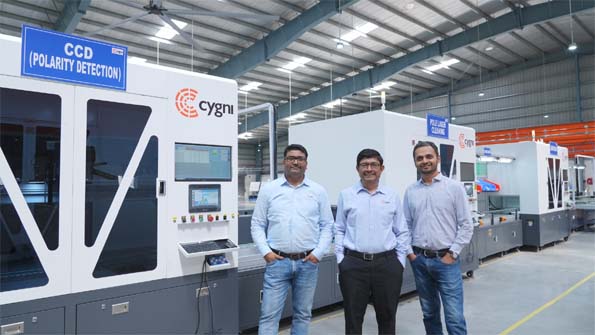
Cygni began Phase I of a battery-storage gigafactory, with a planned 160,000-square-foot facility on a five-acre campus and capacity of 4.8 GWh. The project was announced with an investment of more than ₹100 crore and was intended to serve EV battery-pack and energy-storage demand, including large stationary-storage projects and independent power producers.
2
Cygni has also been developing sodium-ion energy-storage solutions for India with Chinese battery technology company HiNa Battery Technologies; the article says the technology is being pursued for potential cost, safety and charging-time advantages, including charging in around 20 minutes.
3
The need for telecom-site storage is tied to maintaining network availability across many locations: as network coverage and data consumption grow, storage systems could help manage power needs and reduce reliance on conventional backup systems.
4
Cygni is an IIT Madras-incubated Indian company whose capabilities span battery engineering, battery-management systems, battery-pack manufacturing and storage solutions for telecom, stationary storage and mobility applications.
Battery maker Cygni Energy and telecom tower giant Indus Towers signed a memorandum of understanding to jointly develop energy storage systems for India's telecom sites. The Hindu Business Line reports the companies will explore sourcing battery solutions and evaluate building up to 1.5 gigawatt-hours of manufacturing capacity to power telecom infrastructure across the country.
The partnership targets India's growing digital needs. As networks expand and data consumption surges, telecom towers require reliable backup power. Cygni CEO Venkat Rajaraman said the company aims to build 2 GWh of total capacity and scale from current 100Ah batteries to higher-capacity 314Ah systems and newer technologies.
Cygni's Battery Gigafactory Taking Shape
Cygni began Phase I of its battery gigafactory with a planned 160,000-square-foot facility on five acres and 4.8 GWh capacity. Times Tech notes the project carries more than ₹100 crore in investment and targets EV battery packs, stationary storage, and independent power producers needing large-scale energy solutions.
The company is also developing sodium-ion storage systems with Chinese battery firm HiNa Battery Technologies. CXO Today reports sodium-ion batteries offer potential advantages: lower costs, improved safety, and fast charging in around 20 minutes.
Why Telecom Towers Need Battery Backup
India's telecom network spans thousands of towers across remote and urban areas. Power cuts disrupt service, forcing operators to rely on diesel generators — expensive and polluting. Technology For You explains that battery storage systems help maintain network uptime and reduce dependence on conventional backup while cutting emissions.
As data consumption soars, towers face increasing power demands. Storage systems can smooth load spikes and provide seamless backup during outages. The collaboration reflects India's push toward greener, more reliable telecom infrastructure.
An India-Made Battery Play
Cygni is an IIT Madras-incubated startup with expertise in battery engineering, management systems, and pack manufacturing. BioEnergy Times calls Indus Towers one of the world's largest telecom tower operators, making this partnership significant for domestic battery technology development and reducing India's import reliance.
The MoU signals growing industry confidence in energy storage as a cornerstone of India's digital transformation. Partnerships between battery makers and infrastructure operators can accelerate innovation, lower costs, and establish India as a battery manufacturing hub rather than just an importer.
Sentiment
Mostly PositiveNEGATIVENEUTRALPOSITIVE
Publishers
12
Articles
7
Reach
19
A
AnonymousAuthor


