Iran Conflict Strains U.S. Military Logistics
Iran Conflict Strains U.S. Military Logistics
Anonymous
Key Points
1
The analysis says Iranian attacks have damaged not only bases but also ground-based radar, command-and-control stations and troop deployment areas, undermining infrastructure needed for U.S. operations.
2
The article identifies U.S. ammunition stocks as a critical bottleneck, arguing that superior firepower cannot be sustained indefinitely if regional forces lack sufficient munitions.
3
The report says U.S. warships have faced docking constraints because available port and support facilities have been disrupted, potentially impairing naval logistics and maintenance.
4
The commentary describes Saudi Arabia’s military capabilities in more detail, noting that its forces are equipped with first-line fighter aircraft, including F-16s, but not the F-22 or F-35, and are trained both in Saudi Arabia and in the United States.
5
The article compares Iran’s ideological and religious motivations with those it attributes to wartime Japan and argues that the United States previously resorted to nuclear weapons to defeat Japan—an historical analogy not included in the summary.
The U.S. military faces a critical test of endurance in the Iran conflict, with damaged bases, stretched ammunition supplies, and constrained naval operations threatening America's ability to sustain prolonged regional operations Washington Times. Iranian attacks have targeted ground-based radar, command-and-control stations, and troop deployment areas, undermining the infrastructure needed for U.S. forces to function effectively Washington Times. The conflict has strained logistics across the Persian Gulf as American warships struggle to find adequate docking and support facilities for maintenance Washington Times.
Iranian Threats Escalate With New Weapons
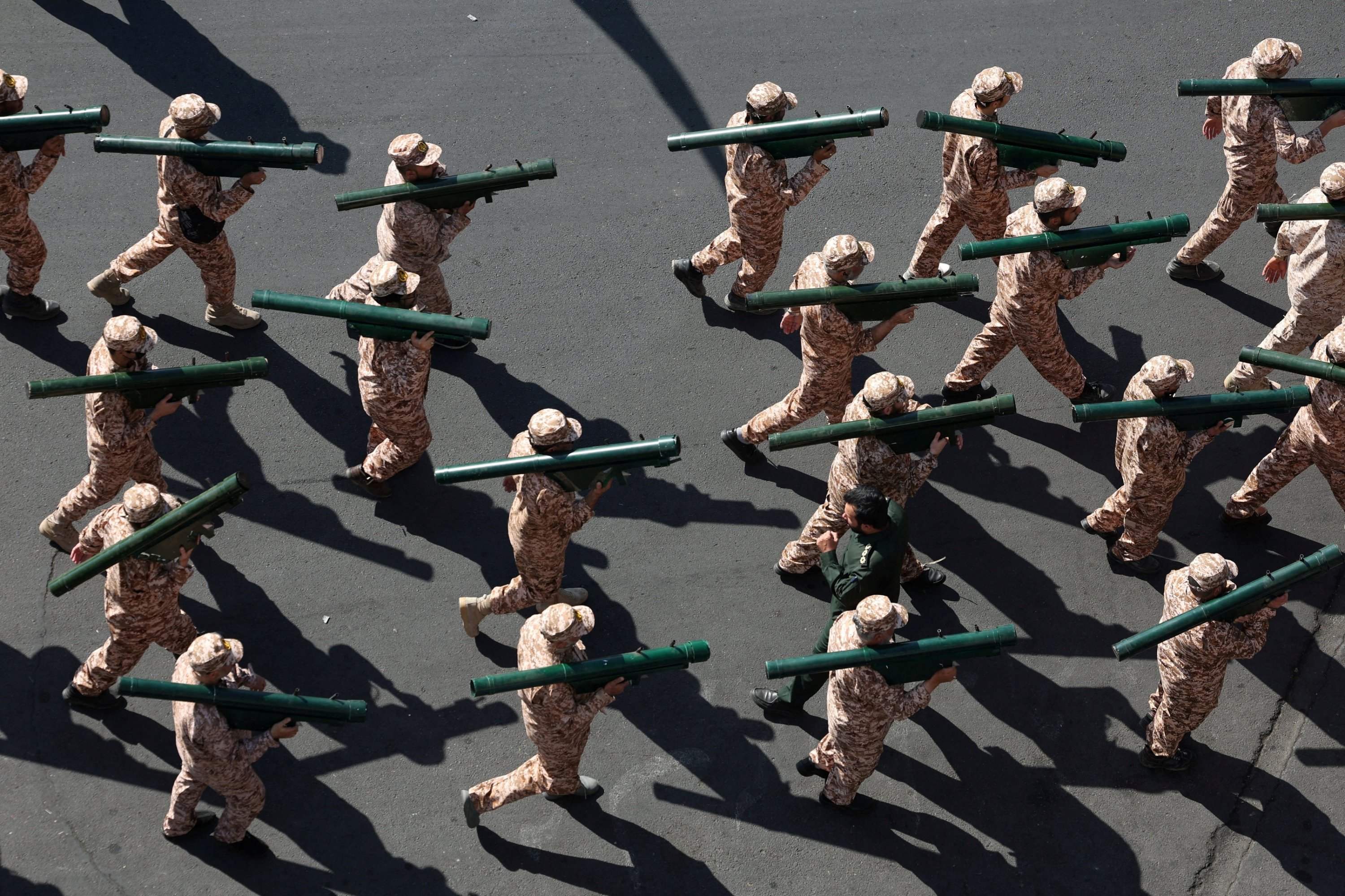
Iran's Islamic Revolutionary Guard Corps has warned of far more destructive strikes if the U.S. resumes attacks. Brigadier General Hossein Mohebbi stated that Iran possesses new weapons capable of expanding the conflict's geography Daily Sabah. The IRGC threatened to strike targets never before attacked and deploy previously unused military capabilities Washington Times. These warnings come as Iranian military leaders have vowed that foreign aggressors will face "more defeats" if they continue challenging the country Tribune India.
Ammunition Shortages Create Operational Limits
U.S. military analysts warn that ammunition stocks have become the war's critical bottleneck. Superior American firepower cannot be sustained indefinitely if regional forces lack sufficient munitions Washington Times. The Pentagon must balance supporting Israel, Saudi Arabia, and direct U.S. operations while managing limited stockpiles. Extended conflict threatens to exhaust these reserves faster than domestic production can replenish them.
Saudi Arabia Hesitant on Major Military Role
Saudi Arabia commands substantial military assets, including first-line F-16 fighter jets and personnel trained in both Saudi Arabia and the United States Washington Times. However, the kingdom lacks advanced stealth aircraft like the F-22 and F-35. Saudi leaders appear reluctant to shoulder primary responsibility for major military confrontations, preferring that U.S. or Israeli forces handle decisive operations in the region Washington Times. This limits regional options for sustained military pressure on Iran.
Houthi Control Threatens Critical Shipping Routes
Iran-backed Houthis have reportedly seized strategic islands and positions near the Bab el-Mandeb Strait, a vital chokepoint for global oil shipments Tribune India. The group's control of these locations threatens to disrupt regional trade and energy exports. Saudi airstrikes have targeted Houthi positions, but the militants maintain their grip on key maritime territory. The closure or disruption of this strait could trigger global energy price spikes and further strain U.S. military resources needed to keep shipping lanes open.
Trump Administration Sets Conflict's Future Course
Vice President Vance has stated that President Trump will determine how and when the Iran conflict changes or ends Washington Times. The administration faces mounting questions about America's ability to win decisively in prolonged regional conflicts. With logistics strained, ammunition finite, and allies reluctant to escalate, Trump must decide whether to negotiate, intensify operations, or maintain the current level of engagement Washington Times.
Sentiment
Mostly NegativeNEGATIVENEUTRALPOSITIVE
Publishers
22
Articles
18
Reach
40
A
AnonymousAuthor


