Ceuta Migrant Reversal
Migrants Detail Hunger and Hostility Driving Their Return from Ceuta, Abandoning European Hopes
Anonymous
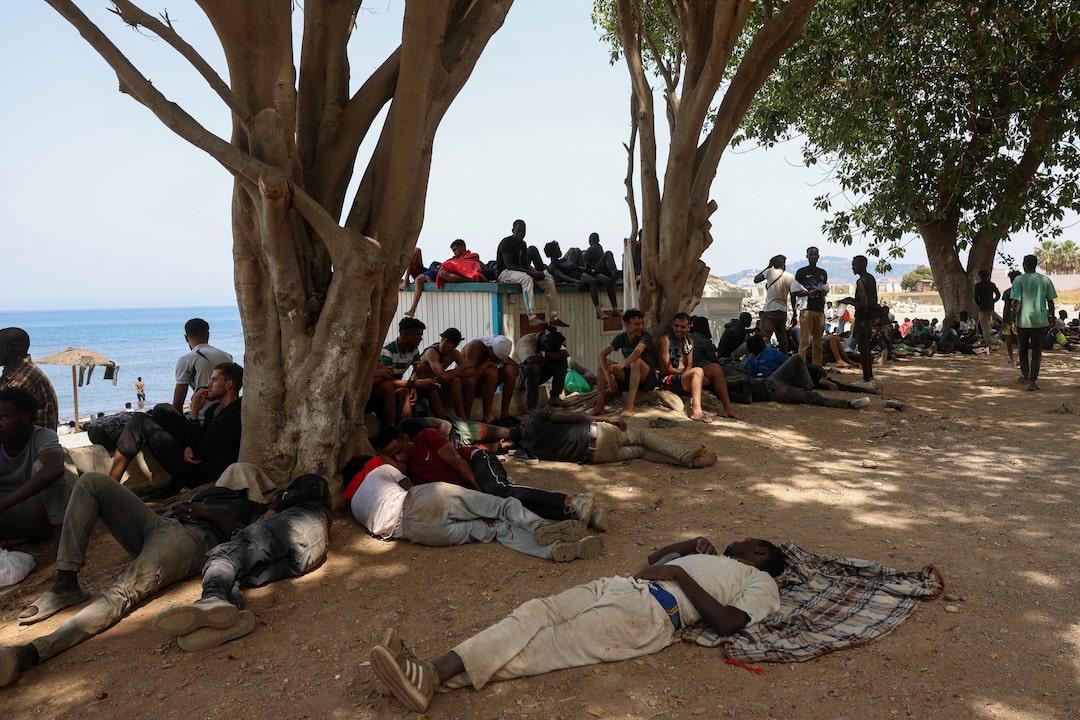
Migrants who stormed into Spain's North African enclave of Ceuta last week have begun returning home — not because they were forced out, but because life inside was too hard to bear. Crossroads Today reported that hunger, exhaustion, and open hostility from local residents crushed their dreams of reaching mainland Europe.
The mass crossing, one of the largest in recent memory, saw thousands wade or swim across the border from Morocco. But within days, many turned around and headed back, telling reporters they could not find food and felt unwelcome wherever they went.
Hunger and Hostility Made Staying Impossible
Once inside Ceuta, migrants struggled to meet basic needs. Finding food proved nearly impossible for many, according to Omaha World-Herald. Aid organizations were stretched thin, and migrants reported going long stretches without eating. The physical toll of the dangerous crossing — many swam for hours — left people too weak to push forward.
Local residents' hostility made a bad situation worse. Migrants said they were met with anger and rejection in the streets. Rather than a gateway to a better life, Ceuta felt like a trap. Many said returning to Morocco was the only option left, Kenosha News reported.
Thousands Crossed, Then the Tide Turned Back
The initial crossing was extraordinary in scale. Spanish authorities were overwhelmed as migrants poured across the border over several days. Ceuta, a small city of roughly 85,000 people, was not equipped to absorb such a sudden influx. Spanish police and military scrambled to manage the situation at the border fence and along the coastline.
But the return was nearly as swift as the arrival. WCF Courier reported that migrants trickled back across the border in groups, many visibly exhausted and empty-handed. The turnaround stunned observers who expected migrants to hold their ground once they had made it into European territory.
Dreams of Europe Shattered at the First Stop
For most migrants, Ceuta was never the final destination. It was meant to be a stepping stone to mainland Spain and the rest of Europe. But crossing into Ceuta does not guarantee the right to move freely across Europe. Many migrants did not know they could be held in the enclave indefinitely, with no clear path forward, according to Missoulian.
The gap between expectation and reality hit hard. Migrants had risked their lives crossing open water, only to find themselves stranded, hungry, and unwanted. Herald-Review reported that many described feeling completely defeated after making it across the border — a journey they had planned and sacrificed for over months or years.
Spain and Morocco Face Pressure Over Border Crisis
The crisis has put Spain in a difficult spot. The Spanish government faces pressure to secure its borders while also meeting its legal duties to asylum seekers. Ceuta's small size and limited resources make large-scale migration nearly impossible to manage. Tensions between Spain and Morocco over the border have also flared, Fredericksburg.com reported.
Morocco's decision to loosen its border controls is widely seen as a political move tied to a dispute with Spain over the Western Sahara region. The episode has reignited debate across Europe about how to handle irregular migration from Africa. For now, those who returned home face the same dangerous conditions they tried to flee in the first place, according to Auburn Citizen.
Sentiment
NeutralNEGATIVENEUTRALPOSITIVE
Publishers
21
Articles
21
Reach
21
A
AnonymousAuthor


