New Cruise Engine Tested
Kratos and GE Aerospace successfully ignite the first F143 cruise engine.
Anonymous
Key Points
1
The engine is specifically identified as the F143-ZZ-100 variant and is being developed as a second source for Williams International’s F107 turbofan, amid U.S. plans to procure as many as 11,200 engines.
2
GEK800 Serial Number 1 achieved a 100% success rate during this critical development phase, according to the companies, allowing the program to proceed to the next stage of testing while remaining on schedule.
3
Kratos and GE Aerospace said the X-58 test validated the engine’s technological architecture, reliability and readiness for integration, positioning it for use by allied defense prime contractors as well as U.S. customers.
4
GE Aerospace executive Jorge Perez said the collaboration is producing “a highly capable propulsion system designed to meet the demanding requirements of cruise missile applications.”
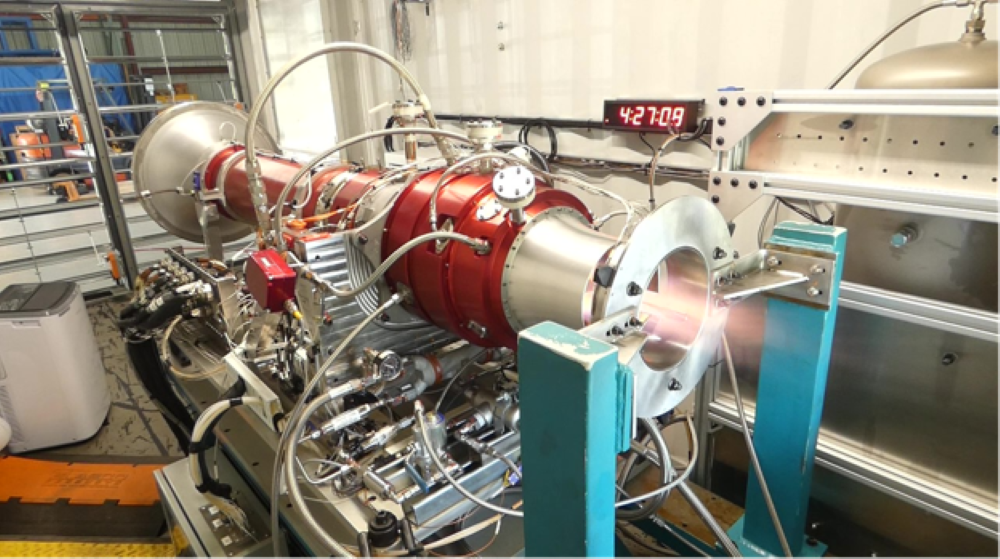
Kratos Defense and GE Aerospace achieved first ignition of the GEK800 turbofan engine—now called the F143—at Kratos' X-58 test facility, marking a major milestone for a new cruise missile propulsion system Aviation Week. The engine achieved a 100% success rate in this critical test, clearing the way for the program to advance to the next testing phase while staying on schedule Defence Industry.
The F143 is being developed as a second source for the Williams International F107 turbofan as the U.S. military plans to procure as many as 11,200 engines for long-range, stand-off cruise missiles Marketbeat. Kratos and GE Aerospace are emphasizing modern engineering and lower-cost manufacturing to support rapid production of high-performance strike systems for U.S. and allied customers.
Engine Proves Ready for Next Phase of Testing
The GEK800 Serial Number 1, designated as the F143-ZZ-100 variant, successfully completed its first ignition test at Kratos' X-58 facility Air Force Technology. The successful burn validated the engine's technological design, reliability, and integration readiness, positioning it for use by both U.S. defense primes and allied contractors Interesting Engineering. The program now moves forward with additional performance, durability, and reliability assessments.
Second Source Engine Targets Massive U.S. Procurement
The F143 was created to provide a backup supplier for the F107 turbofan as the U.S. Department of Defense gears up for large-scale purchases Marketbeat. The military's plans call for up to 11,200 engines to power a new generation of cruise missiles and attritable strike systems. Having two suppliers reduces supply chain risk and enables faster production ramps for this critical capability.
Lower Costs and Rapid Manufacturing Drive the Program
Kratos and GE Aerospace say the F143 program combines modern engineering with cost-conscious manufacturing to deliver affordability without sacrificing performance Defence Industry. This approach is essential for producing attritable systems—weapons designed to be expendable—that can be made and deployed quickly. The companies position the engine as meeting Department of Defense requirements for sustainable, large-volume production of cruise missiles.
GE Aerospace Highlights Propulsion System Capability
Jorge Perez, a GE Aerospace executive, called the partnership "a highly capable propulsion system designed to meet the demanding requirements of cruise missile applications" Defence Industry. The successful first ignition test now opens the path to full integration with missile platforms and production readiness demonstrations. Future test phases will focus on endurance, reliability, and system performance in real-world mission scenarios.
Sentiment
Mostly PositiveNEGATIVENEUTRALPOSITIVE
Publishers
14
Articles
41
Reach
55
A
AnonymousAuthor


