Delhi AI Traffic System
Union Cabinet Approves Delhi's ₹1,790 Crore AI Traffic Management System
Anonymous
Key Points
1
Delhi Police will choose a Master System Integrator through competitive bidding, while C-DAC will serve as Project Management Consultant, providing technical monitoring, scrutiny and acceptance.
2
The deployment plans Adaptive Traffic Control Systems at 1,092 locations and automated, technology-driven enforcement systems at 1,029 sites.
3
The ITMS proposal was first initiated ahead of the 2010 Commonwealth Games; the expanded project is expected to detect nearly 20 types of traffic violations.
4
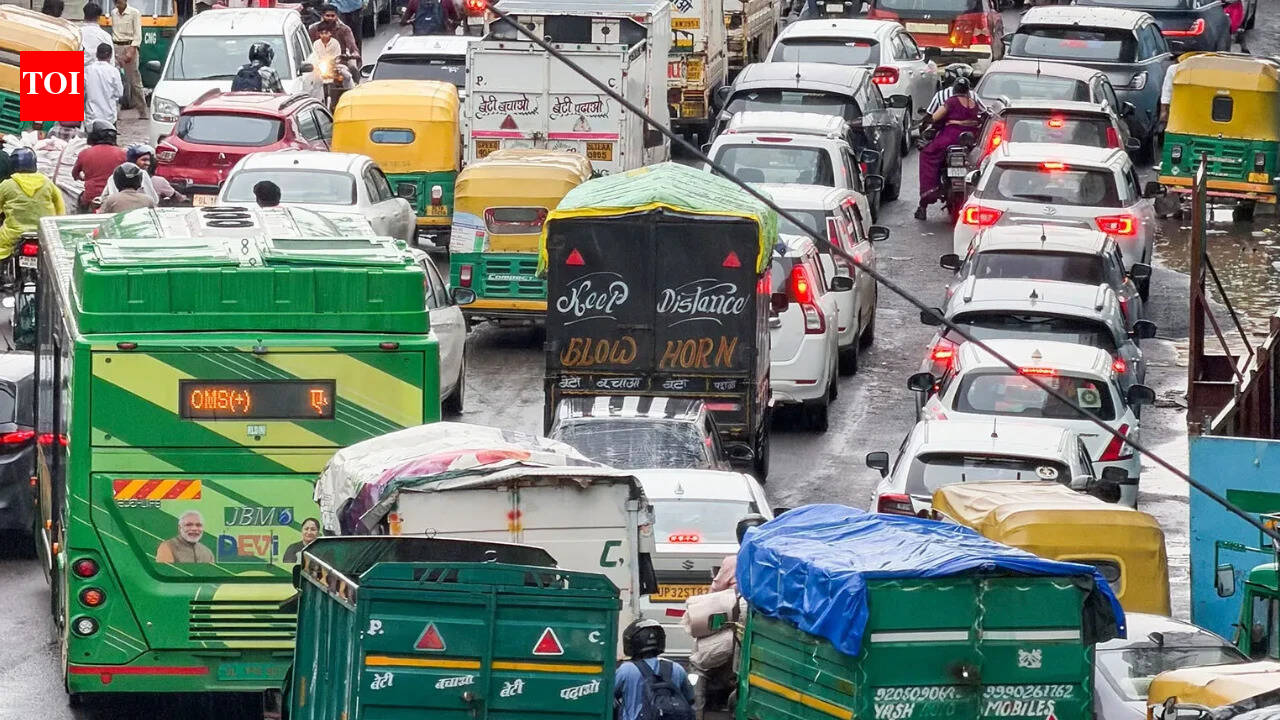
Delhi currently has 1,529 traffic signals operating on fixed timings, and the existing cameras for red-light jumping and speeding operate in isolation rather than through a unified city-wide system.
India's Union Cabinet approved a ₹1,789.52 crore artificial intelligence-powered traffic system for Delhi on Wednesday. Hindustan Times reported the system will deploy across 42 traffic corridors over 24 months, using adaptive signals and cameras to reduce congestion and improve road safety in a city struggling with growing vehicle numbers.
The Intelligent Traffic Management System will coordinate traffic flow in real time, detect congestion, and give emergency vehicles priority routes. Tribune India noted the project includes 1,092 adaptive signal locations and 1,029 automated enforcement sites to catch nearly 20 types of traffic violations.
How the AI System Will Work
The new system replaces Delhi's 1,529 fixed-timing traffic signals with adaptive technology that responds to real-time conditions. Times of India explained the system integrates live traffic data, cameras, and signals into one unified network. Currently, cameras operate in isolation rather than communicating with each other across the city.
The platform will detect congestion automatically and reroute traffic flow accordingly. Emergency ambulances will receive priority signal coordination. Big Info reported commuters will receive live traffic updates through the system, helping them choose faster routes.
Delhi Police to Lead Implementation With Expert Oversight
Delhi Police will select a Master System Integrator through competitive bidding to build and deploy the technology. The Centre for Development of Advanced Computing (C-DAC) will monitor the project as a technical consultant, ensuring quality and performance standards are met.
The three-phase rollout spans 24 months, followed by five years of operation and maintenance. Hindustan Times noted this centralized approach replaces the fragmented camera and signal systems currently scattered across the city.
A Decades-Old Plan Finally Moving Forward
The traffic management system was first proposed ahead of the 2010 Commonwealth Games but never fully implemented. Times of India reported the current expanded version represents the government's renewed effort to tackle Delhi's chronic congestion through technology rather than infrastructure expansion alone.
The system will detect violations like red-light jumping, speeding, and improper lane changes across 1,029 enforcement sites. Business News This Week noted the AI platform aims to maximize existing road capacity by making traffic flow more intelligent and responsive to actual demand.
Sentiment
Mostly PositiveNEGATIVENEUTRALPOSITIVE
Publishers
16
Articles
21
Reach
37
A
AnonymousAuthor


