Ancient Fossils Unearthed
Construction Crews Unearth 40-Million-Year-Old Ancient Mammal Fossils in Oceanside
Anonymous
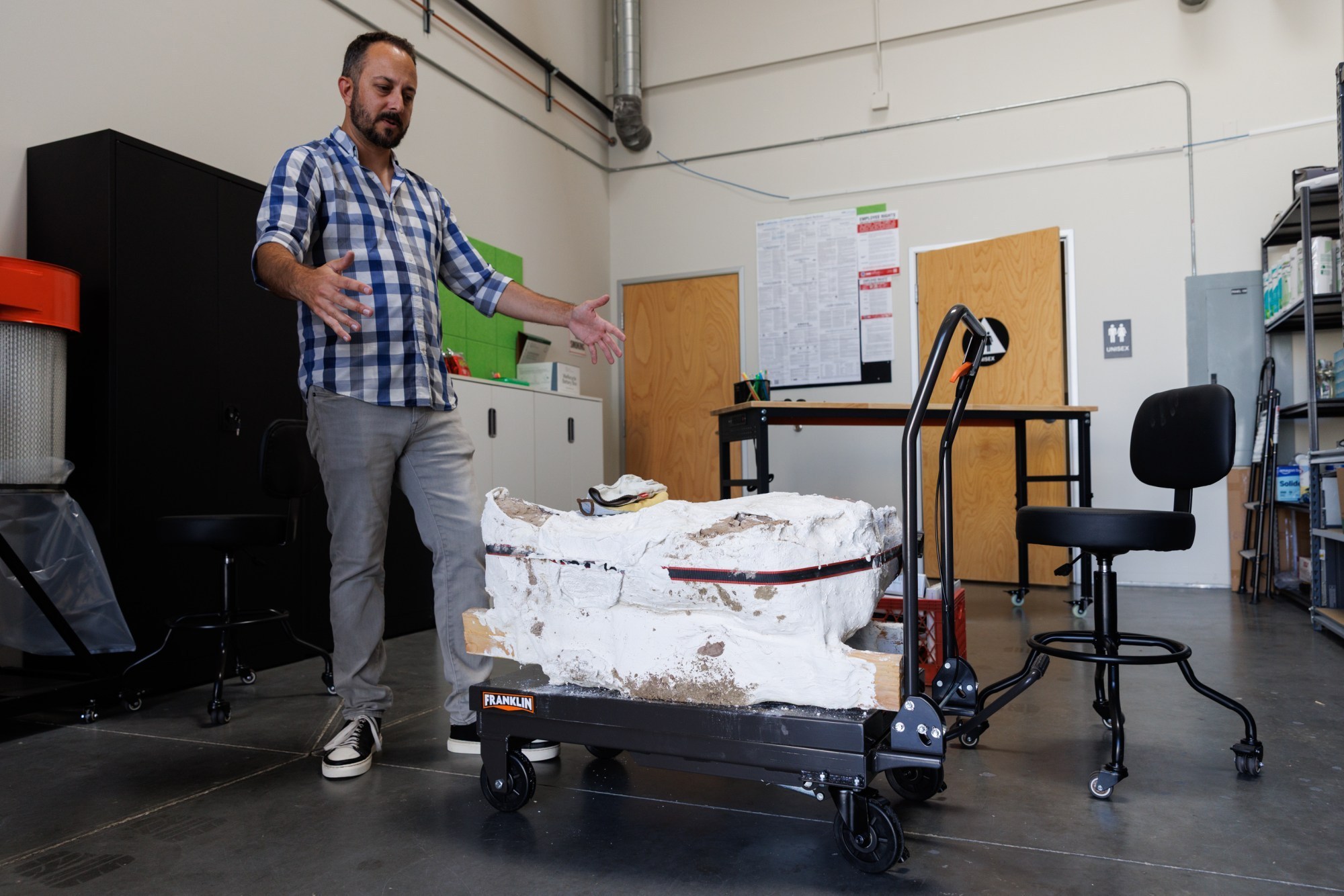
Crews excavating an infrastructure project in Oceanside, California, uncovered fossilized limb bones, ribs and other fragments about 12 feet underground. Paleontologists estimate the remains are 40 million to 45 million years old, based on their discovery in Member C of the Eocene-era Santiago Formation. The bones likely belonged to an extinct odd-toed hoofed mammal, possibly a brontothere—known as a “thunder beast”—or an amynodont sometimes called a “swamp rhino,” though further study is needed to identify the animal. Principal paleontologist Joseph El Adli and his team spent seven days removing the fossils from several tons of hardened sediment and preserving them in plaster. Oceanside withheld the exact site location to protect the fossil deposit, which was identified and recovered with the help of paleontological and cultural-resource monitors.
Key Points
1
The fossils were identified after the project’s regular state-mandated archaeological monitor took a sick day and Joseph El Adli was called to the site; he said he spotted the unusual material within five minutes of arriving.
2
The fossils’ estimated age falls within the Uintan North American Land Mammal Age, a more specific biostratigraphic designation within the Eocene.
3
El Adli’s preliminary interpretation is that the animal may have died in an exposed setting, where its carcass dried and attracted predators, before a flood buried and preserved the remains.
4
The two possible animals had notably different appearances: a brontothere was a rhino-sized vegetarian with a shoulder hump and Y-shaped nasal horn, while an amynodont was a squat, hippo-like herbivore with short legs, a broad head and prominent canine teeth.
5
California environmental-review rules can require construction agencies to assess and protect fossil resources, which is why paleontological monitors were involved in the excavation and recovery.
Sentiment
Mostly NegativeNEGATIVENEUTRALPOSITIVE
Publishers
6
Articles
33
Reach
39
A
AnonymousAuthor


