Boosting India Aerospace Sovereignty
HAL Koraput marks six decades of production by delivering its landmark 2,000th aero-engine.
Anonymous
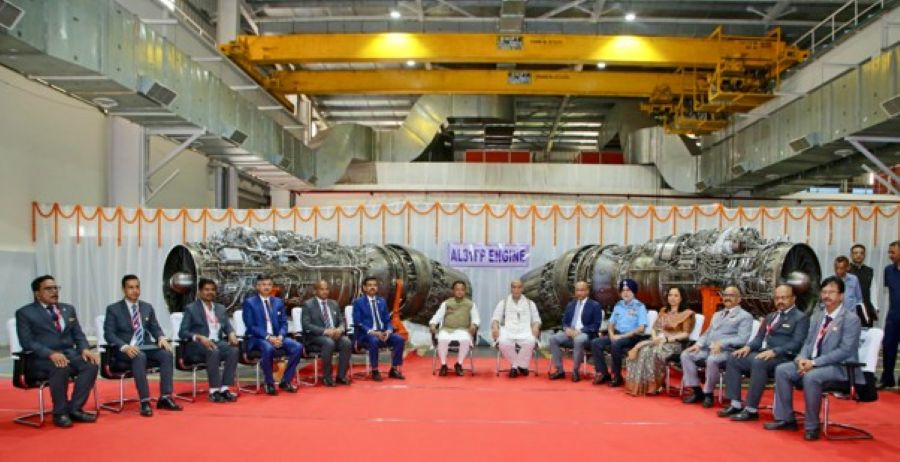
HAL’s Koraput division in Sunabeda marked six decades of engine production by delivering its 2,000th aero-engine, with Defence Minister Rajnath Singh emphasizing the importance of indigenous propulsion technology to India’s aerospace sovereignty. HAL will invest ₹218 crore in a second Shakti engine production line, planned to produce up to 100 engines annually by 2028–29 for Dhruv and Prachand helicopters. The company will also spend ₹335 crore to increase annual production capacity for Su-30MKI AL-31FP engines from 30 to 50; Singh said HAL had delivered 63 of the 240 engines ordered, exceeding its target despite supply-chain challenges. Singh called for investment in domestic engine design, testing, materials and maintenance, including capabilities for future programmes such as the AMCA. HAL Koraput has manufactured engines for several generations of fighter aircraft and overhauled more than 9,000 engines.
Key Points
1
The Shakti programme is an Indo-French collaboration between HAL and Safran Helicopter Engines; the new line is intended to manufacture the Indian version of Safran’s Ardiden 1H1 turboshaft engine.
2
The Ministry of Defence’s ₹62,700-crore contracts with HAL for 156 Prachand helicopters—66 for the Air Force and 90 for the Army—are expected to drive additional engine demand. Deliveries are scheduled to start in the third year and continue over five years.
3
Singh said HAL delivered the first AL-31FP engine ahead of schedule, in addition to delivering 63 engines against a target of 60 by the end of the second year.
4
Singh highlighted plans for an investment of around ₹5,000 crore, India’s first indigenous high-thrust engine testing facility, and collaboration with MIDHANI to develop raw materials domestically. He also called for greater participation by private companies, MSMEs and research institutions.
Sentiment
Mostly PositiveNEGATIVENEUTRALPOSITIVE
Publishers
21
Articles
19
Reach
40
A
AnonymousAuthor