Easier Search for Life
New Studies Suggest Enceladus Ocean is Hospitable and Biosignatures are Easily Detected
Anonymous
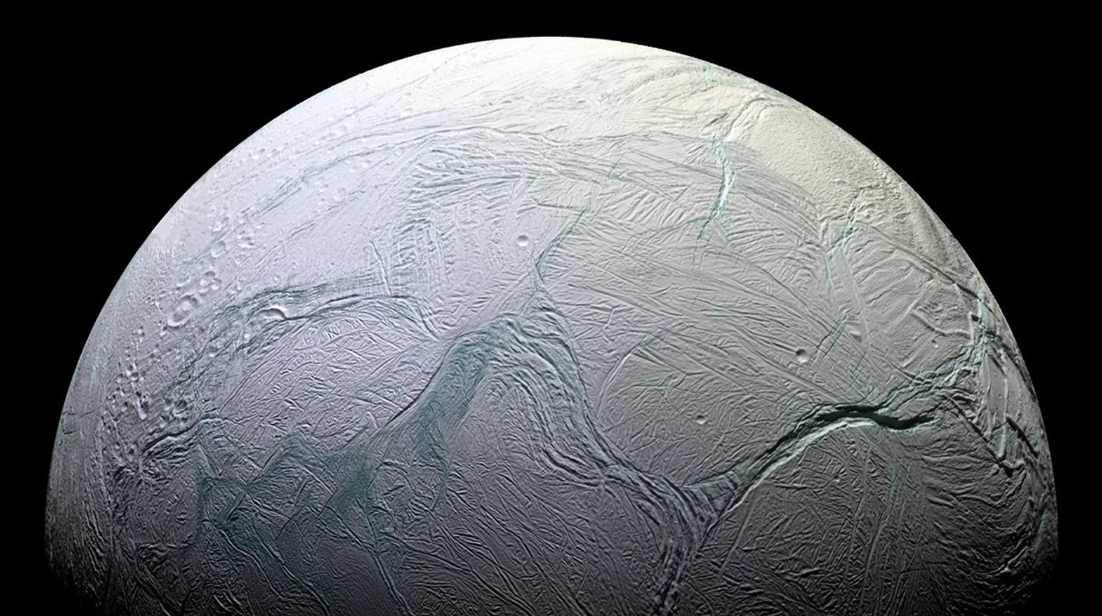
Two new studies strengthen the case for Enceladus as a promising place to search for life and suggest future missions may be able to detect signs of it more easily. Researchers found that droplets from the moon’s subsurface ocean freeze slowly as they rise through its icy crust, separating salts and organic compounds into ice grains whose composition can reveal more about the ocean. A separate experiment found that Earth microbes known as methanogens could survive in a simulated, highly alkaline Enceladus-like environment, where reactions between water and rock produced hydrogen. The findings suggest both that Enceladus’s ocean may be more hospitable than previously thought and that material in its plumes could offer accessible clues about conditions there; they do not establish that life exists on the moon.
Key Points
1
The microbes tested were methanogens from hydrothermal-vent ecosystems off Japan. They produce methane by using hydrogen and carbon dioxide, providing a specific model for how potential Enceladus organisms might live.
2
In the simulated ocean, the methanogens thrived at pH 11 and adjusted their metabolism to use the low carbon-dioxide levels—an unexpected degree of tolerance, according to the researchers.
3
The plume droplets form when gas bubbles burst at the ocean’s surface. As the droplets rise through cracks, they can travel at up to 1,000 km/h and break into tiny fragments when they strike fissure walls.
4
Cassini’s plume measurements are unusually direct evidence: Enceladus is the only extraterrestrial body of water from which scientists have directly analyzed samples, including traces of salts and organic compounds.
Sentiment
Mostly PositiveNEGATIVENEUTRALPOSITIVE
Publishers
16
Articles
2
Reach
18
A
AnonymousAuthor


