October Stargazing Guide
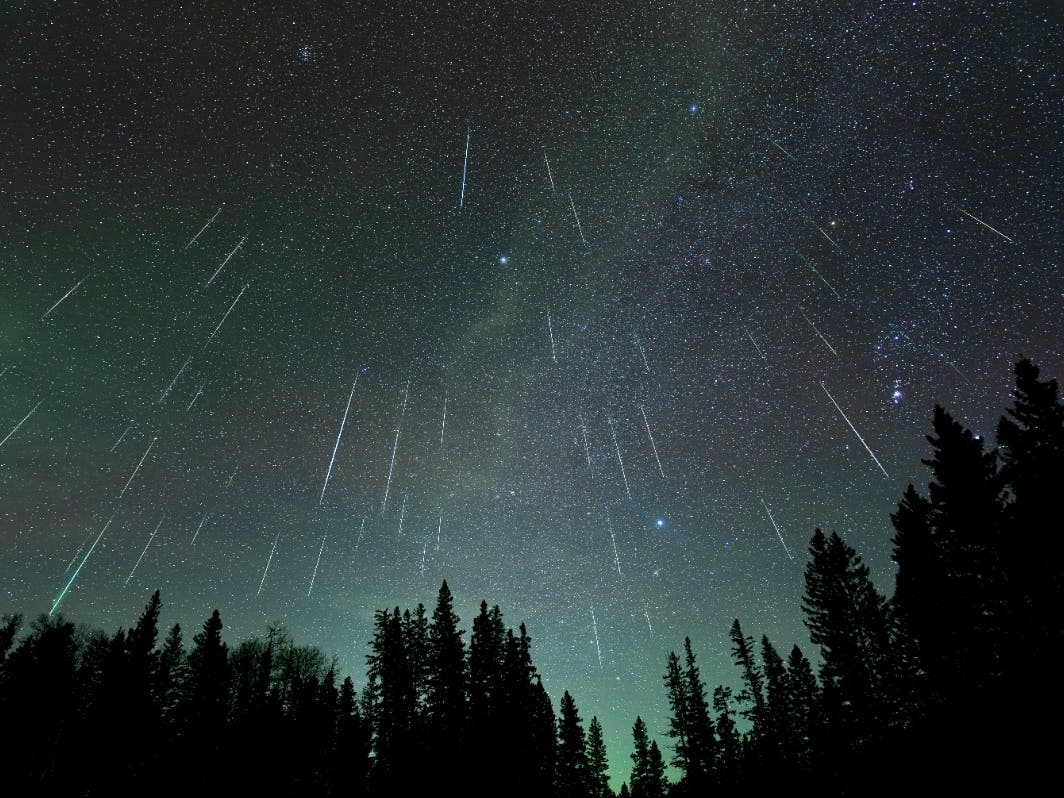
October 2026 brings two major meteor showers alongside rare planetary viewing opportunities.
Anonymous
Key Points
1
The Draconids originate from comet 21P/Giacobini-Zinner, whose roughly 6.6-year orbit brought it relatively close to the Sun in March 2025. The shower can be exceptionally variable: in 2018, it produced an estimated 150–160 meteors an hour.
2
Hubble observations recently revealed a ten-sided atmospheric wave around Saturn’s south pole; the feature appears to be strengthening, offering scientists a rare chance to watch a large-scale atmospheric pattern develop.
3
Orionid meteors move at about 41 metres per second, helping them leave bright, long-lasting trails. Halley’s Comet debris also produces the Eta Aquariid meteor shower in spring.
4
Jupiter is forecast to appear close to the Moon for one morning in October’s pre-dawn sky, with Mars also visible nearby; Mars is expected to be closest to the Moon on Oct. 5.
5
The New Moon falls on Oct. 10, making the nights of Oct. 9–10 and Oct. 10–11 particularly dark for stargazing. The final days of the waning crescent are also favorable for seeing Earthshine, sunlight reflected from Earth faintly illuminating the Moon’s dark side.
October 2026 brings two meteor showers to night skies: the Draconids peaking October 8–9 and the Orionids peaking October 21–22. Patch reports the Draconids are best viewed about an hour or two after sunset, while the Orionids, made from debris left by Halley's Comet, shine brightest before dawn. A NASA skywatch guide highlights that Saturn reaches opposition on October 4, appearing at its brightest and closest to Earth, and the Moon will pass near the Pleiades star cluster.
For best viewing, find dark skies away from city lights and let your eyes adjust for 20–30 minutes. The Weather Network notes that October 10 brings a New Moon, creating especially dark nights on October 9–11. Check local weather before heading out, as clouds will block the view.
Draconids Peak Early in Evening Hours
The Draconids originate from Comet 21P/Giacobini-Zinner, which completed its closest approach to the Sun in March 2025 during its 6.6-year orbit around the Sun, according to Space.com. This shower usually produces modest meteor counts, but it can occasionally flare into a much stronger burst. In 2018, the Draconids reached an estimated 150–160 meteors per hour at peak, Space.com reports.
Patch explains that peak viewing occurs on the evening of October 8 into the early morning of October 9. Unlike most meteor showers, the Draconids are best watched soon after sunset rather than in pre-dawn hours. This timing makes them ideal for families and casual observers who don't want to wake up early.
Orionids Deliver Bright, Long-Lasting Trails
The Museum of Science, Boston notes that Orionid meteors travel at about 41 kilometers per second as they enter Earth's upper atmosphere, creating bright, long-lasting trails across the sky. These meteors originate from debris left along the orbital path of Halley's Comet. The same comet also produces the Eta Aquariid meteor shower in spring.
The Orionids peak overnight October 21–22 and are best viewed in pre-dawn darkness, Time and Date reports. Moonlight may wash out some of the fainter meteors, so darker skies are crucial for seeing the full display. Plan to watch for at least 30 minutes to spot several meteors, as these showers rarely produce continuous streaks.
Saturn's Rare Southern Atmospheric Wave
Hubble Space Telescope observations revealed a 10-sided atmospheric wave around Saturn's south pole—a geometric pattern with individual sides exceeding Earth's diameter. SciTechDaily reports that the feature appears to be strengthening, offering scientists a rare chance to watch a large-scale planetary atmospheric pattern develop in real time.
National Geographic confirms that Saturn reaches opposition on October 4, aligning directly opposite the Sun and appearing at its brightest and closest point to Earth. This is the ideal time to observe Saturn through binoculars or a telescope. The Moon will also pass close to Mars on October 5 in the pre-dawn eastern sky, with Jupiter visible nearby.
Dark Skies Peak Near October 10 New Moon
The New Moon occurs on October 10, creating three especially dark nights from October 9–11 for stargazing, The Weather Network reports. With no moonlight to interfere, fainter meteors and planets become visible even to the naked eye. This window is ideal for both meteor watching and observing Saturn and other planets.
The final days of the waning crescent phase also offer a chance to see Earthshine—sunlight reflected from Earth faintly illuminating the Moon's dark side. This ghostly glow is subtle but visible to the naked eye during clear nights shortly before the New Moon.
Sentiment
Mostly NegativeNEGATIVENEUTRALPOSITIVE
Publishers
27
Articles
38
Reach
65
A
AnonymousAuthor


