Historic Iron Trove Discovered
Austrian Archaeologists Uncover Europe’s Largest Prehistoric Iron Cache from Danube
Anonymous
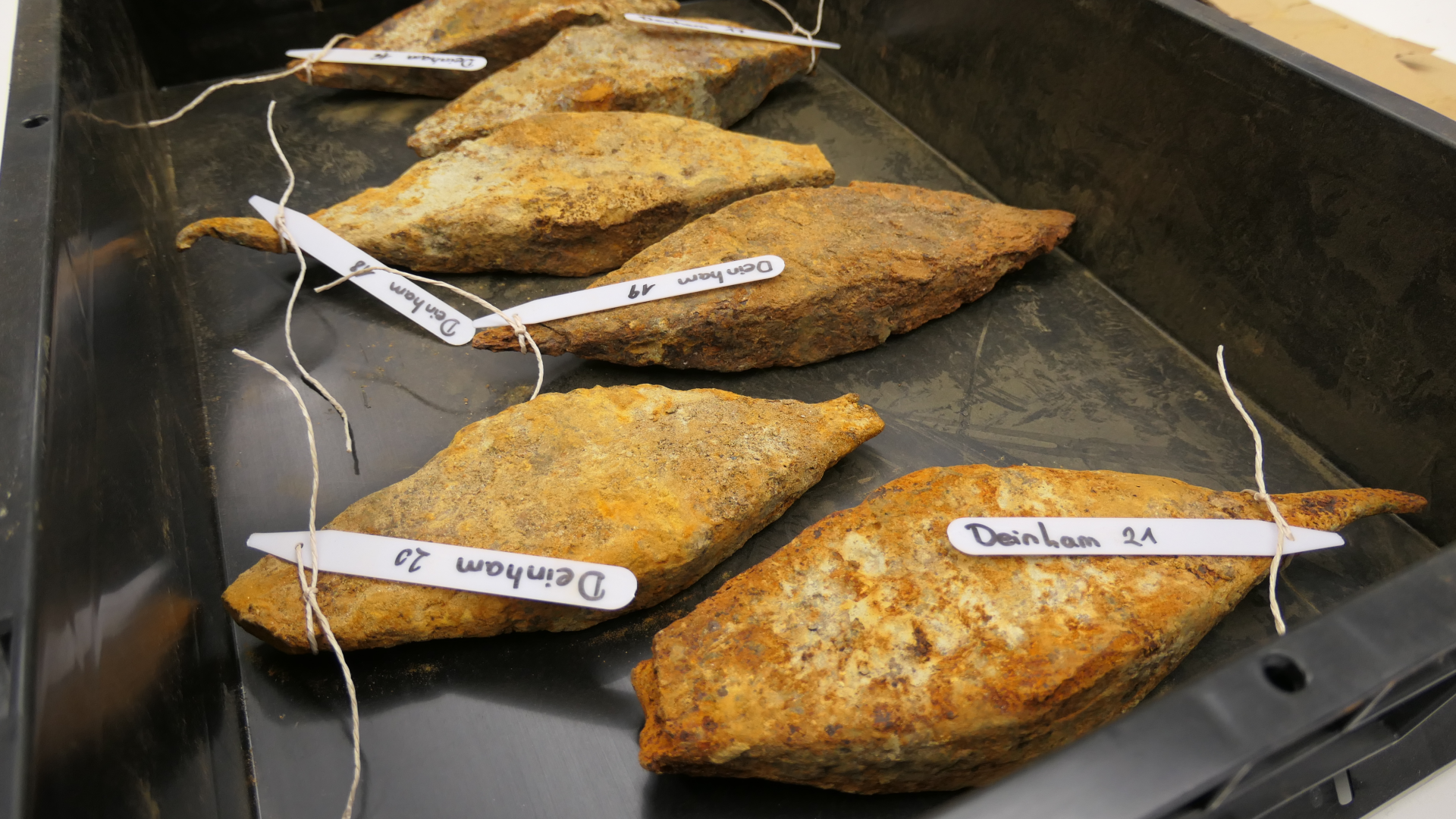
Archaeologists have identified at least 500 double-pointed iron bars recovered from the Danube near Deinham, Austria, as the largest known mass find of prehistoric iron bars in Europe. Discovered during gravel extraction in 2019, the semifinished bars date to the Late Iron Age, mainly the third to second centuries B.C., and weigh more than a metric ton altogether. The material could have been forged into roughly 500 swords or as many as 8,000 nails, indicating the scale of iron production and trade in the Danube region. Researchers believe the cargo was probably lost in a shipwreck, although a ritual deposit cannot be ruled out because the original archaeological context was disturbed. The bars’ geographic origin and exact destination remain uncertain, and chemical analysis is underway to determine whether they were produced in nearby Bavaria or elsewhere.
Key Points
1
Researchers recovered 540 bars or bar fragments in total, a somewhat higher count than the 500-plus figure reported for the assemblage; radiocarbon dating also suggests that some pieces may date as far back as the fourth century B.C.
2
The find offers rare evidence of the scale of Late Iron Age trade because iron semi-products are difficult to date and often escape detection, leaving the volume of trade from specialized production centers poorly understood.
3
Lead archaeologist Peter Trebsche said it was “nothing short of a minor miracle” that the bars were reported to Austria’s monument authority rather than being sold to scrap dealers, and said he was grateful that the finders donated the trove to a state museum collection.
4
Trebsche described the shipment as evidence that an exceptionally large quantity of iron could be transported and exchanged at once, demonstrating the increased production capacity reached in the Danube region during the third and second centuries B.C.
Sentiment
Mostly NegativeNEGATIVENEUTRALPOSITIVE
Publishers
8
Articles
8
Reach
16
A
AnonymousAuthor


