1926 Hurricane Centennial
Centennial of the 1926 Miami Hurricane Revives Warnings for Modern South Florida
Anonymous
Key Points
1
The official death toll remains uncertain: a Red Cross report recorded 373 deaths and 6,381 injuries, while many people were reported missing.
2
The hurricane damaged the young University of Miami’s early buildings, halted campus construction and delayed classes, but the school opened in late October 1926; the disaster also inspired the university’s “Hurricanes” nickname.
3
Dade County’s population had more than doubled from 42,753 in the 1920 census to well over 100,000 by September 1926, intensifying the storm’s impact on a rapidly expanding region.
4
A new reconstruction by University of Miami researcher Brian McNoldy uses a parametric model incorporating the storm’s intensity, radius of maximum winds, tropical-storm-force wind radii and track to produce detailed surface-wind maps—parameters absent from the official 1926 record.
5
Genealogists can trace the hurricane’s effects through census records, city directories, newspapers, death and property records, probate cases, cemetery records, maps and photographs; a person’s disappearance from local records may reflect evacuation, displacement, hospitalization or relocation rather than death.
South Florida marks 100 years since the Great Miami Hurricane devastated the region on September 18, 1926. The storm struck with Category 4 strength and winds near 145 mph, killing hundreds and displacing tens of thousands as it obliterated a rapidly growing Miami and surrounding communities Weather.gov. Because forecasters lacked modern tools and communication from the Bahamas failed, residents got little warning of the approaching disaster.
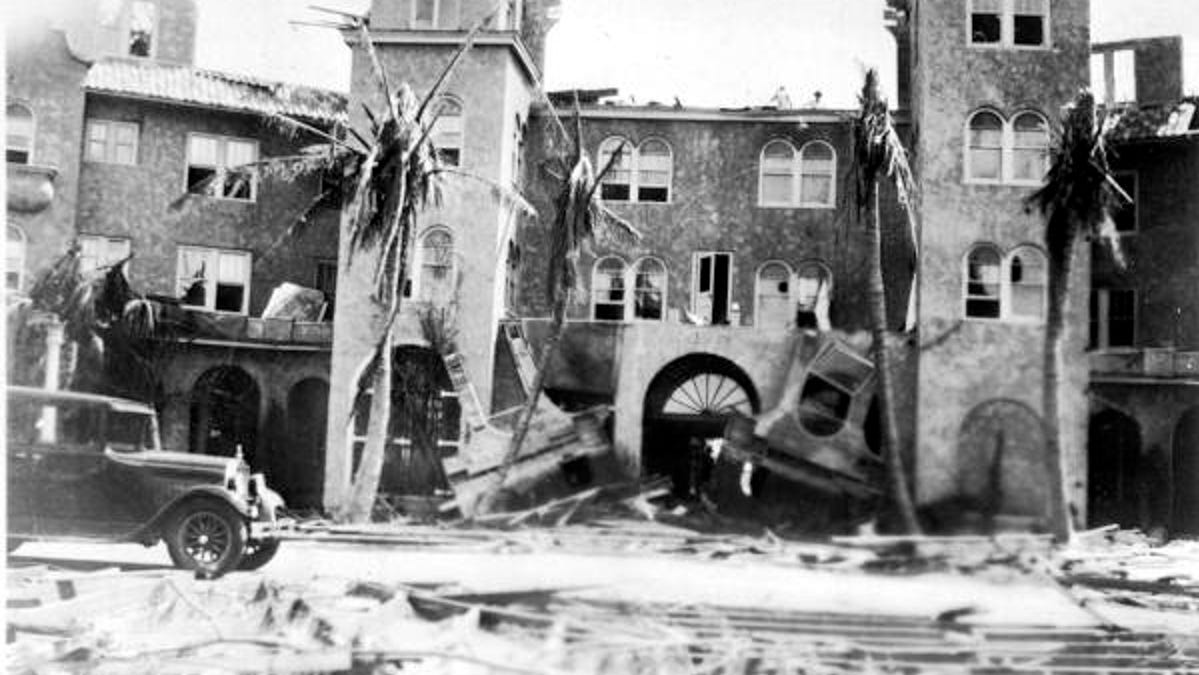
The hurricane collapsed Florida's 1920s land boom and damaged the young University of Miami so badly that it inspired the school's "Hurricanes" nickname Miami Herald. A century later, researchers are using new wind-field reconstructions to understand the storm's true power, while genealogists help families trace its devastating human toll through old records Miami Herald.
A Region Blindsided by Catastrophic Winds
The 1926 hurricane struck when Miami was booming. Weather.gov reports that Dade County's population had more than doubled from 42,753 in 1920 to well over 100,000 by September 1926. Officials and newspapers initially downplayed the threat because forecasting methods were primitive and no one expected such intensity. The storm roared ashore with little advance notice, catching a densely packed region completely unprepared.
A Red Cross report documented 373 deaths and 6,381 injuries, though many people were reported missing Weather.gov. The actual death toll may have been higher. Tens of thousands lost their homes and livelihoods. The storm's arrival during a real estate boom made losses especially severe for families who had recently invested in Florida property.
How Modern Science Now Maps a 100-Year-Old Storm
Researchers today have tools the 1926 forecasters never had. Weather.gov explains that a new reconstruction by University of Miami scientist Brian McNoldy uses a parametric model to map the hurricane's surface winds in detail. The model incorporates the storm's intensity, radius of maximum winds, and tropical-storm-force wind radii—parameters officials never recorded in 1926.
These reconstructed wind maps show how widely the hurricane's dangerous winds spread across South Florida. The detailed maps help researchers and emergency managers understand what such a powerful storm could do to today's much larger and more developed region. The work also fills gaps in historical records that have puzzled scientists for decades.
University of Miami's Hurricane Legacy Born From Disaster
The young University of Miami took the full force of the 1926 hurricane. Campus buildings were severely damaged, construction halted abruptly, and classes were delayed. Yet the school reopened in late October 1926 and emerged from the disaster with a new identity. The hurricane inspired students and staff to adopt the "Hurricanes" as the university's athletic nickname—a symbol of resilience born from catastrophe.
That naming choice has endured for a century, linking the school forever to the storm that nearly derailed its founding. Today, the University of Miami's connection to hurricane science and preparedness reflects that historical trauma turned into institutional mission.
What Today's South Florida Could Face From an Identical Storm
If the 1926 hurricane happened today, the damage would be staggering. PNJ.com reports that experts estimate damages would exceed $400 billion—nearly half a trillion dollars. That figure reflects how much more densely populated and developed South Florida has become. Millions more residents and billions in infrastructure now sit in the hurricane zone.
Modern forecasters would provide days of warning today instead of the hours residents got in 1926. Yet a Category 4 storm hitting the Miami metro area would still cause catastrophic losses and displacement. Miami Herald notes the anniversary is prompting conversations about how vulnerable the region remains despite advances in forecasting and building codes.
Tracing the Hurricane's Hidden Human Cost Through Records
Genealogists and historians can now help families understand what happened to their ancestors during and after 1926. Weather.gov explains that researchers can use census records, city directories, newspapers, death certificates, property records, probate cases, cemetery records, maps and photographs. A person's disappearance from local records might indicate evacuation, displacement, hospitalization or relocation—not necessarily death.
These research tools reveal migration patterns, property loss, and family separations caused by the storm. Many survivors scattered across Florida or left the state entirely. By connecting the dots across historical documents, genealogists help families understand how the 1926 hurricane shaped their family stories and movements.
Sentiment
Mostly NegativeNEGATIVENEUTRALPOSITIVE
Publishers
17
Articles
44
Reach
61
A
AnonymousAuthor


