UN Enemy State Debate
Japanese Prime Minister Takaichi Urges UN to Remove WWII Enemy State Clauses
Anonymous
Key Points
1
Takaichi said Japan’s postwar conduct was based on an “exclusively defense-oriented policy,” presenting that approach as evidence of its peaceful role in the international community.
2
Chinese Foreign Ministry spokesperson Guo Jiakun said the international community pays more attention to Japan’s actions than its words, accusing Tokyo’s government of denying its history of aggression, glorifying war crimes and challenging the postwar international order.
3
Chinese experts argued that Japan’s current policies include efforts to abandon the country’s three non-nuclear principles and revise its pacifist constitution, developments they said could threaten regional peace and stability.
4
Takaichi’s appeal came after a brief summit with U.S. President Donald Trump on the sidelines of the U.N. gathering, before Trump was scheduled to host Chinese President Xi Jinping for a state visit in Washington.
5
The recent use of the enemy-state language by China was linked specifically to worsening Japan-China relations over remarks Takaichi made about Taiwan.
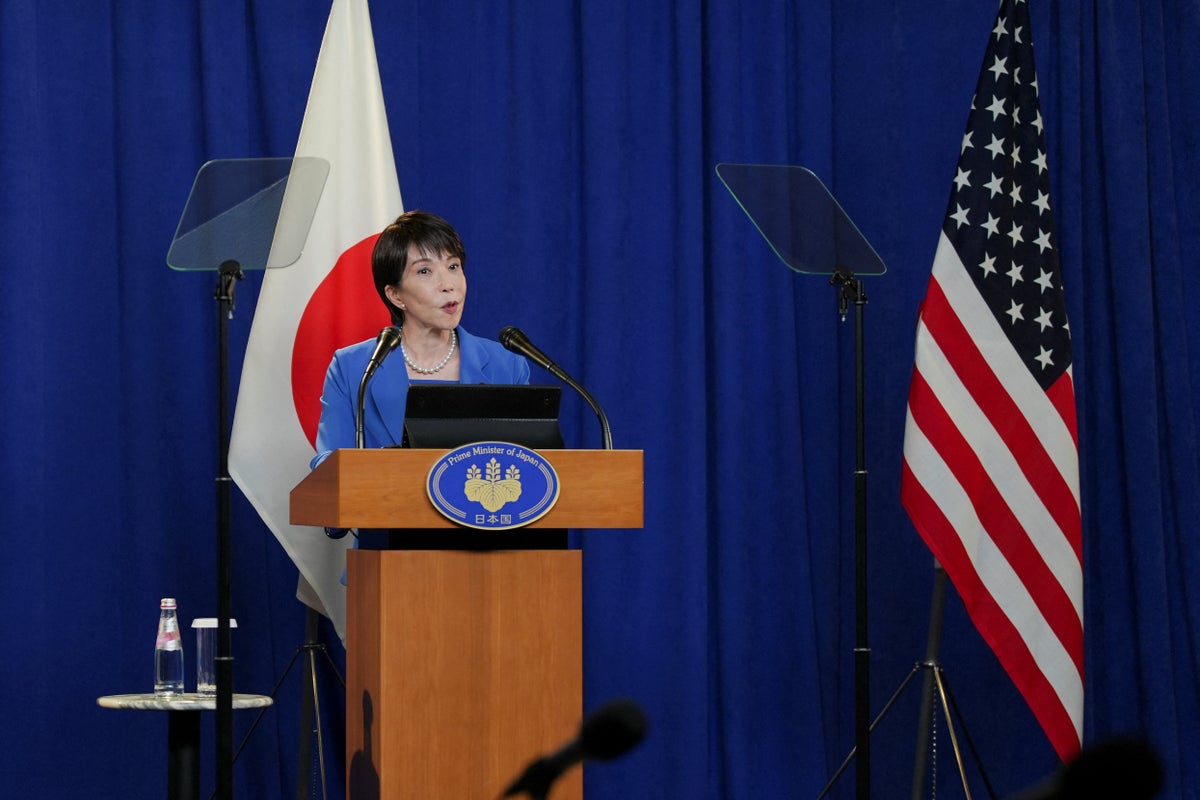
Japanese Prime Minister Sanae Takaichi called on the United Nations to formally remove World War II-era clauses that label Japan, Germany, and Italy as "enemy states" during her first address to the General Assembly on September 22, 2026. The Independent reported that Takaichi argued Japan has become a peace-loving nation and contributed to the UN for seven decades, pointing to a unanimous 2005 UN resolution that already declared the provisions obsolete. However, Charter amendment rules require approval from all five permanent Security Council members — giving China and Russia effective veto power.
China and Russia have weaponized these Cold War-era clauses in recent months to attack Japan's military expansion and defense policies. Indian Express noted that Beijing and Moscow cite the "enemy state" language to challenge Tokyo's growing defense budget, missile procurement, and debate over revising its pacifist constitution. Chinese officials rejected Takaichi's push, arguing her government denies wartime aggression and poses a threat to regional stability.
Takaichi's Case: Seven Decades of Peace
Takaichi framed Japan's postwar record as proof it deserves formal removal from the enemy-state list. She emphasized Japan's "exclusively defense-oriented policy" and $670 billion in official development assistance since 1945. The Prime Minister noted that the UN General Assembly voted in 1995 and again in 2005 to declare the clauses obsolete — the 1995 measure passed with 155 votes, including China's support.
Takaichi told the assembly that formal Charter amendment is the logical next step. She argued the provisions are administrative relics that no longer reflect international reality and distract from modern UN priorities. Her pitch also included a call for Security Council reform to expand permanent and nonpermanent seats.
China Weaponizes the Clauses Against Tokyo
China's Foreign Ministry spokesperson Guo Jiakun rejected Takaichi's plea. Indian Express reported that Guo said the world judges Japan "more by what Japan does than what Japan says." Beijing accused Tokyo of denying wartime aggression, glorifying war crimes, and dismantling its three non-nuclear principles. Chinese officials and experts framed Japan's military buildup and constitutional debates as violations of the postwar order.
On November 21, 2025, China's embassy in Japan posted on social media asserting a right under Article 53 of the UN Charter to take military action against Japan without Security Council approval — a direct threat tied to Takaichi's Taiwan remarks. The August 2026 Chinese Foreign Ministry statements reaffirmed the "binding force" of the enemy-state clauses, signaling they will not be abandoned voluntarily.
Why Charter Amendment Will Likely Fail
Removing the clauses from the UN Charter requires a two-thirds global majority vote plus formal ratification by all five permanent Security Council members. Since China and Russia now treat the provisions as legal shields against Japanese rearmament, both countries have near-zero incentive to approve the change. Neither has signaled willingness to surrender this tool.
Russia's Foreign Minister Sergey Lavrov has cited Japan's enemy-state status to attack Tokyo's defense policies in disputes over the Kuril Islands. Experts note Beijing and Moscow will continue invoking Article 53 for grey-zone coercion — a way to legitimize military posturing without formal war. This stalemate also threatens broader UN Security Council expansion talks Japan supports.
Takaichi's Timing: Trump Summit and Taiwan Tension
Takaichi made her UN push after a brief summit with U.S. President Donald Trump on the sidelines of the General Assembly. Daily Excelsior reported that the Prime Minister also met with President Volodymyr Zelenskyy and UN Secretary-General António Guterres during the session. Her Taiwan remarks — which triggered China's retaliation — underscored the growing rift between Tokyo and Beijing over regional security.
The timing matters: Trump was preparing to host Chinese President Xi Jinping for a state visit in Washington. Japan's push to strip away the enemy-state clauses signals Tokyo's frustration with being treated as a Cold War liability rather than a modern democratic ally. But without U.S. or international pressure on China and Russia, formal amendment remains blocked indefinitely.
Sentiment
Mostly NegativeNEGATIVENEUTRALPOSITIVE
Publishers
26
Articles
16
Reach
42
Topics
A
AnonymousAuthor


