Ancient Egyptian Tomb Discovery
Egyptian Tomb Discovery Uncovers Rare Greek Poem and Ancient Protective Spells
Anonymous
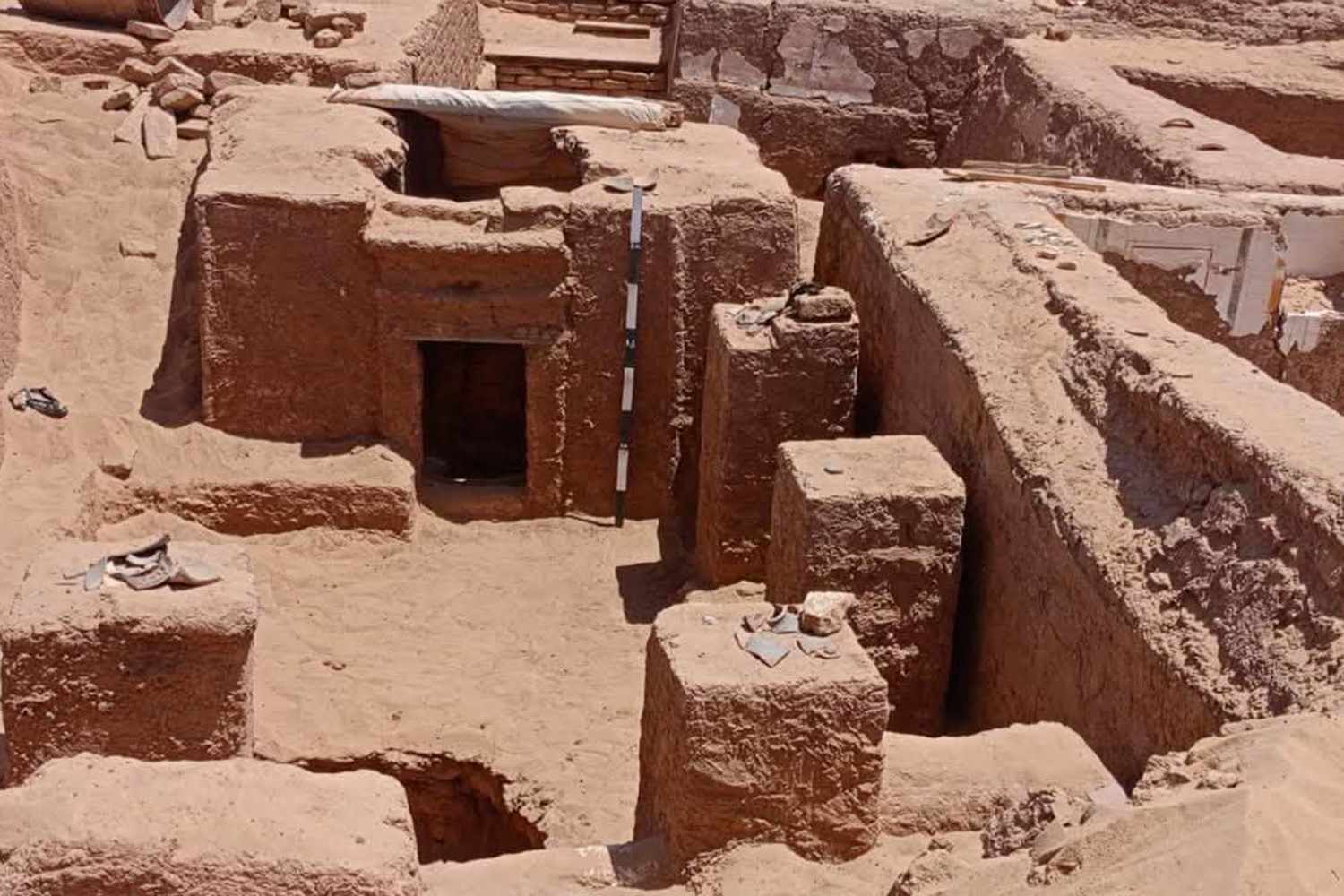
Archaeologists uncovered a roughly 1,700-year-old, pyramid-roofed tomb at Bir al-Shaghala in Egypt’s Dakhla Oasis, built for Pisechtes and his wife during Roman rule. A 19-line Greek funerary poem found there was likely written by Pisechtes’ son Sarapion, mourning his father and praising his kindness and wisdom. The tomb also features Egyptian hieroglyphic protective spells and imagery related to the sun god’s journey through the underworld. Pottery, funerary objects and a coin depicting Emperor Constantine were also found, reflecting the coexistence of Egyptian burial traditions and Greek literary practices in Roman-era Egypt.
Key Points
1
Fourteen steps lead down to the tomb’s entrance, which was decorated with a winged sun disk and two cobras; archaeologists also identified a scene associated with the seventh hour of the Amduat.
2
A classics scholar described the Greek inscription as a sophisticated, original literary epigram, noting that its grammar resembles Homer’s poetry; it calls Pisechtes an “advisor in life.”
3
The tomb appears to have been reused after its original burial, according to evidence reported by researchers.
4
The tomb’s entrance had been sealed by a stone slab bearing Osirian imagery and additional protective funerary texts; inside, the structure included a vaulted mud-brick hall and two burial chambers.
Sentiment
Mostly PositiveNEGATIVENEUTRALPOSITIVE
Publishers
16
Articles
27
Reach
43
Topics
A
AnonymousAuthor


