Radar Finds Ark Site Structures
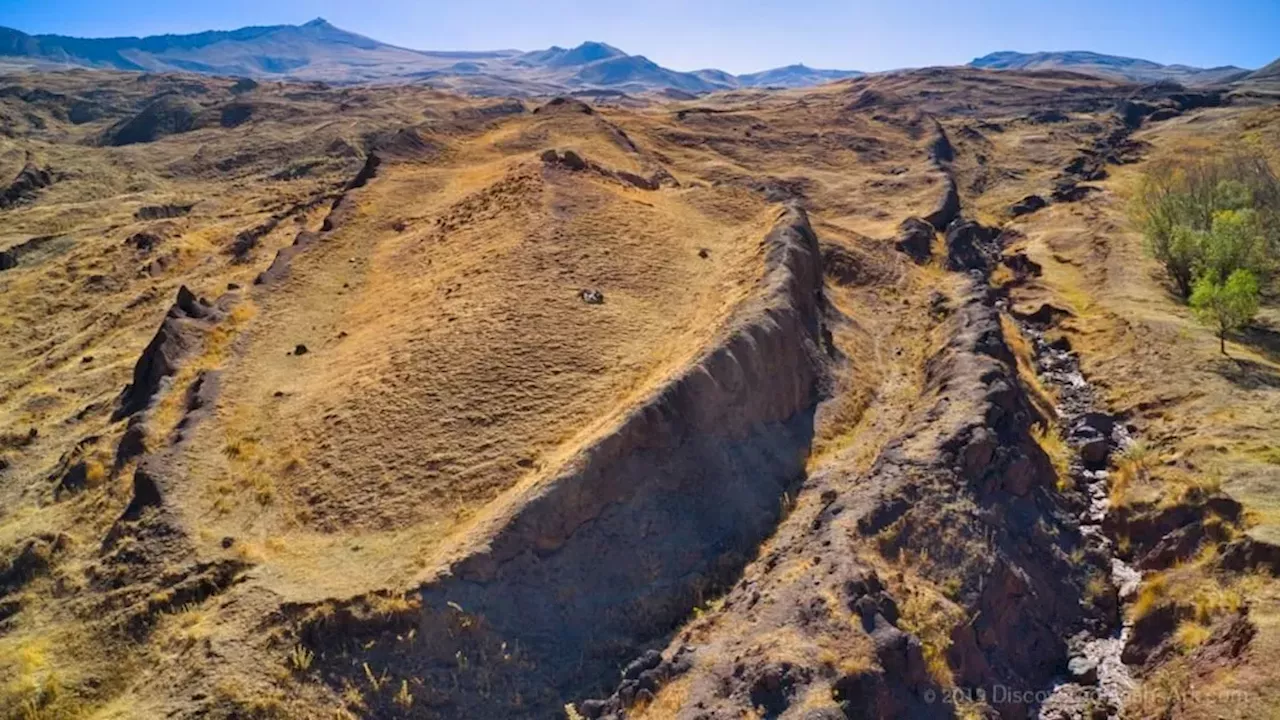
New radar scans reveal potential structural remains beneath Turkey's famous Durupınar Formation.
Anonymous
Key Points
1
The scans were conducted with BakhtarRadar, a system developed by Dr. Khosrow Bakhtar, an engineer whose background includes decades of subsurface-detection work for U.S. defense agencies. The group says the system can distinguish anomalies by masking natural geological features.
2
Founder Andrew Jones said the radar reached as deep as 95 meters at some locations, and described the results as showing soil rather than one continuous block of rock: “There’s no rock there. It’s not a complete one solid block of rock, it’s soil.”
3
Noah’s Ark Scans says it has been investigating the Durupınar site since 2019; the formation was first discovered by Turkish Army Capt. Ilhan Durupinar in 1959.
4
Bakhtar cautioned that the radar findings do not identify the object: “Whatever the object is beneath the surface is extraordinary. In forty years of this work, I have never seen anything like it. It could be a ship. It could be a spaceship.”
Radar scans beneath Turkey's boat-shaped Durupınar Formation have revealed organized underground features that researchers interpret as corridors and chambers, Fox News reported. The private Noah's Ark Scans project says the findings support its theory that remains of Noah's Ark may be buried at the site, though the group emphasizes investigations are still ongoing. The latest fieldwork involved collecting over 300 soil samples and drilling more than 60 feet deep to search for signs of human activity or decayed wood.
The radar system, developed by engineer Dr. Khosrow Bakhtar, reached depths of 95 meters at some locations and showed soil rather than solid rock, according to founder Andrew Jones. Head Topics reported that Bakhtar cautioned the findings do not yet identify the object, saying: "Whatever the object is beneath the surface is extraordinary. In forty years of this work, I have never seen anything like it. It could be a ship. It could be a spaceship."
Advanced Radar Technology Reveals Buried Anomalies
The Noah's Ark Scans team used BakhtarRadar, a system developed by Dr. Khosrow Bakhtar, whose background includes decades of subsurface-detection work for U.S. defense agencies. Fox News explained that the system can distinguish anomalies by masking natural geological features. At the Durupınar site, the radar penetrated as deep as 95 meters and detected soil layers rather than one continuous rock block, suggesting possible structural remains.
Decades-Long Search at Turkey's Boat-Shaped Formation
The Durupınar Formation was first discovered by Turkish Army Captain Ilhan Durupinar in 1959. Daily Star reported that the site has long been linked to Noah's Ark legend. Noah's Ark Scans began investigating the location in 2019, conducting multiple field seasons to gather geological and archaeological evidence from the formation's interior.
Researchers Remain Cautious Despite Dramatic Findings
While the radar scans show extraordinary underground features, researchers stress the findings are preliminary claims that do not yet establish the formation contains Noah's Ark. News Nation reported that the team collected over 300 soil samples and drilled deep into the formation to search for decayed wood or other human-made materials. Dr. Bakhtar emphasized that further analysis is needed before drawing firm conclusions about the object's identity or origin.
Sentiment
Mostly NegativeNEGATIVENEUTRALPOSITIVE
Publishers
10
Articles
3
Reach
13
A
AnonymousAuthor


