Trillions of Tons Lost
Satellite Data Shows Polar Ice Sheets Lost 11.3 Trillion Tons Since 1979
Anonymous
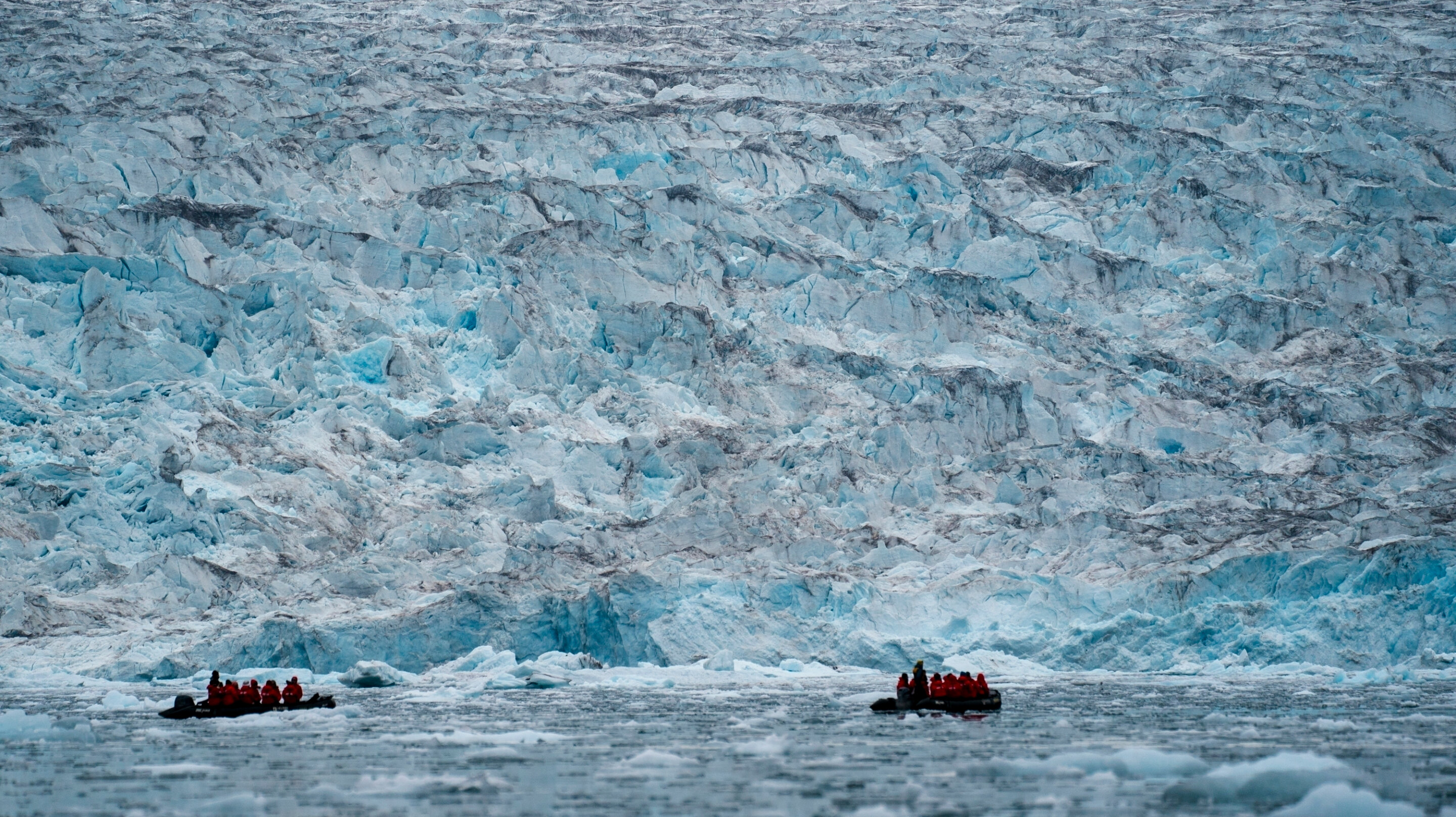
A comprehensive assessment of satellite observations found that Greenland and Antarctica lost about 11.3 trillion metric tons of ice between 1979 and 2023, raising global average sea levels by roughly 3 centimeters and contributing about one-quarter of recent sea-level rise. More than four-fifths of the loss came from glaciers accelerating into the ocean, rather than from surface melting alone, as relatively warm seawater eroded ice shelves and weakened the glaciers’ grounding points. Greenland accounted for about 6,500 billion tons of the loss, while Antarctica contributed roughly 4,780 billion tons, with West Antarctic outlet glaciers playing a major role. Ice loss accelerated substantially during the 2010s, and researchers say the trend could continue for decades because the ice sheets respond slowly to climate warming. Although geothermal heat, including a mantle plume beneath Antarctica’s Marie Byrd Land, affects local conditions, scientists say it is a long-term background factor rather than the primary cause of the recent polar decline.
Key Points
1
Researchers combined 42 independent satellite-based estimates from 27 missions—including radar altimetry, NASA’s ICESat-2 laser measurements, GRACE gravity data and Landsat imagery—to create a continuous record of ice-sheet change from 1979 to 2023.
2
The delayed response of the ice sheets means ice loss is expected to continue for decades even if global warming were to stop, because the glaciers and ice sheets adjust slowly to climatic changes.
3
Although the loss accelerated sharply during the 2010s, the rate briefly stopped accelerating between 2020 and 2023; researchers attributed that interruption to short-term weather variability rather than a lasting reversal of the trend.
4
The combined ice loss was equivalent to nearly 3 quadrillion gallons of water—enough to fill approximately 4.5 billion Olympic-sized swimming pools.
5
Greenland’s Jakobshavn glacier was reported to be retreating by as much as 164 feet per day, illustrating the speed at which individual outlet glaciers can respond to ocean-driven ice loss.
Sentiment
Mostly NegativeNEGATIVENEUTRALPOSITIVE
Publishers
7
Articles
66
Reach
73
Topics
A
AnonymousAuthor


