Record Roman Coin Discovery
Amateur Archaeologist Discovers Germany's Largest Hadrianic Coin Hoard in Western Field
Anonymous
Key Points
1
Finder Oliver Riedl said the detector’s continued signals made him realize that “there was something bigger buried here” after he had already found several coins; he then alerted authorities, who organized the excavation.
2
Archaeologists emphasized that Roman hoards from the second century are rarely as extensive as the Wesseling find, making its historical value particularly difficult to assess.
3
Using the legionary wage comparison, researchers estimated that an ordinary soldier would have needed to save all of his disposable income for about six years to accumulate 934 denarii.
4
The coins were placed on public display at the LVR-LandesMuseum Bonn on September 22, 2026, giving visitors access to the newly excavated hoard.
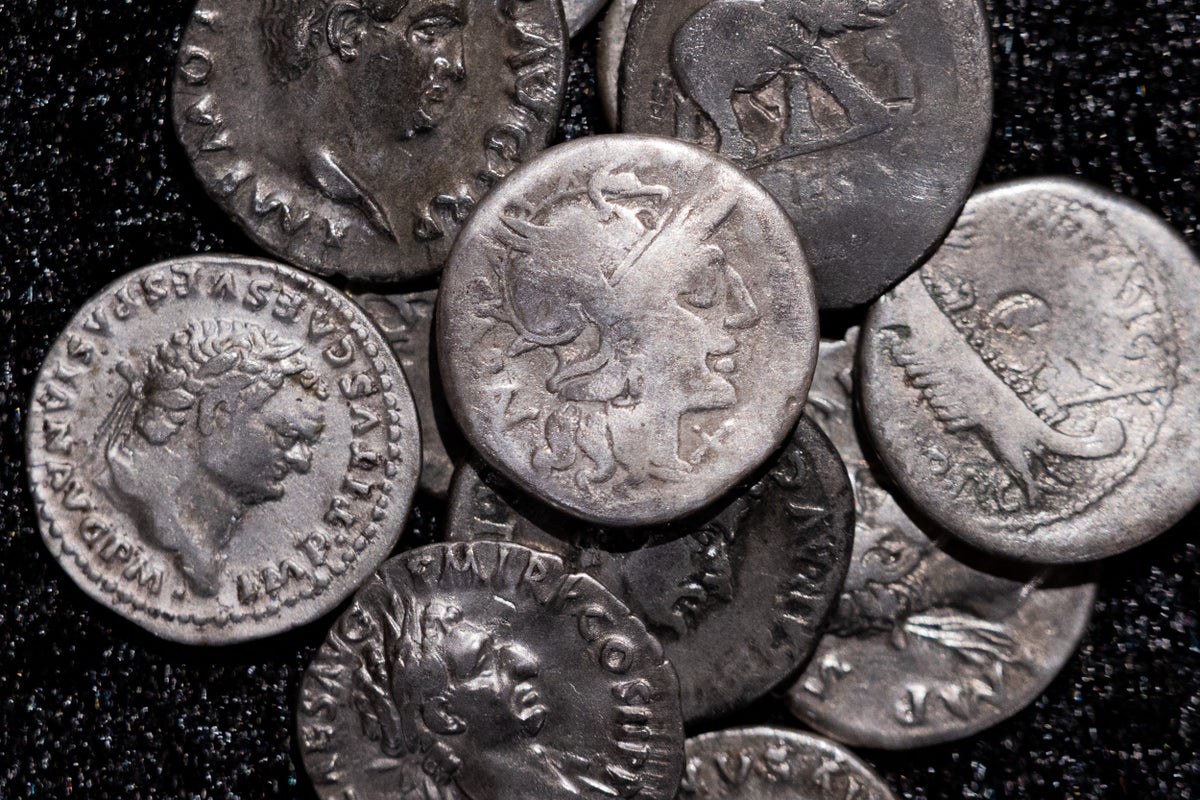
An amateur archaeologist in western Germany struck gold—or rather, silver—when his metal detector uncovered 934 Roman coins buried nearly 2,000 years ago. The Guardian reports that Oliver Riedl's discovery near Wesseling represents Germany's largest hoard of coins from Emperor Hadrian's era. The 3.1-kilogram cache likely lay hidden since the second quarter of the second century A.D., possibly buried by someone seeking a safe place to stash wealth in a world without banks.
The coins now sit on display at the LVR-LandesMuseum Bonn, where archaeologists have begun piecing together the hoard's mystery. Researchers estimate its value by comparing it to a Roman legionary's annual pay: 300 denarii per year. A soldier would need to save his entire disposable income for roughly six years to accumulate 934 coins. The original owner's identity and reason for burying the fortune remain unknown—and likely died without revealing the hiding spot.
How a Metal Detector Revealed a Hidden Fortune
Oliver Riedl wasn't hunting for ancient Roman treasure when he walked into that field with his metal detector. WQOW reports that after finding several individual coins, the detector kept giving stronger signals. Riedl realized "there was something bigger buried here." He stopped digging and alerted authorities. Archaeologists then organized a proper excavation and unearthed all 934 denarii in one spot.
Why Second-Century Hoards Are So Rare
Finding 934 Roman coins from one era in a single location is extraordinary. The Guardian notes that Roman hoards from the second century are rarely this extensive anywhere in Europe. The Wesseling hoard's size makes its historical value particularly hard to pin down. Archaeologists say such large caches offer rare glimpses into how people stored wealth during Hadrian's reign, roughly 2,000 years ago.
A Legionary's Six-Year Salary Buried in a Field
To understand just how much money this hoard represented, consider a Roman soldier's income. A legionary earned 300 denarii each year—but the military deducted about half for food and equipment. That left roughly 150 denarii in disposable income annually. To save up 934 coins at that rate would take a soldier six years of every spare penny. The original owner was clearly wealthy and cautious about where to keep it.
Now on Display for the Public to See
The Independent reports that the coins went on public display at the LVR-LandesMuseum Bonn on September 22, 2026. Visitors can now see the silver denarii up close and read the story of how an amateur archaeologist's persistence solved a 1,800-year-old mystery. The museum's exhibition offers a rare window into Roman life during Hadrian's rule and the financial strategies of ordinary people who lived through that era.
Sentiment
Mostly NegativeNEGATIVENEUTRALPOSITIVE
Publishers
20
Articles
168
Reach
188
Topics
A
AnonymousAuthor


